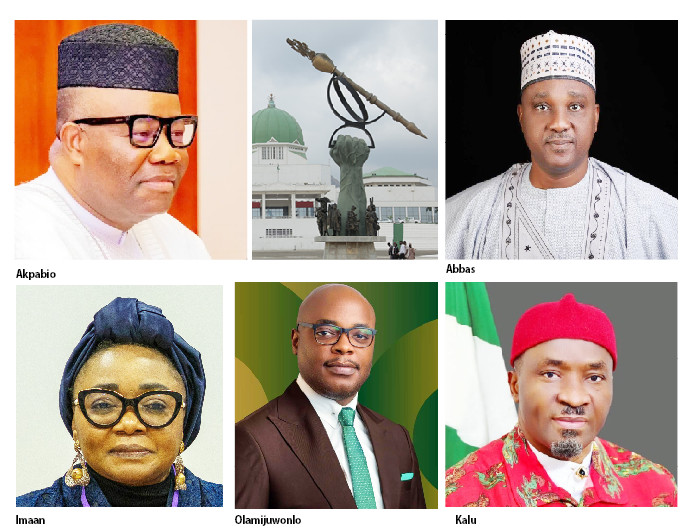
The proposed Constitution Alteration Bill seeking to create special seats for women in the federal and state legislative houses has continued to generate nationwide debate. While supporters describe it as a bold step toward improving gender inclusion in governance, critics argue it raises questions about fairness, merit, and the structure of political representation in Nigeria. JAMES KWEN writes on matters arising.
The Constitution Alteration Bill, seeking to provide Special Seats for women in federal and state legislative houses, presently before the National Assembly has its merits and demerits.
At the heart of the bill is the intention to address the persistent underrepresentation of women in elective positions across the country. Proponents say the initiative is designed to correct historical imbalance and create a more inclusive political space by guaranteeing women greater access to legislative roles at both federal and state levels.
The proposed legislation is one of the 44 prioritised Constitution Alteration Bills that the National Assembly had planned to vote on in December 2025 but has been unable to consider from then until now.
Sponsored by the Deputy Speaker, Benjamin Kalu, and 12 others, the bill seeks to alter Sections 48, 49, 71, and 117 of the 1999 Constitution (as amended) to create one “special seat” reserved exclusively for women in the Senate and House of Representatives for each state of the federation and the Federal Capital Territory (FCT).
The bill also proposes to alter Section 91 of the constitution to provide for three special seats “Reserved exclusively” for women in the State Houses of Assembly.
If passed, the proposed legislation will take effect after the term of the current national and state assemblies elapses and is subject to review every 16 years.
From its introduction through debate and stages of lawmaking, proponents of the bill have listed its benefits or advantages, particularly increased women representation and inclusion.
However, there are equally reservations about the proposal, bothering on discrimination, increased cost of governance, cumbersome nomination process and campaigns.
A co-sponsor of the bill, Hon.Joshua Gana from Niger who spoke for other initiators of the proposed legislation during debate on its general principles said it will address the “profound imbalance and the under-representation of women in the National Assembly and at sub-national levels.”
He argued that the bill is anchored on the fundamental principle of equitable representation and aimed to empowering women by ensuring their voices are not only heard but actively contribute to shaping the legislative landscape and the overall development of our nation.
Gana lamented that even though the constitution guarantees equal rights, the representation of women in the legislature has been “Alarmingly low.”
“Globally, Nigeria lags in women’s representation in parliament, ranking among the lowest. Countries that have implemented affirmative action, like Rwanda and Andorra, have seen significant strides towards gender equality in governance,” he noted.
As the sponsors observed, the present 10th National Assembly has only four women out of 109 senators (3.7 per cent) and 16 women out of 360 members in the House of Representatives (4.44 per cent).
Also, at the end of the 2023 general election, out of the 988 state assembly seats across the country, only 48 female lawmakers, representing 4.85 per cent, were elected.
This is as 14 state assemblies do not have a single woman. These are Kaduna, Kebbi, Sokoto, Zamfara, Jigawa, Kano, Bauchi, Gombe, Yobe and Plateau.
Lead sponsor of the bill, Deputy Speaker Kalu and chairman of the House Committee on Constitution Review also observed that
Nigeria as a nation could no longer ignore the state of representation, which was skewed against the female gender.
Kalu who spoke at the 2025 law week of the International Federation of Women Lawyers (FIDA) Nigeria, Abuja Branch, he said while women constitute
49.43 per cent of the Nigeria’s population, they occupy fewer than five per cent of seats in the National Assembly.
“This is a structural imbalance with real consequences for governance, development, and national cohesion.
“…This is why I sponsored the Reserved Seats Bill (HB 1349), a temporary constitutional remedy to a structural injustice that decades of advocacy alone have not fixed.”
At the same event, Senate President Godswill Akpabio also backed the reserved seats bill which he described as crucial to boosting women’s participation in political leadership.
Akpabio pointed out that a woman’s strength was not supplementary but from the foundation.
Similarly, the Convener of the Reserve Seats for Women Bill Campaign Coalition, Osasu Igbinedion-Ogwuche lamented Nigeria’s poor statistics on women’s political representation which she said was embarrassing for a country regarded as the giant of Africa.
Ogwuche at a training workshop for National Assembly Complex Correspondents on strengthening reportage on the Reserved Seats for Women Bill, said it is unfortunate that Nigeria ranks lowest in Africa in women’s participation in government.
She said: “we say we are the giant of Africa, and I’ve been performing so poorly when it comes to women in government. I was speaking with the Speaker of the South Sudan Council of Representatives the other day.”
Also, the international community, critical stakeholders, civil society organisations and the general public have risen in defence of bill, pointing at its merits and pushing for its passage.
Nigeria‘s First Lady, Senator Oluremi Tinubu equally backed the seat reservation bill for women in the legislature and urged members of the National Assembly to pass the proposed legislation into law expeditiously.
Tinubu at the Art for Governance Exhibition, organised by the Office of the Deputy Speaker in conjunction with ElectHER, recently, stressed the importance of women’s leadership in shaping the country’s future.
“I urge the National Assembly to expedite the passage of the bill. I am committed to supporting initiatives that promote gender inclusion, women and nation-building. This has been my mission as first lady of Lagos, as a senator and now as the first lady of the Federal Republic of Nigeria,”she said.
The United Nations (UN) Women remains resolute in its advocacy for the Special Seats for Women bill.
Beatrice Eyong, the representative of UN Women in Nigeria during the month-long international women day celebration, kept insisting that the country must take deliberate steps to close the gender gap in politics and decision-making.
She said the proposed legislation, which seeks to reserve seats for women could play a crucial role in correcting the imbalance that has kept women largely underrepresented in governance.
“Gender equality is fundamentally a matter of power and in Nigeria, that power gap remains stuck. Women hold just 3.9 percent of parliamentary seats, one of the lowest rates globally, and this severely limits inclusive decision-making and national progress.
“We were hoping that by now it (the bill) would have been passed and we would have already known that at least Nigeria is actually moving to that position of the giant that Nigeria is,” she said.
Recently too, at a high-level stakeholders’ engagement on ‘Special Seats Bill’ in Abuja, the German Ambassador to Nigeria, Ambassador Annett Günther harped on the advantages of the bill.
“We are all aware how low the number of women in the National Assembly is. This is not just a statistic, it represents millions of unheard voices, perspective missing in policymaking, in political discussions, and it’s a systematic barrier to the needs that need to be addressed with urgency and courage,” Günther said.
This is just as more advocacy through peaceful demonstrations in support of the bill continue to take place.
LEADERSHIP reports that not too long ago a coalition of different women groups staged a peaceful rally at the National Assembly where they called for the passage of the women reserved seats bill.
A strong advocate of the bill and former Convener of the Nigeria Civil Society Situation Room, Ene Obi, applauded lawmakers over the progress of the proposed legislation.
However, Obi called on the lawmakers to hasten the passage of the bill to give women the opportunity to contest for the seats to create by the piece of the legislation in the 2027 general election.
“A vote for a woman is a vote for life. Women are the hope of life. And I want to urge the members of the National Assembly, we are not protesting today, we are holding a rally,” she said.
The representative of the International Federation of Women Lawyers (FIDA), Rahila Dauda also called on the National Assembly to pass the bill in order to save Nigeria the shame of poor female representation in the legislative and other arms of government.
“We are in total support of the bill, the special seats and we urge the National Assembly to join with us by passing this bill. It is wrong of our view because it is a shame that a country like Nigeria, which more than half of the population are women, unfortunately only about 5 or 4 are in the National Assembly and the Senate and the House of Representatives,” she said.
Founding Executive Director, African Centre for Leadership, Strategy and Development (Centre LSD), Dr Otive Igbuzor, said the reserved seats proposal aligned with global best practices and remains one of the most effective pathways to improving women’s participation in governance.
“We support the Special Seats for Women Bill in the National Assembly. If you look across the world, particularly in Africa, the countries that have increased women’s participation did it through constitutional provision,” he said.
Legislative Advocacy Centre (CISLAC) and Transparency International Nigeria said the reserve seats being proposed is a tool to help close the gaps and ensure inclusion of women, and also ensure that the long and historical marginalisation and the imbalances of women representation in decision-making are closed.
Leader of the CSOs, Auwal Musa Rafsanjani told LEADERSHIP Weekend that the bill is a deliberate policy to ensure that women who have long been disadvantaged in governance, especially in occupying leadership position in both the legislature and executive are now given the opportunity to meet up with the gaps.
“So it is very important, if we really want to ensure effective participation of women in policies and governance generally, to consider this special seat. I think Nigeria would benefit from having such kind of policy or legal framework that will close these gaps. That will encourage more women in various position to be given this opportunity. It is not a dash. It is also to be computed within among the female who merited to be there.
“So, given the historical imbalances, we must do everything possible to bridge this gap as we democratise in Nigeria, as we aspire for effective participation of women in governance. We will continue to encourage Nigerian government in the National Assembly to give consideration to this bill. We in CISLAC are in support of women reserved seats in either elected or appointed position in Nigeria,” he stated.
As laudable as the merits of the bill appears, there are equally concerns that pointed to its demerits both by lawmakers and other stakeholders.
For instance, at the second reading of the bill, some lawmakers such as Hons Ghali Tijani (APC, Kano), Olamijuwonlo Alao-Akala (APC, Oyo), Billy Osawaru (APC, Edo) and Patrick Umoh (APC, Akwa Ibom) argued that the bill was undemocratic and discriminatory to men.
The lawmakers also argued that candidates should be chosen solely on their merits rather than their gender, and that women should mobilise to vote for women.
Tijani argued that creating reserved seats was “undemocratic” and contended that women should compete for seats rather than having them reserved.
Umoh said, “we may sound very emotional about this bill but the reality is that when a bill is being considered in the House of Representatives, we must accord it with the principles as enshrined in the constitution of the Federal Republic of Nigeria.”
Pundits have raised concerns over how political parties will nominate candidates for the reserved seats and how they would carry out their campaigns.
They reasoned that women vying for the reserved seats would campaign across entire states as the seats are not tied to senatorial districts or federal constituencies but each woman will represent the whole state. Women will need to travel across all local government areas, hold statewide consultations, and build broad coalitions to achieve this goal.
Another concern is the financial implications of the bill because if passed, the country’s legislature would expand to 146 senators, 397 members of the House of Representatives and 1,098 members of the State Houses of Assembly.
Based on the provisions of the bill, there will be 37 additional seats for women in each chamber of the National Assembly and 108 additional seats for women in States Houses of Assemblies, bringing the total to 182 new seats for women legislators in Nigeria.
According to reports, the cost implication of having another 182 female lawmakers for 16 years will gulp the nation the whooping sum of close to N200 billion.
Sharing in these concerns, the women affairs minister, Sulaiman-Ibrahim had said the reserved seats for women bill is a weak negotiation for increased female political participation.
She said: “I’m a great advocate for the special reserve seat bill, but I am not a fan of it, and I’m not afraid to say that, because I believe that the bill even puts us at a disadvantage as women.
“I believe that we can go for more and get more. So why are we negotiating for less, and why do we keep watering it down?”
Speaking with LEADERSHIP Weekend, a political science lecturer at the Nnamdi Azikiwe University, Awka, Dr Christian Okeke, said while improved representation by women in parliament is desired, something is fundamentally wrong with the ideas espoused in the bill.
According to him, the ideas in the bill looks like using exclusion to cure exclusion as efforts have not been made by sponsors to carry citizens along by way of advocacy.
Okeke said; “no wonder it has failed repeatedly. The sponsors have not effectively outlined how additional seats can be financed, especially in the face of the demand for cut in cost of governance.”
He noted that even the proponents’ argument that the new seats will add only a percent (1%) extra cost on the National Assembly budget looks like “they so not bother about additional burden on the excessively-taxed citizens who do not even reap any meaningful fruits from the kind of legislation witnessed in recent times in the country.
“It is irrational to think of addressing women exclusion with heavy costs. After all, extra seats are no guarantee to quality legislation. In the end and if passed and signed into law, such reserved seats law may be hijack by career politicians.
“It could become a Haven for women political struggle and a caricature to democracy.
What the sponsors ought to have considered is total reform that cuts down on cost of political participation as well as political environment that encourages women.
“Alternatively, a law can be passed that mandates reservation of a seat per existing constituency or district in each state at every election cycle on rotational basis rather than increasing the size of the already-bloated legislature.”
A CSO, CREAP Africa Initiative acknowledged the import of the bill to closing an urgent gap in Nigeria’s democracy but said the proposal must be carefully interrogated to ensure it does not create new governance challenges while attempting to solve an old one.
The Executive Director of CREAP Africa Initiative, Sylvanus Udoenoh, harped on major concerns such as the cost implication governance, constituency arrangements and party nominations.
He said: “creating additional reserved seats, rather than reforming the existing structure, risks expanding an already expensive democratic system without clear evidence that this is the most efficient path to inclusion.
“At a time when Nigerians are demanding leaner governance and better fiscal discipline, adding more publicly funded positions may face strong public resistance.
“Relatedly, questions around constituency definition and representation legitimacy remain unresolved; whether these seats will represent geographic constituencies, special interest blocs, or operate as at-large positions could affect accountability and voter connection.
“Furthermore, the issue of party nomination and internal democracy cannot be ignored. If political parties retain full control over who occupies these reserved seats, there is a risk that the reform could be captured by political elites, limiting opportunities to a narrow circle rather than broadening inclusion.
“So, without transparent, competitive, and merit-based nomination processes, reserved seats may unintentionally reinforce patronage politics rather than dismantle systemic barriers.
“We therefore recommend a more balanced approach; one that combines electoral reforms, enforceable party quotas, financial support mechanisms for female candidates, and cultural reorientation, rather than relying solely on structural seat expansion as a solution.”
Also, a lecturer in the Department of Political Science, Federal University of Kashere, Gombe State, Dr Terna Vincent Tavershima said there is no need to create reserved seats in the legislature to ensure women representation as other options could be explored.
“I am not an advocate for this reserved or reserved seat bill for women. I am not. You know, if women are to be represented in the governance of this country, you know, we don’t need to create special seats for them in elected positions.
“What we need to do is a deliberate attempt by the people in authority to appoint as many as possible women after elections. You know, you can appoint more women to occupy more positions after elections because when you are talking about democracy, democracy is majority rule. So you go in there, slog it out. If you win, fine. If you don’t, so be it,”he said.
The don acknowledged other efforts towards women inclusion, saying political parties have gone to the extent of even giving expression of interest and nomination forms to women free.
He pointed out that reserved seats for women can also create marginalisation which is an anomaly in a democratic setting.
“If you create special seats for women, you are marginalising people. You are marginalising men in that particular constituency, which we have asked only women to run. It doesn’t make sense and it doesn’t add up.
“If you are appointed a commissioner or an adviser, you are also representing your people. You will have a voice on the table. So for me, this issue of special seats for women, I don’t buy it. I’m a true Democrat and I believe in democracy. Allow everybody to buy the form and slug it out. If you win, fine. If you don’t, fine,” he added.
LEADERSHIP Weekend writes that if passed, the bill could mark a significant shift in Nigeria’s democratic representation by guaranteeing women a fixed presence in the National Assembly and state legislatures. However, it also raises important questions about constitutional balance, equity, and the long-term implications of reserved political seats.
As debate continues, lawmakers and stakeholders remain divided between viewing it as a necessary corrective measure for inclusion and a contentious alteration to the principles of elective representation.
We’ve got the edge. Get real-time reports, breaking scoops, and exclusive angles delivered straight to your phone. Don’t settle for stale news. Join LEADERSHIP NEWS on WhatsApp for 24/7 updates →
Join Our WhatsApp Channel