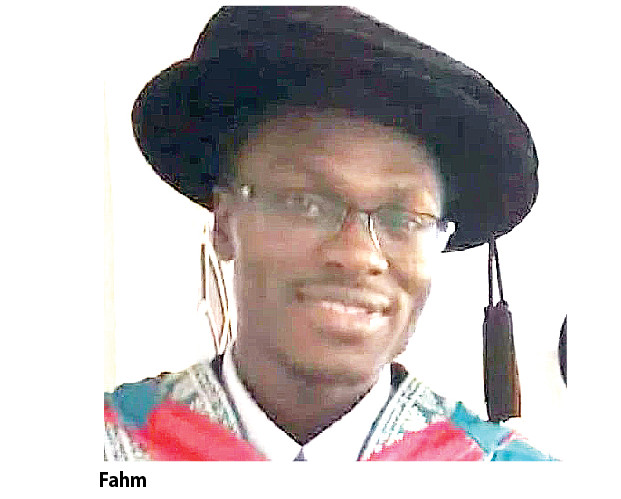
Dr AbdulGafar Fahm is a reader in the Department of Religions at the University of Ilorin. He teaches courses such as Islamic thought and civilisation, Islamic spirituality, ethics, and research methodology at both undergraduate and postgraduate levels. His research spans spirituality, ethics, philosophy, Muslim-world issues, and contemporary dynamics within Islamic culture. In this interview with ABDULLAHI OLESIN, Fahm sheds further light on the processes that led to his emergence as the University of Ilorin Researcher of the Year. Excerpts:
Congratulations on winning the Researcher of the Year Award! What inspired your research focus on Islamic ethics and digital transformation?
I received the news with deep gratitude and humility. My interest in Islamic ethics and digital transformation grew naturally from two sides of my life. The first is my long-standing academic grounding in Islamic thought, spirituality, and ethics. The second is my observation of how rapidly technology has entered everyday Muslim life, especially in learning, communication, moral formation, and even religious authority. I began to see that many of the questions Muslims now face are no longer only in the Mosque, the classroom, or the family setting. They are also on phones, social media platforms, online classrooms, and digital communities. That reality pushed me to ask a simple but important question: how can timeless Islamic ethical principles guide people in a fast-changing technological world? That question has stayed with me and continues to shape my research journey.
Your work explores the intersection of faith, ethics, and technology. How do you think Muslim societies in Nigeria can navigate the moral and educational challenges of the digital age?
I believe Muslim societies in Nigeria must approach the digital age with both openness and caution. We should not see technology as an enemy, because it has clearly expanded access to knowledge, widened educational opportunities, and created new spaces for dawah, learning, and social connection. At the same time, we should not embrace it uncritically. Every technology carries values, pressures, and consequences. The challenge is to ensure that our use of technology is guided by moral discipline, not by mere convenience or trend. For me, the way forward lies in ethical literacy. We need to train young people not only to use digital tools, but to ask moral questions about what they consume, what they share, how they interact, and who influences them online. Families, schools, universities, and religious institutions all play a role. We need digital competence, but we also need spiritual intelligence. A morally grounded digital culture will not emerge automatically. It has to be taught, modelled, and sustained.
What are some of the most significant findings from your research on online platforms and Islamic learning?
One of the major findings from my research is that online platforms have fundamentally changed how Islamic knowledge is accessed and who is seen as authoritative. Many young Muslims now learn from a mixture of local scholars, international preachers, short video clips, WhatsApp broadcasts, YouTube lectures, and algorithm-driven content. This means that learning has become more accessible, but also more fragmented. Another important finding is that digital access does not always mean digital depth. A person may consume a great deal of religious content online without developing a sound grounding, critical understanding, or proper context. I have also found that online Islamic learning is often shaped by trust, language, relatability, and emotional connection, rather than solely by scholarly credentials. This is very important because it means that authority online is not always earned solely through deep learning. Sometimes it is produced through visibility, style, and digital influence. That reality has both positive and troubling implications.
What motivated you to pursue a career in academia, and how did you become interested in Islamic Studies?
My journey into academia was quite accidental. However, personal conviction and intellectual curiosity have sustained me. I joined academia from the lowest rank, and where and what I should research was not always clear. I remember asking myself how people write academic papers, so it has not always been easy, but Islamic Studies gave me a framework for engaging questions of meaning and the human condition in a serious and disciplined way. I found in it not only a body of sacred knowledge, but also a rich intellectual tradition that speaks to law, ethics, history, civilisation, spirituality, and social life. What motivated me to remain in academia was the realisation that teaching and research are forms of service. Through academia, one can shape minds, preserve knowledge, challenge assumptions, and contribute to society in ways that may outlive one’s lifetime. I saw scholarship not simply as a profession, but as a responsibility. That understanding has kept me going.
Can you share some advice for emerging researchers in Islamic ethics and digital transformation?
My advice is to be grounded in both worlds: do not study technology without understanding society, and do not speak on Islamic ethics without a strong grounding in the intellectual tradition. This field requires balance. You need Islamic historical depth, but you also need contemporary relevance. Read widely. Understand your context. Listen to real people. Do not only write about digital life from a distance. Observe it, study it, and, where possible, engage communities directly. I would also advise young researchers to be patient. Interdisciplinary work can be demanding because it requires learning across fields. But that same difficulty is what makes it meaningful. Most importantly, let your research be driven by sincere questions, not by fashionable language alone.
How has the University of Ilorin supported your research, and what resources have been most helpful to you?
The University of Ilorin has been very supportive in many ways, and I say that with sincerity. There have been series upon series of trainings on research that I have even lost count, we now have several research grants from the Faculty up to the National level, and the university often supports these initiatives, I am talking about Faculty Research Grant, Senate Research Grant, Special Intervention Grant, National Research Fund, etc. This shows you that the university has provided an environment that values scholarship, recognises academic excellence, and encourages researchers to keep pushing themselves. For me, one of the most important forms of support has been the culture of recognition (because two or three years ago, I won the Faculty Researcher of the Year (Humanities Cluster) while Dr Atolani of the Department of Chemistry won the Sciences Cluster, and Professor Tella of Library and Information Science won the Researcher of the Year that academic session. When an institution values research, it gives scholars moral energy to continue. I have also benefited from collegial relationships, several academic mentors, institutional opportunities, and an academic atmosphere that fosters serious work. As I said, research grants, conference support, access to scholarly networks, and most importantly, opportunities for collaboration have been helpful. Beyond formal structures, I must also say that the encouragement of colleagues, students, and mentors has mattered greatly in my journey.
How do you plan to ensure your research has a positive impact on Nigerian society and beyond?
For me, research must not remain on the shelf. I want my work to speak to real human concerns. One way I try to do this is by choosing research questions that connect scholarship with lived realities, whether in education, youth culture, ethics, religious identity, or social transformation. I also believe strongly in public-facing scholarship. Academic research should be communicated in ways that policymakers, educators, religious leaders, and ordinary citizens can understand and use.
What role do you think researchers can play in informing policy and guiding youth engagement with technology?
Researchers play a very important role. We help society move beyond guesswork. Good research shows patterns, identifies risks, highlights opportunities, and offers evidence-based recommendations. In a country like Nigeria, where youth engagement with technology is growing rapidly, researchers can help policymakers understand what is actually happening rather than what people merely assume. We can also provide frameworks for thinking ethically about technology. Young people need guidance, but that guidance must be informed, realistic, and credible. Researchers can help bridge that gap by studying online behaviour, digital learning, mental habits, moral pressures, and social change. If our findings are well communicated, they can shape better educational policy, youth programmes, and digital governance.
What role do you think researchers can play in informing policy and guiding youth engagement with technology?
A practical example is the way my research speaks to Islamic learning in digital environments. It has helped frame discussions about how Muslim communities, educators, and institutions can think more seriously about online religious education, digital authority, and ethical engagement with content. In some of my work and presentations, I have shown that the issue is not simply whether people are online, but how they learn online, who they trust, and what moral structures guide that learning. My research has also contributed to broader discussions on digital ethics, education, and responsible technology use in Muslim contexts. Even when the application is not immediate in a policy sense, it helps shape conversations among educators, scholars, and community actors who are dealing with these realities daily.
What does this award mean to you, and how will it influence your future research?
This award means a great deal to me. I see it first as a mercy from Allah, then as a source of encouragement, and also as a reminder of responsibility. I do not see it merely as a personal achievement. No serious scholar works alone. Behind every award are mentors, colleagues, collaborators, students, institutional support, and family sacrifices. So I received it with gratitude and reflection.
It will certainly encourage me to work harder, not to relax. Awards are beautiful, but they also challenge one to remain disciplined and to continue producing work of value. I see it as a call to deepen my research, widen its reach, and invest even more in meaningful scholarship.
How do you balance your academic work with other aspects of your life?
Balance is something I continue to learn. Academic life can be very demanding because research, teaching, supervision, writing, and administrative responsibilities all compete for time and attention. What helps me is prioritisation and a clear sense of purpose. I try to organise my time around what matters most and avoid unnecessary distractions.
What message would you like to convey to your colleagues and students at the University of Ilorin?
My message is one of gratitude and encouragement. To those who have included me in their research team, I say thank you for the atmosphere of scholarship, support, and mutual respect that makes meaningful academic work possible. To my students, never underestimate the power of consistent effort. Academic excellence is rarely the result of one dramatic moment.
It is usually the result of small acts of discipline repeated over time. Knowledge should also be pursued with humility. The more we learn, the more we should realise the weight of responsibility that comes with learning. Let us continue to build a university culture where scholarship is not only excellent but also ethical and socially relevant.
How do you think the intersection of Islamic ethics and digital transformation can inform Nigeria’s approach to AI and technology development?
It can contribute something very valuable. Islamic ethics brings into the conversation a strong concern for responsibility, justice, human dignity, trust, accountability, and the public good. These are exactly the kinds of values Nigeria needs as it thinks about AI and technology development. Too often, conversations about technology focus mainly on efficiency, speed, and innovation. Those are important, but they are not enough. We also need to ask whether technology serves human well-being, protects the vulnerable, reduces harm, and promotes fairness. Islamic ethics can help enrich that debate by insisting that technology is not morally neutral in its social consequences. It can offer a value-based framework for thinking about AI in education, governance, media, and public life.
What collaborations or partnerships would you like to pursue to further your research on Islamic learning and online platforms?
I would like to pursue collaborations that bring together scholars of religion, education, media, ethics, and technology. This field is too broad for a single discipline. I am particularly interested in partnerships with universities, research centres, digital education initiatives, and scholars working on religion and technology in Africa and beyond.
As a leading researcher in your field, what advice would you give to students exploring interdisciplinary studies in Islamic Studies and technology?
Study Islamic intellectual traditions properly. Learn how technology shapes society, culture, and knowledge. Develop research skills that allow you to analyse real-world issues critically. I also encourage them to remain curious. Technology changes quickly, but human questions about truth, justice, meaning, and responsibility remain. The best interdisciplinary scholars are those who can connect timeless questions with contemporary realities.
We’ve got the edge. Get real-time reports, breaking scoops, and exclusive angles delivered straight to your phone. Don’t settle for stale news. Join LEADERSHIP NEWS on WhatsApp for 24/7 updates →
Join Our WhatsApp Channel