
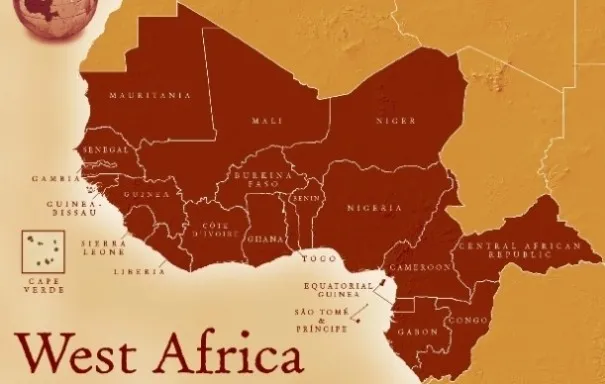
Nigeria has reaffirmed its leadership role in regional economic development with a fresh $500,000 commitment to the third phase of the AFRITAC West 2 (AFW2) programme, signalling sustained support for institutional capacity building across West Africa.
The AFRITAC West 2 agreement which was signed on the sidelines of the 2026 Spring Meetings of the International Monetary Fund and the World Bank in Washington DC, serves countries including Cabo Verde, The Gambia, Ghana, Liberia, Nigeria and Sierra Leone, transitioned into its third phase in August 2024.
The initiative is designed to enhance expertise in critical areas such as macroeconomic policy, monetary frameworks and financial sector oversight.
IMF Director for Capacity Development, Catriona Purfield, underscored the broader significance of Nigeria’s contribution, noting that it goes beyond financial assistance.
Appreciating Nigeria’s contribution to the AFRITAC West, Purfield said “not only does this signal your deep commitment to the centre itself, but it also sends two other very important signals.
“One is the value that you place in investing in your people, and I’m not using contribution, I say investment, because it is investment in developing the capacity of our people in policy. And I think it does that. The second is that it really signals to those who also met us, who need these centres, our donor partners, that you are so committed to it. It is so important they see that. So, thank you for that.”
On his part, IMF African Department Deputy Director, Montfort Mlachila, described the funding as a clear demonstration of Nigeria’s appreciation of the programme’s impact and its partnership with development stakeholders.
“On behalf of the African Department, I would like to most sincerely thank you for the half million contribution to the centre. We really appreciate and it shows your genuine commitment to the well-being of the centre, but also that you appreciate what you get from it, and more importantly, that you appreciate also the support that our development partners give us as well.
Governor of the CBN, Olayemi Cardoso, reitierating the country’s resolve to sustain the partnership, emphasized the importance of continued investment in human capital and institutional strengthening.
“We appreciate the opportunity to strengthen this collaboration and the commitment shown by all parties, particularly at a time as busy as the Spring Meetings. The progress so far has been encouraging, and we are pleased to build on this partnership, which continues to deliver real value. For us, this remains about investing in people and deepening capacity, and we look forward to sustaining the gains achieved.”
Nigeria’s renewed funding is expected to bolster ongoing reforms and reinforce the region’s capacity to navigate complex economic challenges, as policymakers increasingly prioritise resilience and sustainable growth.
commitment to the third phase of the AFRITAC West 2 (AFW2) programme, signalling sustained support for institutional capacity building across West Africa.
The AFRITAC West 2 agreement which was signed on the sidelines of the 2026 Spring Meetings of the International Monetary Fund and the World Bank in Washington DC, serves countries including Cabo Verde, The Gambia, Ghana, Liberia, Nigeria and Sierra Leone, transitioned into its third phase in August 2024.
The initiative is designed to enhance expertise in critical areas such as macroeconomic policy, monetary frameworks and financial sector oversight.
IMF Director for Capacity Development, Catriona Purfield, underscored the broader significance of Nigeria’s contribution, noting that it goes beyond financial assistance.
Appreciating Nigeria’s contribution to the AFRITAC West, Purfield said “not only does this signal your deep commitment to the centre itself, but it also sends two other very important signals.
“One is the value that you place in investing in your people, and I’m not using contribution, I say investment, because it is investment in developing the capacity of our people in policy. And I think it does that. The second is that it really signals to those who also met us, who need these centres, our donor partners, that you are so committed to it. It is so important they see that. So, thank you for that.”
On his part, IMF African Department Deputy Director, Montfort Mlachila, described the funding as a clear demonstration of Nigeria’s appreciation of the programme’s impact and its partnership with development stakeholders.
“On behalf of the African Department, I would like to most sincerely thank you for the half million contribution to the centre. We really appreciate and it shows your genuine commitment to the well-being of the centre, but also that you appreciate what you get from it, and more importantly, that you appreciate also the support that our development partners give us as well.
Governor of the CBN, Olayemi Cardoso, reitierating the country’s resolve to sustain the partnership, emphasized the importance of continued investment in human capital and institutional strengthening.
“We appreciate the opportunity to strengthen this collaboration and the commitment shown by all parties, particularly at a time as busy as the Spring Meetings. The progress so far has been encouraging, and we are pleased to build on this partnership, which continues to deliver real value. For us, this remains about investing in people and deepening capacity, and we look forward to sustaining the gains achieved.”
Nigeria’s renewed funding is expected to bolster ongoing reforms and reinforce the region’s capacity to navigate complex economic challenges, as policymakers increasingly prioritise resilience and sustainable growth.
BIC Expands Distribution, Local Partnerships To Drive Growth
BY OLUSHOLA BELLO
BIC, has reaffirmed its long-term commitment to Nigeria’s economy, advancing investments across its local supply chain, expanding its distribution network, and strengthening partnerships that support business growth and job creation nationwide.
As a longstanding player in Nigeria, BIC continues to contribute to economic activity by enabling access to its products through an extensive distribution system and footprint that supports businesses across wholesale, logistics, and informal retail channels.
This commitment was brought to the fore at BIC’s 2026 Commercial and Distributor Conference, where the company engaged its network of partners on its growth agenda and the critical role of collaboration in expanding market reach and driving shared value.
Speaking at the conference, the general manager, BIC Nigeria, Anthony Amahwe said, “Nigeria remains a strategically important market for BIC, and our focus is on building a sustainable business that contributes meaningfully to the economy, and supports the community. Our growth is driven by strong local partnerships and an extensive distribution network that enables us to reach consumers across diverse communities.”
“We will continue to invest in the systems, partnerships, and capabilities that support long-term growth, while contributing to job creation, strengthening local supply chains, and expanding opportunities across the markets in which we operate.” Amahwe added.
BIC stated that “its distributor network currently supports thousands of retail touchpoints across Nigeria, enabling the company to reach consumers in both urban and underserved communities while generating economic activity across the value chain.
“By prioritizing local partnerships and investing in operational capacity, BIC continues to support enterprise growth, strengthen supply chain efficiency and contribute to job creation across its ecosystem.”
The company also recognized high-performing distributor partners for their role in expanding BIC’s footprint and deepening its presence across the country. As part of its broader capability-building efforts, BIC recently introduced a structured Sales Academy to support the development of its sales teams and partners, reinforcing its belief that sustained growth is driven by investment in people and performance.
With Africa continuing to present significant growth opportunities, BIC’s focus on Nigeria reflects its commitment to scaling responsibly, through strong local partnerships, expanded access, and continued investment in the systems that enable long-term success.
We’ve got the edge. Get real-time reports, breaking scoops, and exclusive angles delivered straight to your phone. Don’t settle for stale news. Join LEADERSHIP NEWS on WhatsApp for 24/7 updates →
Join Our WhatsApp Channel