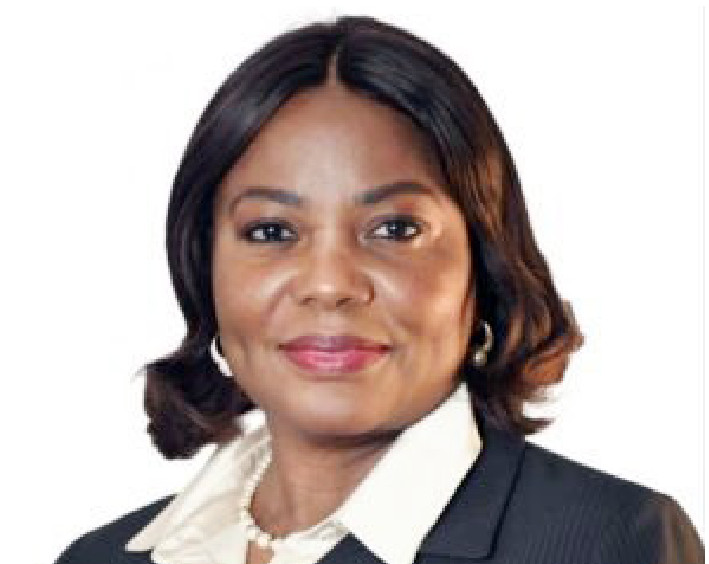
Debt sustainability pressures, global economic headwinds and Nigeria’s reform trajectory took centre stage Director and Head of Secretariat, The G-24 Dr Iyabo Masha, spoke on the sidelines of the 2026 IMF/World Bank Spring Meetings in Washington DC. In this interview with LEADERSHIP’s BUKOLA ARO-LAMBO, she assesses Africa’s rising debt burden, the impact of Middle East tensions on global growth, and how ongoing reforms are shaping investor confidence in Nigeria.
Debt sustainability remains a major concern for African economies, especially amid intensifying global shocks. How do you assess the current debt outlook and pathways to restoring sustainability without undermining growth?
Debt sustainability is a challenge for many countries, not just African or developing countries, but also some developed economies. We see the challenge on two fronts. One is the size of the debt. Ideally, a country’s debt should be around 50 to 70 per cent of GDP, but we are now seeing much higher levels.
The second, and more critical issue, is debt servicing. Countries need additional resources of around 15 per cent of GDP to service their debt. What we see now is that debt service has become so high that it is a source of retrogression. Instead of investing in education, health and infrastructure, countries are channelling resources back to advanced economies. So, debt service is the biggest challenge that countries face.
Several policy options are under discussion. The IMF and World Bank do have certain requirements that factor in a country’s debt burden to assist it, but not all countries qualify. African countries are also moving towards forming a borrowers’ club to strengthen their negotiating position. The lenders do have their club, where they decide on the interest rate, and now Africans are coming to the realisation that they do need a borrowers’ club to help them negotiate better with advanced economies and creditors in general. There are engagements with credit rating agencies that have a very significant influence on the interest rate that a country pays. There are ongoing discussions to improve their methodologies, taking into account a wider range of factors, which will hopefully lead to better ratings and lower borrowing costs.
There is also the G20 initiative on a common framework for debt resolution. Countries can approach it when debt becomes unsustainable, then get their debt restructured or make meaningful reductions, and learn how to improve their capacity for debt management. But doing so often comes with reputational risks. While these initiatives may provide some relief, broader debt relief remains necessary for many countries.
On aggregate, we could see a reduction in debt when those initiatives do materialise. But the fact is that many countries are in such a bad state that no matter the little reduction they get, it will still be a good thing for the international community to consider debt relief
What role is the G24 playing in addressing these challenges?
Over the past two to three years, through our negotiations, we got the IMF to reduce surcharges, which are additional interest payments on large IMF loans. This was significant, especially as five of the six most indebted countries to the IMF are G24 members. As a result of our negotiations last year, the IMF decided to reduce that surcharge. The reduction in interest payments alone amounted to close to $1 billion. That is something we have achieved. We are also advocating for improvements to the G20 common framework and pushing for a standalone debt resolution mechanism within the IMF and the World Bank.
The IMF recently downgraded its growth outlook for Nigeria and sub-Saharan Africa. Do you think the projections adequately reflect the realities in the region?
The projections are broadly balanced, reflecting both resilience and risks. The downgrade is largely driven by developments in the Middle East. World growth, as of the January update, was projected at about 3.1%, and with this downgrade, at about 2.6%; that 1.5% difference is entirely due to the situation in Iran. Oil shocks affect the global economy as a whole, not just the energy sector.
Oil-importing countries will have to pay more for oil. Their fiscal and external balances will weaken; they will have to look for more foreign currency, their external deficit will increase, and they will have to pass on that cost domestically. And when they do, it feeds into inflation and growth pressures. For oil-exporting countries, many will benefit, but not all will be net beneficiaries, especially those heavily dependent on imports. So, on a net basis, they may not benefit. That is why I say the downgrade is broadly balanced.
How are Nigeria’s recent reforms influencing investor confidence and economic stability?
Based on available investor reports and external metrics, it appears the reforms have increased investor confidence in Nigeria. Access to foreign exchange is now better than in the past. The price may be higher, but at least it is available. Market access is also more open. According to institutional reports, investors have greater confidence in the Nigerian economy today than a few years ago. In terms of what happens next, current reforms should be a stepping stone toward reforms that create jobs, boost productive investments, and foster high-level production.
What role should domestic resource mobilisation, particularly tax reforms, play in reducing reliance on debt?
There are three fundamental ways. First, when a country has strong tax revenue, it reduces the need to borrow. Second, without sufficient revenue, governments borrow domestically, which is often inflationary. Reducing that reliance helps control inflation. Third, strong tax systems are tied to productive economies. High tax revenue reflects a productive base of businesses and workers. Overall, domestic resource mobilisation is key to lowering debt and ensuring macroeconomic stability.
Given the diversity within the G24, how do you maintain a unified position?
The G24 comprises countries from different regions and levels of development, so interests do vary. However, we have managed this by ensuring that outcomes benefit different segments. For example, while surcharge reductions mainly benefited middle-income countries, we also secured additional resources for facilities serving low-income countries. On broader issues such as IMF quota reform and World Bank lending costs, all members have a shared interest. Our communiqués reflect this balance.
What should be the top priorities for African policymakers going forward?
First is macroeconomic stability, including low inflation and responsive monetary policy. Second is debt sustainability, ensuring borrowing remains within manageable limits. Third is having a clear strategic vision for economic development, supported by coherent policies.
Should Nigerians expect to see you return to public service?
I have served before at the Central Bank of Nigeria and in government. Life is about service and purpose. Whenever an opportunity arises, one should always be ready to serve one’s country.
We’ve got the edge. Get real-time reports, breaking scoops, and exclusive angles delivered straight to your phone. Don’t settle for stale news. Join LEADERSHIP NEWS on WhatsApp for 24/7 updates →
Join Our WhatsApp Channel