Poor Nigerians turn to herbs as malaria drug prices soar
The rising cost of treating malaria is deepening the health and economic burden on Nigerians, as many struggle to pay for treatment.
For many households, treating malaria depends not only on access to healthcare but also on the ability to afford it.
This is a concerning trend because, according to the World Health Organisation’s 2025 World Malaria Report, Nigeria already accounts for 27 per cent of global cases and 31 per cent of deaths.
According to the statistics, an estimated 610,000 people died of malaria globally in 2024, with Nigeria accounting for about 184,800 to 195,000 of the figures.
The country also accounted for 38.6 per cent of global malaria deaths in children under five, with the disease responsible for about 30 per cent of child deaths and 11 per cent of maternal deaths annually in Nigeria.
Also, over 24 million malaria cases were reported in Nigeria in just the first nine months of 2025.
With most Nigerians struggling with a cost-of-living crisis, affording proper treatment for this deadly disease is getting out of reach for many families.
LEADERSHIP Weekend’s checks revealed that treating a single case of malaria in general hospitals costs between N7,000 and N17,000, covering consultation, diagnosis and medication.
The exact amount depends on the severity of the illness and the type of medicines prescribed.
Given the economic reality in the country, this cost is unaffordable for many Nigerians, particularly those in urban slums and rural communities, forcing some to delay treatment or seek cheaper alternatives that may be ineffective or unsafe.
Nyanya is a satellite town in the Federal Capital Territory (FCT), Abuja, about 10 kilometres from the city centre.
At the Nyanya General Hospital in Abuja, a mother who brought her child for treatment said the family had battled repeated malaria episodes for a month.
“We were asked to run a full blood count and malaria test. I have spent over N30,000 treating malaria in the past month,” she lamented.
With Nigeria’s minimum wage at N70,000, many families say malaria treatment has become unaffordable.
For a household of four or five, the cumulative cost of tests, consultation and medicines can exceed a monthly salary — a reality pushing many towards herbal mixtures, popularly called ‘agbo’.
In another FCT satellite town, Kurudu, Abuja resident Rita Aminu showed our correspondent her test result indicating a high malaria load. She said she had previously spent N2,300 and N1,800 on malaria drugs in the weeks before taking the test, after symptoms kept recurring.
“I was shocked the result still showed high malaria,” she said.
The test cost her N2,500 at a private laboratory, bringing her total expenses to N6,600.
She said when she took the result to a nurse who runs a drug store nearby, she was told she needed injectables, tablets and paracetamol, costing N10,000.
“I am waiting until the end of the month when I collect my salary before I can afford it,” she said.
In the meantime, her body will have to contend with the parasite until she can afford treatment.
A medical laboratory scientist with a general hospital in Abuja, who spoke on condition of anonymity, told LEADERSHIP Weekend that the gold-standard malaria test (microscopy) now costs N2,000 in FCT general hospitals.
He noted that while Rapid Diagnostic Test (RDT) kits supplied by the government are supposed to be free, many health workers avoid using them due to their low sensitivity.
“The RDT is meant to be free because the government supplies it, but, to be very honest, the kits are not sensitive. We try not to use them because they lead to misdiagnosis,” he said.
A pharmacist, Timothy Yakubu, told LEADERSHIP Weekend that a few years ago, “you could treat malaria for less than N1,500. A good malaria drug now is N2,500 and above. The least-priced option is N2,500. It used to be N500 or N700 back then. The most expensive was about N1,500 to N1,700. Now the least you can get is N2,500, and some brands go for N3,000, N4,000, even up to N7,000,” he said.
According to him, a widely used artemether injection, Emal, now costs N7,000, up from N5,000 previously.
Former chairman of the Pharmaceutical Society of Nigeria (PSN), FCT chapter, Mr Ifeanyi Ikebudu, said the cost of medicines, including malaria drugs, continues to rise despite the recent federal government import duty waiver.
Ikebudu told LEADERSHIP Weekend that the price situation mirrors the country’s general inflationary trend, as the waiver has not yet translated into lower prices for core medications.
“Malaria medication in Nigeria is just like every other thing. Even though the exchange rate has fallen and the government recently granted a waiver, it has not yet trickled down to core medications.
“With inflation and other economic pressures, the cost of medicines is still increasing, and malaria drugs are not exempted,” he said.
According to him, Artemisinin-based Combination Therapy (ACT) remains the standard of care for malaria in Nigeria, with artemether–lumefantrine being the most commonly used. He noted that prices vary widely.
“The average price of artemether–lumefantrine ranges from N700 to N9,000, depending on the brand and the location. Prices also vary across regions,” he explained.
Lamenting that the days of subsidised malaria treatment are long gone, Ikebudu recalled the Affordable Medicines for Malaria (AMFm) programme implemented under the Obasanjo administration, which reduced costs for consumers.
He said the high cost of anti-malarials is largely driven by market forces, especially since most Nigerians pay out of pocket for medicines due to low insurance coverage.
Even local manufacturers, he added, are affected by the high cost of active pharmaceutical ingredients (APIs), as well as by electricity costs and other production challenges.
“As long as we do not have sustainable API production locally, prices will remain high. Even if waivers are granted, other cost components like power and logistics make medicines expensive,” he said.
Ikebudu also raised concerns over rising antimalarial drug resistance, which he attributed to wrong diagnosis, incomplete treatment and misuse of medicines.
“Not every fever is malaria. People self-medicate without testing, and even when they get the right drugs, many do not complete the dosage. ACTs are mostly taken for three days, but once symptoms reduce after the first doses, some patients stop. This contributes to resistance because the remaining parasites become stronger,” he warned.
Ikebudu further decried the widespread problem of fake, expired and banned medicines circulating in the market.
“Some traders alter expiration dates to avoid losses. Some import banned drugs, and many Nigerians do not pay attention to these issues. Medicines that have been withdrawn are still being supplied, and this causes a lot of harm,” he stated.
The pharmacist advised Nigerians to always purchase medicines from registered pharmacies, where storage conditions and quality standards are better monitored.
He noted that treatment costs differ across communities.
“The price of medicines in areas like Asokoro or Maitama cannot be the same as in Nyanya. Costs are very competitive and location-dependent,” he explained.
Asokoro and Maitama are high-brow districts in Abuja.
Ikebudu emphasised the need for proper diagnosis, responsible medicine use and stronger regulatory enforcement to curb resistance and ensure safer malaria treatment nationwide.
Attributing the rising cost of medications partly to high operational expenses, a patent medicine vendor in Jikwoyi, another FCT satellite town, Ekene Akachukwu, told LEADERSHIP Weekend that malaria medicines in his shop now sell for between N1,000 and N5,000, depending on the brand.
He attributed the rising cost partly to high operational expenses, including rent, fuel and transportation.
According to him, most of his supplies come from Onitsha, which requires additional transport costs to Abuja.
“My shop used to go for N200,000. Late last year, the landlord increased the rent by 100 per cent; it is now N400,000.
“I also spend a lot of money on fuel because there is hardly any electricity. All those costs reflect the price of malaria medicines,” he explained.
Despite the rising malaria burden, environmental conditions in many slum settlements within the FCT continue to fuel mosquito breeding.
In a community in Jikwoyi Phase 2, stagnant water, clogged drains, and foul-smelling gutters create a haven for mosquitoes.
Worse still, awareness remains low, as some petty traders in the area said they were not aware that mosquitoes cause malaria.
When asked if they use insecticide-treated nets, one of them, Peter Asabe, said she abandoned the free net she was given.
“It causes heat,” she said.
Describing environmental sanitation as one of the most neglected but critical tools in malaria elimination, the Group Managing Director of the Society for Family Health (SFH), Dr Omokhudu Idogho, called for sanitation drives, routine distribution of insecticide-treated nets (ITNs), and stronger community involvement, noting that traditional and religious institutions must be central to elimination efforts.
However, he said the organisation is pleased with the country’s progress, citing new data from the Malaria Indicator Cluster Survey, which shows malaria prevalence has fallen from 22 per cent to 15 per cent.
He described the decline as “worth celebrating”, but stressed that the remaining 15 per cent still represents millions of Nigerians, especially women and children under five, who remain at risk.
“While the drop is worth celebrating, it is important to remember the sheer number of women and children still dying from malaria. For us, the theme of this year’s World Malaria Day, ‘Driven to End Malaria,’ speaks directly to our mission. We know what to do — to push and finish the job,” he said.
Dr Idogho noted that malaria prevalence varies significantly across states, with some nearing pre-elimination levels of less than two per cent, while others remain quite high.
World Malaria Day is commemorated globally on April 25 to raise awareness about the ongoing fight against malaria, a disease that continues to pose a major public health challenge, particularly in Africa.
Beyond its heavy health burden, malaria also places a significant financial strain on families already struggling with poverty and rising living costs.
WHO explains that malaria is caused by a parasite transmitted to humans through the bites of infected female Anopheles mosquitoes. Unlike influenza or COVID-19, malaria is not spread from person to person. However, in rare cases, it can be transmitted through blood transfusion or contaminated needles.
The global health body emphasised that malaria is preventable through the use of insecticide-treated mosquito nets, indoor residual spraying and antimalarial medications.
It also stressed that prompt treatment can prevent mild cases from progressing to severe disease.
“Getting tested and treated early is the best way to save lives,” the organisation said, calling for sustained investment in prevention, treatment and public education.
Meanwhile, LEADERSHIP Weekend reports that the Ministry of Health and Social Welfare inaugurated the Advisory on Malaria Elimination in Nigeria (AMEN) in 2024.
The Minister of Health and Social Welfare, Prof. Ali Pate, described AMEN as a bold step towards addressing what he called a “wicked problem” that has long undermined Nigeria’s health outcomes and economic growth.
“Malaria continues to take an unacceptable toll on our country. Nigeria accounts for 27 per cent of global malaria cases and 31 per cent of malaria deaths. In 2022 alone, over 180,000 children under five died from this preventable disease,” he said.
Prof. Pate also highlighted the economic impact, estimating that malaria costs Nigeria over $1.1 billion annually in lost productivity.
“This is more than a health crisis. It drains productivity, deepens poverty and increases out-of-pocket healthcare spending,” he added.
Recall that Nigeria received about one million doses of the malaria vaccine in 2024, which were deployed in Kebbi and Bayelsa states, identified as some of the highest-burden malaria areas in the country.
Speaking on this, the Head of Advocacy, Communication and Social Mobilisation at the National Malaria Elimination Programme (NMEP), Federal Ministry of Health, Mr Raphael Onyilo, told LEADERSHIP Weekend that after piloting the malaria vaccine in Kebbi and Bayelsa, the agency has now extended it to four states, adding Ondo and Bauchi.
Regarding mosquito nets, he explained that the government is also intensifying its distribution, particularly targeting vulnerable groups such as pregnant women and children.
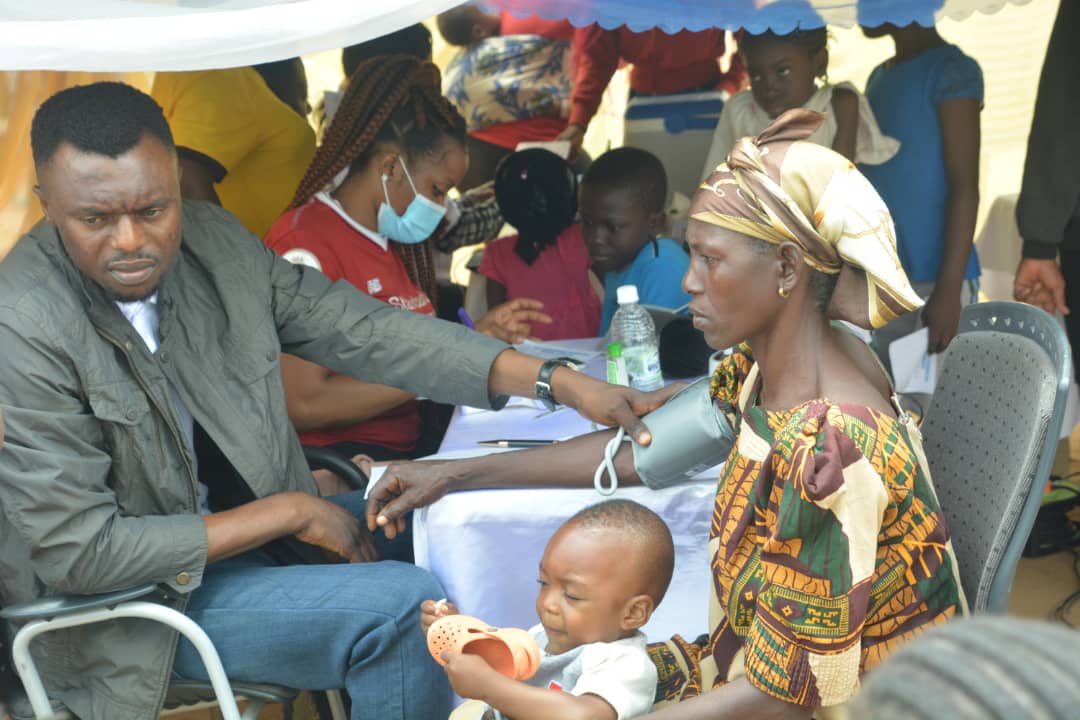
“As part of our outreach for World Malaria Day, we are distributing mosquito nets to pregnant women and children. Last Friday and Sunday, we also carried out outreaches in mosques and churches where nets were distributed,” he said.
Onyilo added that free malaria testing and treatment were also provided during the outreach programmes.
The NMEP official further revealed that large-scale mosquito net distribution campaigns are scheduled in several states this year under different funding arrangements.
He said under the Global Fund-supported programme, mass distribution campaigns will be conducted in Kwara, Osun and Adamawa states.
In addition, the World Bank-supported project will drive similar campaigns in the FCT, Borno and Abia states.
Poor Nigerians Turn To Herbs As Malaria Drug Prices Soar
At dusk in Mpape, Abuja, 36-year-old Aisha Bello boils neem leaves, bitter leaf and lemongrass.
Her seven-year-old son, Usman, lay feverish on a mat.
“Coartem is N5,000 now,” she says. “I didn’t have N500 last week. How will I find N5,000?”
Like many poor Nigerians, she has returned to her grandmother’s herbal remedies.
The price of Artemisinin-based Combination Therapy (ACT), the World Health Organisation’s first-line malaria treatment, has tripled in 12 months.
A survey of 30 pharmacies in Abuja, Lagos and Kano this week found that a full dose now costs between N4,800 and N5,200, up from N1,500 in April 2025.
The National Bureau of Statistics’ (NBS) March 2026 inflation report put pharmaceutical products at 41.2 per cent year-on-year.
“Eighty per cent of our raw materials are imported, and the naira keeps sliding,” said Prof. Cyril Usifoh, President of the Pharmaceutical Society of Nigeria (PSN).
For families on the N70,000 minimum wage (or N2,333 daily), the arithmetic is stark.
“Patients ask the price and walk away. Some buy two tablets instead of 24,” said Chinedu Okoro, a Mararaba-based pharmacist.
Mararaba and Nyanya are border towns on the Abuja–Nasarawa axis, with the former in Nasarawa State.
His records show ACT sales fell by 38 per cent between Q1 2025 and Q1 2026
Herbal Vendors See Increased Patronage
At Nyanya market, Mama Kemi sells malaria herbs for N300 a bag.
“Now I see mothers, drivers, even students,” she said.
A 2024 National Institute for Pharmaceutical Research and Development (NIPRD) study found that 62 per cent of FCT herbal samples contained plants with anti-plasmodial activity.
But the NIPRD Director-General, Dr Obi Adigwe, warned that “without standardisation, you risk under-dosing and resistance, or liver toxicity.”
Doctors See the Fallout
Dr Sadiq Raji said severe malaria admissions among children under five rose by 22 per cent between January and March 2026 compared to last year.
Health Ministry data shows only 19 per cent of Nigerians with malaria fever accessed ACTs within 24 hours in 2025, down from 27 per cent in 2022.
“A N5,000 drug becomes a N50,000 hospital bill — or a funeral,” Raji said, stressing the need for early treatment.
We’ve got the edge. Get real-time reports, breaking scoops, and exclusive angles delivered straight to your phone. Don’t settle for stale news. Join LEADERSHIP NEWS on WhatsApp for 24/7 updates →
Join Our WhatsApp Channel