
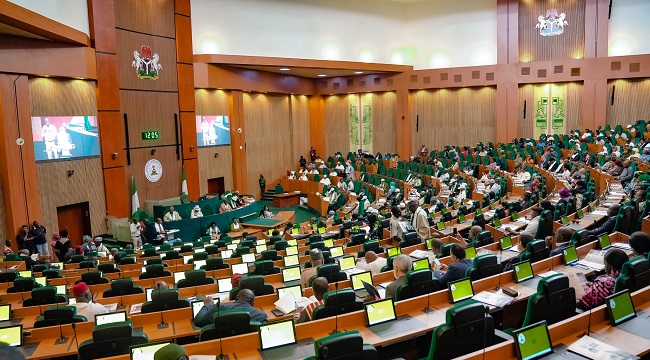
The House of Representatives has passed, through second reading, a bill for an Act to establish a 50-year national economic plan for Nigeria, along with measures to ensure compliance.
Sponsored by Hon. Amobi Godwin Ogah from Abia State, the bill seeks to create a legally binding, long-term economic framework that will guide national development across successive administrations.
By institutionalising continuity, coordination, and accountability, the proposed legislation is designed to reposition Nigeria’s economy for sustainable growth and global competitiveness.
Leading debate on the general principles of the bill, Ogah said Nigeria’s economy had been characterised by a succession of development plans, many of which were ambitious in conception but weak in implementation.
“From Vision 2010 to Vision 20:2020 and the Economic Recovery and Growth Plan (ERGP), the country has repeatedly demonstrated its capacity to plan, but not necessarily to sustain those plans.
“Frequent changes in government priorities, weak institutional frameworks, and the absence of legal enforceability have often led to policy reversals, abandoned projects, and inefficient use of public resources. These structural deficiencies have hindered long-term economic transformation, leaving the country vulnerable to external shocks, particularly fluctuations in global oil prices.
“The proposed 50-year national economic plan addresses these shortcomings by providing a stable and predictable economic direction over an extended period. One of its most significant contributions is the promotion of macroeconomic stability.
“A long-term plan enables the government to articulate clear fiscal and monetary priorities, thereby reducing uncertainty and volatility. Stability in economic policy is essential for maintaining investor confidence, managing inflation, and ensuring sustainable growth.
“By anchoring economic decisions within a long-term framework, Nigeria can better withstand external shocks and maintain steady progress.
“The absence of continuity in Nigeria’s economic policies has historically discouraged long-term investment, particularly in capital-intensive sectors such as infrastructure, manufacturing, and energy.
“A legally binding 50-year plan sends a strong signal of policy credibility and commitment, thereby reducing investment risk and attracting capital inflows.
“The bill also has profound implications for infrastructure development, which is a cornerstone of economic growth. Infrastructure projects such as highways, railways, power generation, and ports require long planning horizons and sustained investment,” he added.
We’ve got the edge. Get real-time reports, breaking scoops, and exclusive angles delivered straight to your phone. Don’t settle for stale news. Join LEADERSHIP NEWS on WhatsApp for 24/7 updates →
Join Our WhatsApp Channel