By Shuaib I. Shuaib
The US-Iran war has unsettled oil markets with the price of crude rising as high as $126 per barrel. The war has led to supply disruptions, the destruction of energy infrastructure across countries in the Gulf region including Qatar, Saudi Arabia, the United Arab Emirates, Oman, Kuwait and in Iran itself. While there appears to be no end in sight to the hostilities, particularly in the closure of the Strait of Hormuz, the shipping lanes where most of the regions oil passes through, the subsequent rise in oil prices maybe temporary.
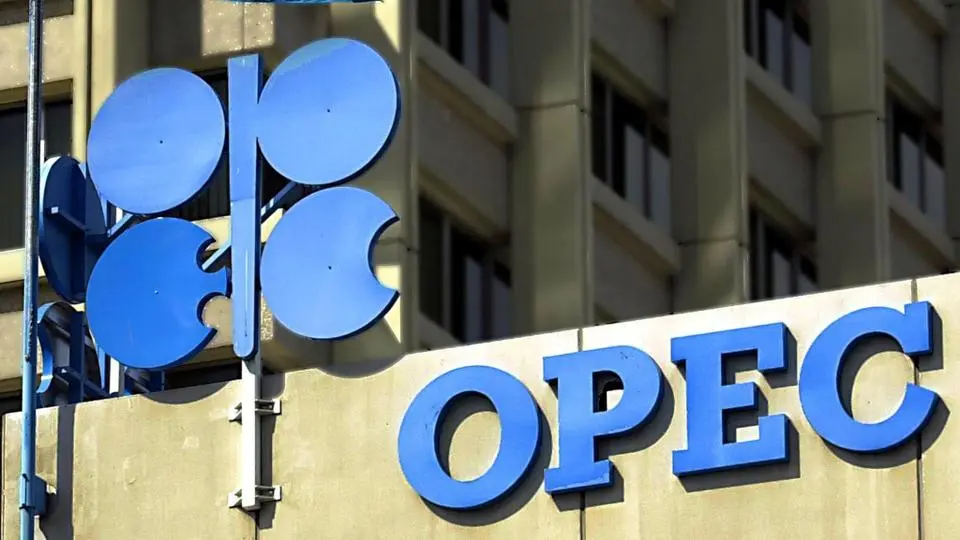
The long term consequences of the war have however began to take shape, and it is emerging in the potential unraveling of the Organization of Petroleum Exporting Countries that was established 66 years ago in Baghdad, Iraq and now led by Saudi Arabia; a country that produces 10 million bpd. OPEC assigns production quotas to member countries in order to stabilize the market and keep oil prices from falling too low or rising too high.
Membership of OPEC has been fluid over the last decades, with Angola been the last country to withdraw in January 2024. Indonesia has gone in and out of OPEC, so as Gabon, which along with Ecuador is now out. After a 2017 economic blockade and a breakdown in relations between Qatar and its Gulf neighbours, it also withdrew in 2019. The group produces just over 30 million bpd, 30 percent of the 105 million bpd global production. But it is the most recent withdrawal that could pose a threat to the long-term survival of OPEC and its strategic goals, the economies and security of member countries, which stood at 12 a few days ago but is now missing one. How that will effect Nigeria, that joined in 1971 and impact its economy cannot be underestimated. Nigeria will have to make choices about its relationship with other member states knowing that the political stability in all of Subsaharan Africa could be at stake. That is because the recent withdrawal isn’t simply about oil. It is laced with politics, a search for security and a quest for regional dominance.
Believing the organization no longer serves its long-term energy goals, economic and security aspirations, the United Arab Emirates, which joined in 1967, has in recent days withdrawn from the organizations. The UAE has strongly disagreed with how the Gulf states responded to the attacks on their countries by Iran, believing they were weak and showed a lack of resolve. But the decision to part ways with the Saudi led OPEC isn’t just a political rupture that is a fallout of the Iran war. It is something the Emiratis have been considering for years, according to regional observers and experts in the oil industry. It has invested $150 billion to increase production capacity but was restricted from the actual production increase by OPEC’s quota.
The UAE not only sees OPEC as hindering its production capacity, the country and Saudi Arabia have entirely different visions on the future oil, the fossil fuel industry and how to make the best of it while it last. Saudi Arabia has been very active in trying to limit climate policies and goals aimed at phasing out of fossil fuels. At the same time, while diversifying it’s economy, it wants to keep oil prices stable. The UAE, also diversifying it’s economy, would rather flood the market with oil before the fossil fuel era comes to an end, even at the risk of prices collapsing. The UAE’s OPEC production quota is 3.5 million barrels per day. With those restrictions gone, it plans to raise production to four million barrels in the short-term from the present 3.4 million barrels and subsequently to five millions barrels per day.
In every aspect, Nigeria’s policies align more with the Saudi position except the country has repeatedly failed to diversify its economy and remains totally dependent on crude oil sales. The dependence filters down all the way to all the 774 local governments, starting from the federal government and the states. Added to that, Nigeria’s wealthiest businessman, Aliko Dangote has placed his bet on oil as a viable industry for some time to come. He has built a $20 billion refinery and is about to expand it and make it the biggest in the world. He is also planning to replicate the feat in east Africa with support from the governments of Kenya, Democratic Republic of Congo, Uganda and South Sudan. But here is where things get a little complicated. The withdrawal of the UAE is partly fueled by a geopolitical rivalry with Saudi Arabia. The rivalry goes back several decades. But more than any time in the last 50 years, it is also very personal between the present leaders, Mohammed Bin Zayed of the Emirates and Saudi’s Mohammed Bin Salman. The two countries have taken opposing positions in the conflicts in Sudan, Somalia, Yemen and Libya. And analysts are already predicting that the Emirates could push other OPEC members, which Nigeria is one, to abandon the organization. The next in line could be Venezuela, which would mean another 3 million barrels out of OPEC control, cutting the organization’s share of the 105 million barrels per day share to less than 25 million. It has always been US policy that OPEC does not serve its interests.
Nigeria’s president, Bola Tinubu has desperately been courting the Emiratis hoping to benefit from financial investments. Apart from France where the president regularly visits for medical attention and the United Kingom where he goes to ‘rest’, there is no country he has visited as much as the UAE. The Saudis on the other hand see a future in doing business with Aliko Dangote.
Since President Tinubu’s infamous May 29, 2023 ‘subsidy is gone’ proclamation and the coming on stream of the Dangote Petrochemical and Oil Refinery, consumers in Nigeria have lost every kind of insulation from international oil prices. While Nigerian citizens are paying record pump prices for petroleum products, the Nigerian government has been smiling to the bank. The country’s foreign reserves has risen to about $50 billion in the last three years.
It is no longer spending its hard earned foreign currency on importing petroleum products thanks to the 650,000 bpd Dangote Refinery and is even using its reserves as leverage to borrow more money. But how much Nigeria is actually saving from domestic production, how much Dangote spends to produce every litre of Petroleum Motor Spirit, its parameters for determining the pump price and what its profit margins are, are all shrouded in cooperate and even regulatory secrecy.
After two or three years of bickering, and the Tinubu government wavering on supporting the Dangote Refinery with crude oil supply, both Dangote and the presidency finally seem to be aligning their positions on Nigeria’s energy needs. In a clear concession, President Tinubu just appointed a former Dangote Industry executive as the new head NMDPRA, the regulatory body that oversees the sector under which the refinery operates. Now comes the real test, whether Tinubu will abandon his ambitions courting the Emiratis or ride out the storm and stick with OPEC.
But the Nigerian government isn’t making similar investments like the UAE to increase production capacity. This could prove detrimental, even to Dangote who plans to expand his refinery to 1.3 million barrels per day. That is almost all of Nigeria’s 1.5 million bpd crude oil production, which NNPC prefers to export. There is no restriction from OPEC on producing for domestic refining, which should give the government leeway to sell a million barrels or more per day to Dangote and export another 1.5 million barrels. But because of low production capacity, it has to be one or the other. And should OPEC unravel, the consequences could be devastating for Nigeria whether it chooses to leave the organization after 55 years or stay to weather the storm. A collapse in oil prices will ensure that.
We’ve got the edge. Get real-time reports, breaking scoops, and exclusive angles delivered straight to your phone. Don’t settle for stale news. Join LEADERSHIP NEWS on WhatsApp for 24/7 updates →
Join Our WhatsApp Channel