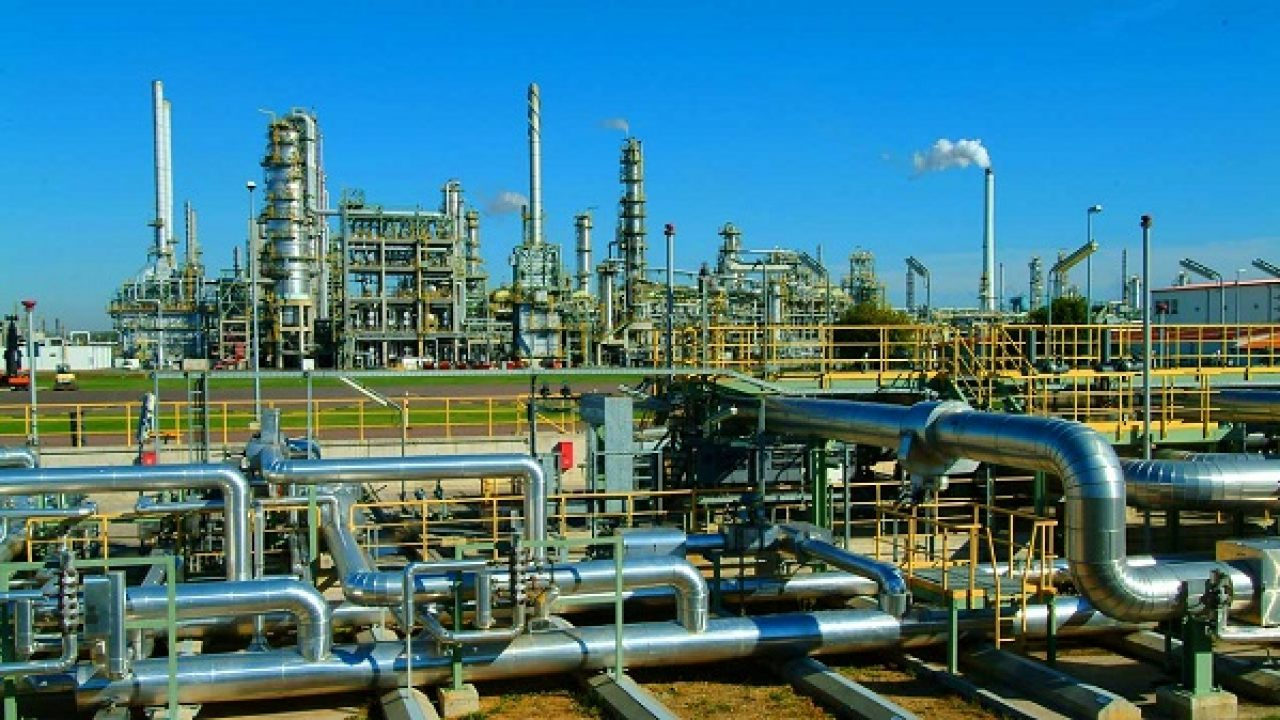
Major employers’ group, the Nigerian Employers’ Consultative Association (NECA), has called for the privatisation of the Port Harcourt and Warri refineries, citing over $25 billion in past Turnaround Maintenance (TAM) failures as justification for a shift to private-sector management.
NECA, in a position statement on Sunday, raised concerns that repeated government-led rehabilitation efforts in the past, which have gulped up to $25 billion, have yielded little result, leaving the facilities underutilised despite massive investments.
The director general and chief executive officer of the Nigeria Employers Consultative Association (NECA), Adewale-Smatt Oyerinde, said privatisation of refineries is the antidote amid frequent failed TAMs.
Recall that the NNPC Ltd. signed a new Memorandum of Understanding (MoU) with two Chinese firms, Sanjiang Chemical Company Limited and Xingcheng (Fuzhou) Industrial Park Operation and Management Co. Ltd., on April 30, 2026, in Jiaxing City, China, to support the completion, operation, restart, and possible expansion of the Port Harcourt and Warri refineries.
Oyerinde, on Sunday, based his warnings on the past spending on the same refineries, which have not produced tangible results, as reasons for his alarm. He demanded to know what moral justification the government has for entering into another MoU on the same projects.
NNPC described the agreement as a move toward a “Technical Equity Partnership,” which means the Chinese partners may contribute technical expertise, operational discipline, and investment capacity rather than serving only as contractors, adding that the arrangement is meant to help revive long-struggling refining assets, improve efficiency, and explore co-located petrochemical and gas-based industrial projects around the refinery complexes
Reacting to this, Oyerinde, noted that “$25 billion had been spent with zero value. Between 2010 and 2023, Nigeria expended over N11 trillion – approximately $25 billion- on refinery rehabilitation projects, maintenance, and turnaround programmes, yet the state-owned refineries remain significantly unreliable and non-functional.
“The gamble of over $1.5 billion on the Port-Harcourt refinery in March 2021 is still fresh in the minds of Nigerians. Despite purported claims of 90% readiness by 2026, the facility has not been recorded to produce sufficient barrels of refined product on a sustainable basis.
“Since the 1990s, Port Harcourt Refinery has endured multiple ‘rehabilitation cycles,’ 2000-2010, 2012-2015, 2016-2021, each involving billions expended with facilities that continued to deteriorate.”
Still expressing his concern, the DG said, “NECA viewed with grave concern the Memorandum of Understanding signed on May 4, 2026, between the Nigerian National Petroleum Company Limited (NNPC) and Chinese firms for the ‘restart, completion, and expansion’ of the Port Harcourt and Warri refineries.
Still angered by the recently signed MoU, Adewale-Smatt stressed, “while we note that the nation desperately needs functional refineries, we cannot ignore the decade-long pattern of billion-dollar rehabilitation contracts that have delivered zero sustained refining output. It will be unpatriotic to endorse another opaque deal while questions on past spending remain unanswered.”
Speaking further, the director-general noted that “it is on record and apt to say that the nation cannot afford another trail of wasteful spending. In the last few years, $25 billion had been spent with zero value. Between 2010 and 2023, Nigeria expended over N11 trillion – approximately $25 billion – on refinery rehabilitation projects, maintenance, and turnaround programmes, yet the state-owned refineries remain significantly unreliable and non-functional.
“The gamble of over $1.5 billion on the Port-Harcourt refinery in March 2021 is still fresh in the minds of Nigerians. Despite purported claims of 90% readiness by 2026, the facility has not been recorded to produce sufficient barrels of refined product on a sustainable basis. Since the 1990s, Port Harcourt Refinery has endured multiple “rehabilitation cycles,” 2000-2010, 2012-2015, 2016-2021, each involving billions expended with facilities that continued deteriorate.”
In the same vein, the DG, reiterating his disappointment over the MoU, said, “While the intention might be right, it is, however, important for the NNPC to provide Nigerians with sufficient informational explanation on the status of past spending and audits carried out on the refineries. What are the details of the “technical equity partnerships” of the MOU? With past efforts at TAM riddled with delays, cost overruns, and repeated shutdowns, what guarantees and safety nets are in place to ensure the past does not repeat itself at the expense of Nigeria and Nigerians? The 2021 revamp was reportedly intended to restore PHRC to 90% of its design capacity as quickly as possible, but it didn’t. How will this MOU guarantee Nigerian man-hours, procurement, and technology transfer beyond press statements?
“Nigerian businesses have paid the price for energy insecurity for over 30 years – high production costs, forex spent on fuel imports, and jobs lost. It will be unpatriotic to clap for another MOU, given that about $25 billion from past revamps produced almost no results. NNPC must earn public trust by operating more transparently in the face of public scrutiny.”
We’ve got the edge. Get real-time reports, breaking scoops, and exclusive angles delivered straight to your phone. Don’t settle for stale news. Join LEADERSHIP NEWS on WhatsApp for 24/7 updates →
Join Our WhatsApp Channel