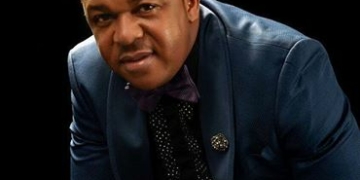
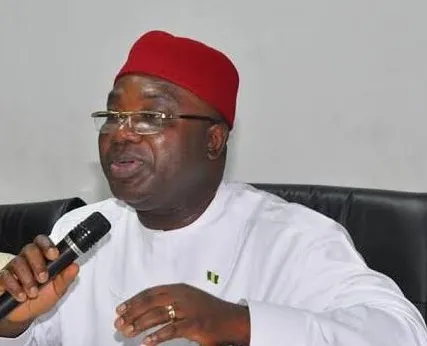
Dr Tony Okechukwu Ojukwu (SAN) is soft-spoken, meticulous, methodical and firm in public advocacy.
With firmness and steadfastness on his job, Ojukwu has become one of the most influential figures in Nigeria’s contemporary human rights landscape.
As the executive secretary of the National Human Rights Commission (NHRC), he has overseen a major transformation of the institution, moving it from a relatively low-profile government agency to a high-volume intervention system that responds to millions of rights-related complaints annually.
Born on May 31, 1963, in Mbaise, Imo State, Nigeria, Chief Ojukwu (OFR) hails from Onicha, Ezinihitte Mbaise, Imo State. He is an eminent legal practitioner, a seasoned public administrator and a globally respected human rights advocate who currently serves as the executive secretary and chief executive officer of NHRC, a position he has held since April 2018. He was elected the president of Network of National Human Rights Institutions in West Africa (NNHRI-WA) in July 2025 and a member of the Bureau of the Global Alliance of National Human Rights Institutions (GANHRI) in February 2026.
Records at NHRC showed that Ojukwu’s academic and professional background reflect a deep and sustained commitment to law, governance and human rights. He obtained his Bachelor of Laws (LL.B) degree from the University of Nigeria in 1985 and was called to the Nigerian Bar in 1986 after completing his professional training at the Nigerian Law School.
Ojukwu later earned a Master of Laws (LL.M) degree from the University of Lagos in 1988. His international exposure includes professional certifications from Public Administration International, London (2003) and the International Human Rights Training Programme in Canada (2007).
His early career was rooted in legal practice and public service, during which he worked across various justice-sector institutions. Before his appointment as executive secretary of the NHRC, Ojukwu built a reputation within legal and governance circles for his work on constitutional rights, police accountability and institutional reforms. He is described as disciplined, analytical and unusually steady in managing sensitive public issues.
Over time, he developed a distinct approach that blends legal advocacy with institutional diplomacy. Rather than positioning the NHRC as a purely confrontational watchdog, he has worked to expand collaboration with civil society organisations, security agencies, development partners and grassroots communities, while still maintaining a critical stance on rights violations.
That balance became particularly visible during the 2020 #EndSARS protests, when nationwide demonstrations against police brutality placed Nigeria’s security and justice systems under intense scrutiny. During that period, the NHRC under Ojukwu documented abuses, monitored allegations of excessive force and consistently demanded accountability and protection for victims. The commission’s visibility increased significantly as it became a central institutional voice in the national rights conversation.
Under his leadership, the NHRC has also expanded its focus beyond high-profile violations to include everyday injustices affecting ordinary Nigerians. These range from domestic violence and labour exploitation to unlawful detention, denial of wages, displacement, gender-based abuse and insecurity-driven violations.
One of the most notable shifts under Ojukwu has been the widening definition of human rights in Nigeria. Increasingly, rights are no longer viewed solely as political freedoms such as speech and assembly, but as broader issues tied to economic hardship, insecurity and social inequality.
This evolution is reflected in the scale of complaints the commission has handled in recent years. In 2025 alone, the NHRC reportedly received about 3.7 million complaints nationwide. In the first quarter of 2026, it recorded 659,617 complaints within just three months. In 2024, the commission handled over two million complaints, while tens of thousands of cases were investigated and resolved through mediation and legal interventions.
Analysts say the rising numbers reflect two realities at once: worsening socio-economic pressures and growing public trust in the commission’s accessibility. Through expanded state offices, digital reporting systems and outreach programmes, more Nigerians now turn to the NHRC as a first point of contact for redress.
For many Nigerians, the NHRC has become a last hope—particularly in cases where other institutions appear slow or inaccessible.
Ojukwu’s leadership has also been marked by increased attention to vulnerable groups, including women, children, internally displaced persons and communities affected by insurgency and communal violence. The NHRC has become more active in documenting abuses in conflict-affected regions and advocating for victims’ protection and rehabilitation.
He is widely regarded as an administrator who understands both the legal and operational demands of rights protection. His leadership style emphasises documentation, data-driven reporting and structured response mechanisms, alongside public advocacy.
We’ve got the edge. Get real-time reports, breaking scoops, and exclusive angles delivered straight to your phone. Don’t settle for stale news. Join LEADERSHIP NEWS on WhatsApp for 24/7 updates →
Join Our WhatsApp Channel