
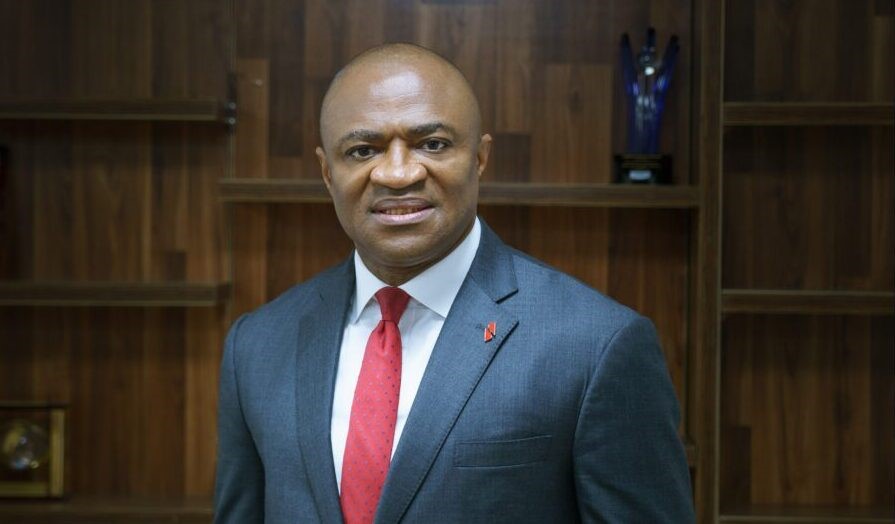
The chairman of the Body of Banks’ CEOs and Group Managing Director of United Bank for Africa, Oliver Alawuba, has said Nigerian banks are now better equipped to withstand economic shocks following the recent recapitalisation exercise in the banking industry.
Alawuba stated this at the investiture ceremony of the 24th President and Chairman of Council of the Chartered Institute of Bankers of Nigeria (CIBN), Dele Alabi.
He described the banking sector as significantly strengthened by the recent recapitalisation process.
“Dr Alabi assumes office at a defining moment for our industry following the successful recapitalisation exercise that has made Nigerian banks stronger and more resilient than ever before,” Alawuba said.
Despite the progress recorded, he warned that the banking sector still faces major challenges, including digital disruption, cyber-security threats, evolving regulatory demands, talent migration and rising consumer protection expectations.
According to him, the role of the CIBN has become more critical in promoting ethics, professionalism, innovation and capacity building across the financial sector.
Alawuba expressed confidence in Alabi’s leadership ability, saying the new CIBN president would consolidate ongoing reforms and position the institute as a strategic partner in the transformation of Nigeria’s financial system.
“We are handing over this respected institution to Dr Alabi and his team because we believe in their competence and leadership capacity,” he added.
He also assured that the Body of Banks’ CEOs would continue supporting the institute in strengthening professionalism and sustaining public confidence in the banking industry.
In his acceptance speech, Alabi unveiled a reform-driven agenda focused on ethics, innovation, skills development, accountability and financial inclusion amid rapid technological changes and macroeconomic pressures confronting the banking sector.
He noted that the financial services industry is being reshaped by digital disruption, changing customer expectations, tighter regulations and economic volatility, stressing that the institute must play a leading role in shaping the future of banking and finance in Nigeria.
“The banking and financial services landscape, both globally and within our country, is undergoing profound transformation,” Alabi said.
The new CIBN president disclosed that his administration would pursue a six-pillar agenda under the acronym “IMPACT”, representing Inclusion, Membership Economy, Professionalism and Ethical Conduct, Accountability and Enhanced Financial Performance, Competencies and Skills Development, as well as Technology, Automation and Innovation.
According to him, the initiative is designed to strengthen the institute’s relevance in Nigeria while improving its global standing as a professional banking body.
Speaking on the economy, Alabi said inflationary pressures and tight financing conditions were still constraining private sector growth despite the recent moderation in monetary policy.
“Inflation remains elevated, monetary policy is tight despite the modest reduction in the MPR by 50 basis points from 27 per cent to 26.5 per cent in February 2026, while stringent financing conditions continue to constrain private sector activity,” he stated.
He, however, noted that recent foreign exchange reforms had improved transparency and price discovery in the market.
On recapitalisation, Alabi said the long-term success of the exercise would depend on how effectively banks channel the additional capital into productive sectors of the economy.
“The ultimate success will be measured by the extent to which banks translate this enhanced capacity into increased lending to productive sectors, deeper financial inclusion and sustained economic transformation,” he said.
We’ve got the edge. Get real-time reports, breaking scoops, and exclusive angles delivered straight to your phone. Don’t settle for stale news. Join LEADERSHIP NEWS on WhatsApp for 24/7 updates →
Join Our WhatsApp Channel