
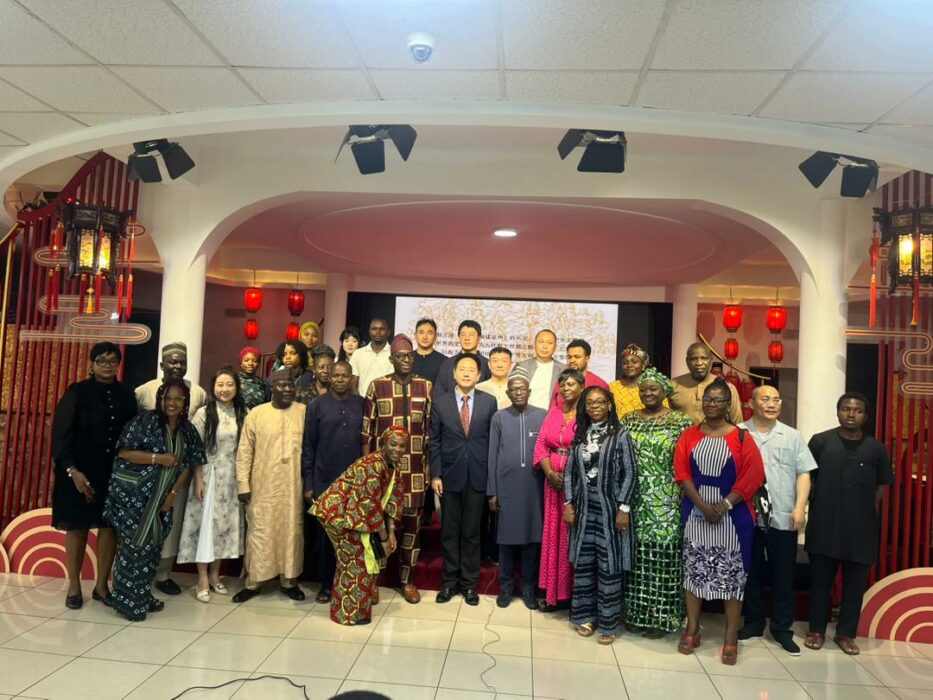
China and Nigeria have reaffirmed their commitment to strengthening cultural ties and people-to-people exchanges through a tea heritage and cultural diplomacy initiative held at the China Cultural Centre in Abuja.
The 2026 “Maritime Silk Road Impressions: Immersive Salon of Intangible Cultural Heritage from Ancient Zayton Port” interactive experience activity brought together diplomats, cultural stakeholders, government officials and artists from both countries to promote mutual understanding and bilateral cooperation through tea culture and intangible cultural heritage.
Speaking at the event, a representative of the Chinese Embassy in Nigeria described tea as a symbol of harmony, dialogue and mutual learning among civilisations.
According to the envoy, traditional Chinese tea processing techniques and related social practices were inscribed on UNESCO’s Representative List of the Intangible Cultural Heritage of Humanity in 2022, underscoring tea’s cultural significance in Chinese civilisation.
He explained that tea originated in China more than 5,000 years ago and spread globally through the Silk Road, becoming an important aspect of cultural and social interaction worldwide.
“Tea unites the world. It serves as a bridge for dialogue and mutual learning between civilisations,” he said.
The envoy noted that the event also marked the 55th anniversary of diplomatic relations between China and Nigeria, as well as the China-Africa Year of People-to-People Exchanges.
He said the salon featured traditional Chinese tea ceremonies, incense culture, ceramics exhibitions and Guqin musical performances aimed at deepening friendship and cultural understanding between both countries.
Referencing the ancient Chinese port city of Quanzhou, historically known as Zayton and recognised as a UNESCO-listed starting point of the Maritime Silk Road, the envoy said the spirit of peaceful cooperation, openness and mutual benefit continues to shape modern China-Nigeria relations.
He further highlighted China’s recent zero-tariff policy for 53 African countries with diplomatic ties to Beijing, noting that Nigerian agricultural exports such as sesame, cocoa, peanuts and cassava stand to benefit from improved access to the Chinese market.
Representatives of the Federal Ministry of Art, Culture, Tourism and the Creative Economy described tea culture as a tool for promoting unity, hospitality and cultural interaction.
They noted that Nigeria’s growing tea culture presents opportunities for agro-processing, tourism development and expansion within the creative economy.
The ministry also pledged continued support for cultural exchange initiatives, including tea festivals, cultural hubs and collaborative programmes aimed at strengthening Nigeria’s international cultural visibility.
We’ve got the edge. Get real-time reports, breaking scoops, and exclusive angles delivered straight to your phone. Don’t settle for stale news. Join LEADERSHIP NEWS on WhatsApp for 24/7 updates →
Join Our WhatsApp Channel