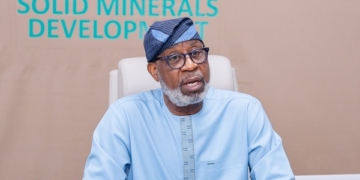
Vice President Kashim Shettima has reaffirmed Nigeria’s commitment to deepening bilateral relations with the Republic of Benin, describing both countries as partners bound by shared history, culture and economic interdependence.
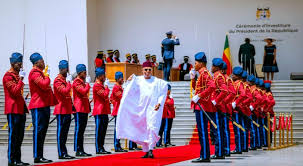
Shettima spoke on Sunday in Cotonou, the Benin Republic capital, where he represented President Bola Tinubu at the inauguration of President Romuald Wadagni at the Presidential Palace.
He said the Tinubu administration views the Nigeria–Benin relationship as central to regional integration, democratic stability and economic growth within West Africa.
“Our presence here in Cotonou underlines President Tinubu’s unwavering, deep-seated commitment to strengthening ties with our neighbours,” he said.
The Vice President said both countries share deep-rooted cultural and historical bonds that transcend modern borders, noting that communities on both sides of the boundary remain closely connected.
“Our border with the Benin Republic stretches across nearly 600 kilometres, spanning six Nigerian states… Our cultural and historical ties run deep—we intermarry, and our communities overlap,” he said.
“There are Yoruba people on this side of the border just as there are in Nigeria. Benin has a Borgu Province, while we have a Borgu Local Government Area in Niger State. We are essentially one people tied to a common destiny.”
He stressed the need for stronger collaboration in promoting democracy, peace and prosperity across the ECOWAS sub-region.
“Because of this, we must show solidarity, empathy and active support toward strengthening democracy in West Africa,” he added.
Shettima disclosed that trade between both countries currently stands at about $2 billion annually, with an estimated five million Nigerians residing in Benin Republic out of its 15 million population.
He noted that Nigeria and Benin have also strengthened cooperation in border security, trade facilitation, grassroots governance and infrastructure development under broader ECOWAS integration frameworks.
According to him, both countries formalised local-level cooperation through a Memorandum of Understanding last year, enabling border communities and local governments to collaborate directly on security and socio-economic development.
The arrangement covers border areas such as Seme, Igbokofi and Ilara, and has helped improve commercial activity, agriculture, infrastructure development and local security coordination.
Shettima also referenced ongoing regional frameworks under the ECOWAS Trade Liberalisation Scheme and the Common External Tariff, which aim to deepen economic integration and improve cross-border trade conditions.
“As ECOWAS member states, both countries continue to uphold the protocol on free movement of persons, allowing citizens to stay within each other’s territories for up to 90 days without visa requirements,” he said.
We’ve got the edge. Get real-time reports, breaking scoops, and exclusive angles delivered straight to your phone. Don’t settle for stale news. Join LEADERSHIP NEWS on WhatsApp for 24/7 updates →
Join Our WhatsApp Channel