
The Centre for the Promotion of Private Enterprise (CPPE) has warned that Nigeria’s sluggish manufacturing output threatens broader economic stability and growth prospects.
The Centre stated this in its latest policy brief despite the country recording improved GDP growth in the first quarter (Q1) of 2026.
The report follows the release of new data by the National Bureau of Statistics showing that Nigeria’s real Gross Domestic Product (GDP) grew by 3.89 per cent year-on-year in Q1 2026, compared to 3.13 per cent recorded in the corresponding period of 2025.
The director of CPPE, Dr Muda Yusuf, said that the manufacturing sector recorded a modest growth of 3.29 per cent, up from 1.13 per cent in Q4 2025, supported largely by petroleum refining, food and beverages, cement, chemicals and pharmaceuticals.
He added that, nonetheless, manufacturing contribution to GDP remains below 10 per cent, highlighting the continuing structural constraints confronting the industrial sector, saying that “high energy costs, elevated interest rates, weak infrastructure, logistics bottlenecks and policy uncertainties continue to undermine industrial productivity and competitiveness.”
He disclosed that the economy cannot achieve durable structural transformation without a stronger manufacturing base. Industrialisation remains the most sustainable pathway to large-scale job creation, export competitiveness and inclusive growth.
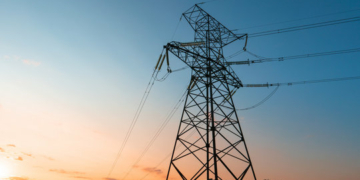
He noted that “the most troubling aspect of the report is the sharp contraction of the electricity/gas sector by 15.30 per cent, making it the weakest-performing sector in the quarter and the steepest contraction recorded by the sector in recent years.
“This underscores the deepening fragility of Nigeria’s power sector and raises serious concerns about the sustainability of economic growth, industrial productivity and business competitiveness.”
According to Yusuf, this development is concerning because electricity is not merely another economic sector; it is the foundation upon which productivity, industrialization, competitiveness and inclusive growth depend.
A contraction of this magnitude signals persistent structural weaknesses across generation, transmission and distribution, as well as continuing liquidity and governance challenges within the power sector.
“The implications for businesses are severe. At a time when firms are already burdened by high interest rates, logistics costs and weak consumer purchasing power, deteriorating electricity supply further escalates production costs and weakens competitiveness.
“Heavy dependence on diesel and petrol-powered self-generation continues to erode profitability across the manufacturing, SME, hospitality, agro-processing and digital sectors.”
He emphasized that “sustainable economic transformation cannot be built on fragile energy infrastructure. Without reliable, affordable and stable electricity, gains recorded in other sectors may prove difficult to sustain.
“This underscores the urgent need for accelerated reforms across the electricity value chain, including stronger investment in transmission infrastructure, improved market liquidity, accelerated metering, reduction in technical and commercial losses, and governance reforms that can restore investor confidence in the sector.”
Yusuf pointed out that the Q1 2026 GDP report reflects an economy supported by resilient services, digital activities, trade, construction and expanding domestic refining capacity.
He however said the report also exposes structural vulnerabilities, especially in power supply, industrial productivity and export competitiveness.
“The next phase of economic reform should therefore focus more deliberately on productivity enhancement, industrialization, power sector reforms, export competitiveness and inclusive growth.
These remain the critical foundations for sustainable economic transformation and improved welfare outcomes for Nigerians,” he noted.
We’ve got the edge. Get real-time reports, breaking scoops, and exclusive angles delivered straight to your phone. Don’t settle for stale news. Join LEADERSHIP NEWS on WhatsApp for 24/7 updates →
Join Our WhatsApp Channel