Nigeria’s capital market has tripled its Assets Under Management (AUM) to N10 trillion, from N3.2 trillion over the past two years.
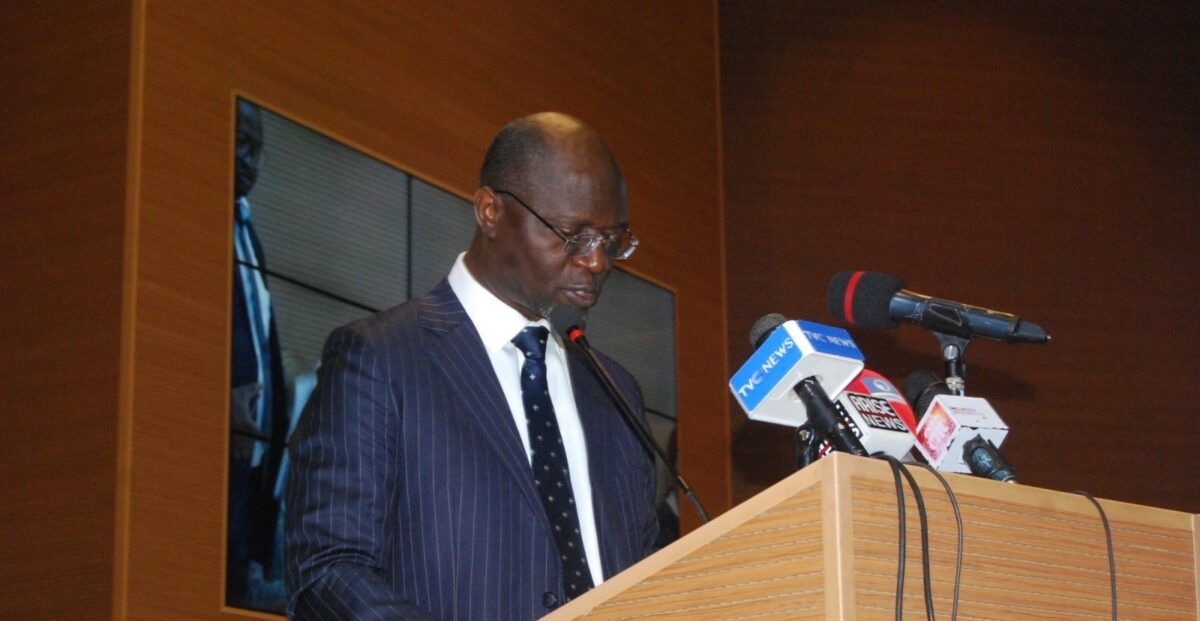
This significant achievement was highlighted by the director-general of the Securities and Exchange Commission (SEC), Dr Emomotimi Agama during the Closing Gong Ceremony celebrating the transition to a T+1 settlement cycle at the Nigerian Exchange (NGX) in Lagos.
Agama attributed this growth to heightened investor confidence and the positive outcomes of ongoing reforms within the Nigerian capital market.
He pointed to several recent milestones that underscore this progress, including a remarkable rise in market capitalisation.
“The Nigerian capital market has achieved historic milestones. In just two years, we have seen AUM grow from N3.2 trillion to N10 trillion. Notably, in February 2026, market capitalisation surged by N17.6 trillion, marking the highest single-month gain in our history,” he stated.
“In April 2026, both domestic and foreign portfolio investments on the Nigerian Exchange rose to N1.803 trillion, reflecting a 3.35 percent month-on-month increase and an impressive 274.05 per cent growth from N482 billion in April 2025.
Over the first four months of 2026, total market transactions reached N5.952 trillion, more than double the N2.714 trillion recorded in 2025,” he added.
Agama characterised these figures as unprecedented, showcasing the strengthening of Nigeria’s capital market and its increasingly significant contribution to the country’s Gross Domestic Product (GDP), which rose to 33 per cent in 2025.
He noted a substantial 125 percent rise in market capitalisation, climbing from approximately N55 trillion in April 2024.
While celebrating these achievements, Agama also recognised the potential for further growth.
He highlighted the increase in foreign participation in Nigerian equities, which rose from 9.9 percent in 2023 to 22.2 percent in 2025, signifying a meaningful recovery for the market.
However, he noted that there is still ample opportunity to close the gap, and the T+1 settlement cycle is a crucial tool to help achieve this objective.
Agama expressed confidence that the shift to a T+1 settlement cycle would enhance efficiency, improve liquidity, and elevate Nigeria’s standing as a competitive destination for global investment.
He emphasised that this transition not only represents a milestone for the market but also introduces new responsibilities for market operators.
He indicated that the shorter settlement cycle would place greater demands on smaller market participants to modernise their operations and enhance back-office processes.
The SEC director-general also said plans to launch the Nigerian Capital Market Master Plan 2.0 between June and July, aiming to further drive progress and innovation in the sector.
We’ve got the edge. Get real-time reports, breaking scoops, and exclusive angles delivered straight to your phone. Don’t settle for stale news. Join LEADERSHIP NEWS on WhatsApp for 24/7 updates →
Join Our WhatsApp Channel