
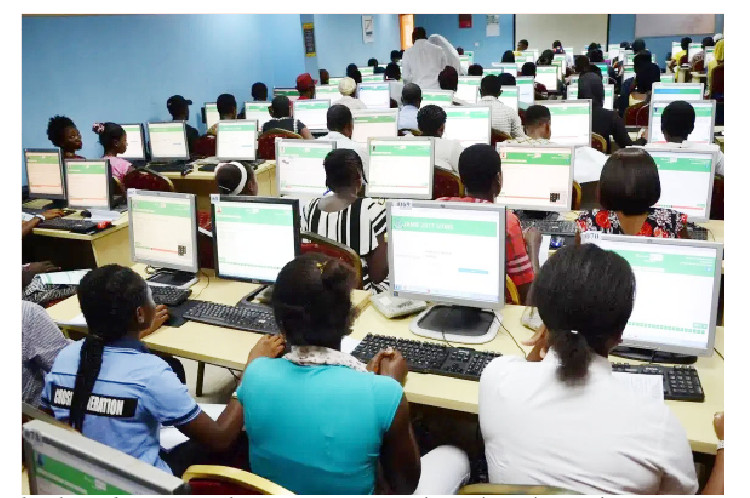
As more than 2.2 million candidates across Nigeria await admission into universities, polytechnics and colleges of education, concerns are growing over the activities of admission scammers who are exploiting the hopes, anxiety and desperation of young people seeking higher education.
Every admission season, social media platforms become flooded with unofficial announcements, fake screening forms, fraudulent admission offers and groups claiming to provide direct access to university officials.
For many candidates and their parents, distinguishing between genuine information and carefully designed scams has become increasingly difficult.
The problem has become so widespread that several tertiary institutions have begun issuing warnings to prospective students and members of the public.
Recently, the University of Abuja cautioned candidates against fraudulent admission-related information being circulated by unauthorised individuals, websites and social media platforms regarding its 2026/2027 admission exercise.
The institution stated that it had not released any official information or advertisement concerning admissions and advised the public to rely only on its recognised communication channels.
The warning shows a broader challenge confronting tertiary institutions across the country as fraudsters continue to exploit the annual admission process.
LEADERSHIP findings show that one of the most common tactics used by scammers is the creation of unofficial social media groups bearing the names of popular universities.
These groups often appear genuine, displaying university logos, photographs of campus facilities and admission-related content copied from official platforms.
Once candidates join such groups, they are often directed to WhatsApp communities where administrators claim to be admission officers, university staff or individuals with special connections to admission committees.
Within these groups, candidates are given promises of assistance ranging from admission upgrades and score adjustments to guaranteed placement in highly competitive courses.
Many unsuspecting students are persuaded to pay various fees supposedly meant for admission processing, verification, slot reservation or document clearance. In most cases, however, the promised admission never materialises.
With millions of candidates sitting the Unified Tertiary Matriculation Examination (UTME) every year and limited spaces available in tertiary institutions, many applicants become vulnerable to individuals who claim they can influence the process.
The situation is particularly worrying because institutions have already commenced preliminary activities for the 2026/2027 admission cycle. Across the country, several universities have begun announcing screening exercises and registration procedures.
For instance, Ambrose Alli University, Ekpoma, has released its screening form, while the University of Calabar has opened registration for qualified candidates seeking admission through its Post-UTME and Direct Entry screening exercise.
Lagos State University has also announced its screening process for prospective students.
While these are legitimate admission activities, they often create opportunities for fraudsters to circulate fake versions of application forms and misleading information designed to confuse candidates.
A false advertisement shared on social media can quickly reach thousands of students before university authorities become aware of it.
Some fraudulent operators have become highly sophisticated. They create websites that closely resemble official university portals, complete with admission dashboards, registration links and payment interfaces where candidates are sometimes instructed to pay screening or acceptance fees into personal bank accounts disguised as institutional accounts.
Commenting on the issue, a Cybersecurity experts, Tina Gambo warned that the consequences of the fraudsters activities goes beyond financial losses.
She said Victims may also become exposed to identity theft and other forms of online fraud, stressing the need for parents and guardians to verify information through official university websites before taking any action.
“Apart from the immediate financial damage, these schemes place students at serious risk of identity theft and wider online exploitation, as cybercriminals increasingly target personal data linked to admission processes.”
Moreso, a statement issued by the management of the University of Abuja also emphasised that no legitimate university grants admission through unofficial WhatsApp groups, private social media accounts or third-party agents demanding payments.
Findings by LEADERSHIP show that the admission process remains transparent and follows a clearly defined procedure.
Typically, the Joint Admissions and Matriculation Board (JAMB) releases UTME results after examinations. Thereafter, JAMB and tertiary institutions agree on admission guidelines and benchmarks.
Universities then announce their Post-UTME or screening exercises, after which candidates register and participate in the process.
Meanwhile, institutions subsequently upload and process candidates through the JAMB Central Admissions Processing System (CAPS), while admission offers are communicated through official channels.
For the 2026 admission cycle, JAMB has already conducted its policy meeting and approved admission benchmarks, paving the way for institutions to continue their admission activities.
The regulatory body advised candidates to verify every announcement through official university websites and recognised communication platforms before making any payments or submitting personal information.
We’ve got the edge. Get real-time reports, breaking scoops, and exclusive angles delivered straight to your phone. Don’t settle for stale news. Join LEADERSHIP NEWS on WhatsApp for 24/7 updates →
Join Our WhatsApp Channel