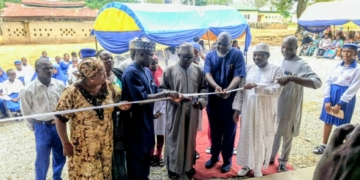
Bauchi State chapter of the Nigeria Association of Women Journalists (NAWOJ) has advocated hands-on training in the production of reusable sanitary pads as a strategy to improve menstrual hygiene management among adolescent girls.
Speaking at a training session held yesterday in Liman Katagum community of Bauchi, targeted adolescent girls, the chairperson of NAWOJ in the state, Hajiya Rashida Yusuf, said the initiative was designed to enhance awareness and knowledge of menstrual hygiene while equipping participants with practical skills for producing reusable sanitary pads.
According to her, the training and advocacy programme was organised by the Bauchi State government in partnership with NAWOJ, with support from the United Nations Children’s Fund (UNICEF).
Rashida described menstrual hygiene as a critical public health issue that requires continuous attention and community-based interventions.
She stressed the importance of extending awareness campaigns beyond local government headquarters to ensure that girls in rural and hard-to-reach communities are not left behind.
“We are here to promote menstrual hygiene and advocate for greater attention to menstrual health and hygiene.
“We believe this hands-on training will enable girls to become better informed and more confident in managing their menstrual health.
“Participants should also share the knowledge gained with their peers, family members, and other members of the community.
“If they master the skills of producing reusable sanitary pads, it can also become a source of income and economic empowerment,” she said.
Also speaking, a health worker, Mrs Jummai Haruna, encouraged girls to openly discuss menstruation with their parents and seek accurate information to make informed decisions about their reproductive health.
She explained that personal hygiene and proper menstrual management are essential for ensuring safe and healthy menstrual periods.
Haruna educated participants on the signs and symptoms associated with menstruation, menstrual care practices, hygiene measures, and ways of addressing myths and misconceptions surrounding menstrual health.
“As girls, we need to understand the symptoms, signs, hygiene practices, myths, and misconceptions related to menstruation and menstrual health,” she said.
Yusuf commended the Bauchi State Government for establishing adolescent-friendly corners aimed at promoting menstrual hygiene and addressing other reproductive health concerns among young people.
Officials of the Bauchi State Primary Healthcare Development Board and the Rural Water Supply and Sanitation Agency (RUWASA) noted that the programme would encourage healthy lifestyles and improve menstrual health outcomes among adolescent girls.
The training featured practical demonstrations on the production and use of reusable sanitary pads as part of efforts to improve menstrual dignity and expand access to affordable menstrual hygiene products.
In his remarks, the community leader of Liman Katagum, Alhaji Yakubu Abubakar, expressed appreciation to the organisers for bringing the programme to the community.
He said the initiative had positively impacted various aspects of girls’ development and wellbeing, adding that improved menstrual hygiene would contribute to better health outcomes.
Abubakar noted that the skills acquired during the training could serve as a source of livelihood and help reduce poverty among girls and women, particularly in rural communities.
“We have many remote communities around us, and this initiative is a source of empowerment.
“The skills acquired can provide support for girls and women, create income-generating opportunities, and help reduce poverty in our communities and villages,” he said.
We’ve got the edge. Get real-time reports, breaking scoops, and exclusive angles delivered straight to your phone. Don’t settle for stale news. Join LEADERSHIP NEWS on WhatsApp for 24/7 updates →
Join Our WhatsApp Channel