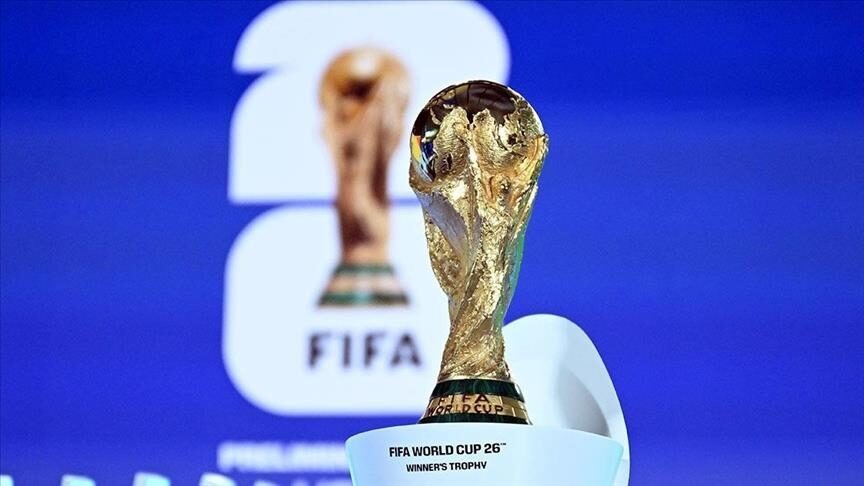
The 2026 FIFA World Cup, expanded to 48 nations and to be staged across the United States, Canada and Mexico, will not only be the largest World Cup in history but also the most inclusive for Africa. As anticipation builds towards the Mundial, SALIFU USMAN examines the prospects, strengths and ambitions of the continent’s 10 flagbearers as they seek to make a lasting impact and potentially challenge for football’s ultimate prize.
The road to the FIFA World Cup 2026 has ushered in a landmark moment for African football. For the first time in the history of the tournament, the continent will be represented by 10 nations on football’s grandest stage, a development that reflects both FIFA’s expansion of the competition and Africa’s growing influence in the global game.
The final piece of the puzzle fell into place on 30 March when the Democratic Republic of Congo edged Jamaica 1-0 after extra time in the intercontinental play-offs, securing the continent’s tenth and final slot. The Leopards joined Senegal, Morocco, Egypt, Ghana, Algeria, Tunisia, Côte d’Ivoire, Cape Verde and South Africa in what will be Africa’s largest-ever delegation to a World Cup.
It is a moment of celebration, validation and opportunity. Yet beyond the symbolism lies a more pressing question: can Africa’s record representation translate into its greatest World Cup performance?
With the tournament set to be staged across the United States, Canada and Mexico, expectations are rising that at least one African nation could once again challenge the traditional powers of Europe and South America.
A New Chapter for African Football
The expansion of the FIFA World Cup from 32 to 48 teams has transformed the qualification landscape. Africa, which previously had five guaranteed places, now enjoys nine automatic slots plus one intercontinental play-off berth.
Critics initially argued that increased numbers might dilute quality. However, many African football stakeholders have viewed the decision as long-overdue recognition of the continent’s enormous talent pool and growing competitiveness.
Over the past two decades, African football has evolved significantly. Improved youth development programmes, greater tactical sophistication, better coaching structures and increased exposure of players in elite European leagues have strengthened national teams across the continent.
The watershed moment arrived at the 2022 FIFA World Cup in Qatar when Morocco stunned the football world by becoming the first African and Arab nation to reach the semi-finals. The Atlas Lions defeated Belgium, Spain and Portugal before eventually finishing fourth.
That historic achievement altered perceptions. No longer are African teams merely participants; they are increasingly viewed as genuine contenders capable of upsetting football’s established order.
Morocco: Africa’s Leading Hope
If there is one African nation carrying the weight of continental expectations into 2026, it is Morocco.
The Atlas Lions enter the tournament as Africa’s highest-ranked team and one of the most respected sides in world football. Their remarkable run in Qatar was no accident. It was built on tactical discipline, defensive solidity and a squad packed with players competing at the highest level.
Led by influential figures such as Achraf Hakimi, Sofyan Amrabat and Yassine Bounou, Morocco possess experience, confidence and belief.
The challenge for the North Africans will be proving that Qatar was not a one-off achievement. Should they maintain their current trajectory, another deep run into the knockout stages appears entirely realistic.
Senegal: Africa’s Established Powerhouse
Few African teams have displayed greater consistency in recent years than Senegal.
The Teranga Lions remain one of the continent’s strongest footballing nations, blending physicality, technical quality and tournament experience. Their triumph at the 2021 and 2025 Africa Cup of Nations confirmed their status among Africa’s elite.
Even with some members of their golden generation entering the latter stages of their careers, Senegal continue to produce exceptional talent. The leadership of Kalidou Koulibaly and the attacking threat of Sadio Mané could prove decisive.
Having reached the Round of 16 in both 2002 and 2022, Senegal will be targeting a quarter-final berth or better. Few teams would relish facing them in a knockout match.
Egypt: Can Salah Deliver World Cup Glory?
For Egypt, qualification offers another opportunity to maximise the talents of one of Africa’s greatest footballers.
Much attention will inevitably focus on Mohamed Salah, whose influence extends far beyond Egyptian football. While Salah has conquered English and European football at club level, World Cup success has remained elusive.
The Pharaohs possess a proud football history but have struggled to make a significant impact at the World Cup. Their challenge will be ensuring they are not overly dependent on their superstar captain.
If Egypt can build a balanced and competitive squad around Salah, they have the potential to emerge as one of the tournament’s surprise packages.
Côte d’Ivoire: Champions with Momentum
Still basking in euphoria of their remarkable triumph at the 2023 Africa Cup of Nations, Côte d’Ivoire arrive at the World Cup with renewed confidence.
The Elephants demonstrated resilience and character throughout their AFCON-winning campaign, overcoming adversity to lift the trophy on home soil.
Their squad combines youthful energy with valuable experience, making them one of Africa’s most balanced sides. Having previously reached three World Cups during the era of Didier Drogba and Yaya Touré, the current generation will seek to create its own legacy.
A place in the knockout stages appears a realistic objective, though they possess enough quality to dream even bigger.
Algeria: Seeking Redemption
The 2022 World Cup remains a painful memory for Algeria. The Desert Foxes suffered a heartbreaking qualifying defeat to Cameroon, missing out on Qatar in dramatic fashion. Their return to the global stage therefore carries an added sense of purpose.
With technically gifted players and a passionate football culture, Algeria remain one of Africa’s most dangerous sides. Their blend of European-based talent and tactical organisation makes them difficult opponents for any nation.
The challenge will be converting potential into consistency. If they achieve that balance, Algeria could become one of the tournament’s dark horses.
Ghana: Reviving a Proud Tradition
No African nation came closer to reaching a World Cup semi-final before Morocco than Ghana.
The Black Stars’ heartbreaking quarter-final exit in 2010 remains one of the most iconic moments in African football history. Sixteen years later, they return determined to restore their status among the continent’s elite.
Ghana’s recent performances have been inconsistent, but the country continues to produce talented footballers competing in top European leagues.
The World Cup offers an opportunity to reconnect with past glories while establishing a new identity for the next generation.
Tunisia and South Africa: Experienced Competitors
Tunisia have become one of Africa’s most reliable qualifiers, consistently reaching major tournaments through organisation, discipline and tactical intelligence.
While they may not possess the star power of some rivals, the Carthage Eagles are rarely easy opponents. Their ability to frustrate stronger teams could prove invaluable in the group stage.
South Africa, meanwhile, return to the World Cup after years in the wilderness. Backed by a passionate football culture and growing domestic league structures, Bafana Bafana have steadily rebuilt their competitiveness.
The 2026 tournament presents an opportunity to announce their return to the international spotlight.
Cape Verde: The Fairytale Story
Among Africa’s representatives, none carry a more romantic narrative than Cape Verde. The island nation has enjoyed a remarkable rise over the past decade, transforming itself from a footballing outsider into a respected continental competitor.
Qualification for the World Cup would represent one of the greatest achievements in African football history. While expectations may be modest, Cape Verde’s fearless style and strong team spirit could make them one of the tournament’s most captivating stories.
Every World Cup needs a surprise package. Cape Verde may be perfectly positioned to fill that role.
DR Congo: Back After Half a Century
The qualification of DR Congo is arguably the most emotional story of Africa’s campaign.
The Leopards will return to the World Cup for the first time since 1974, ending a wait of more than five decades. Their dramatic victory over Jamaica in the intercontinental play-off symbolised the determination that has characterised their journey.
DR Congo possess a rich football heritage and a vast pool of talent scattered across Europe’s leading leagues. Their challenge will be translating individual quality into collective success.
The excitement surrounding their return is immense, and they could prove one of the tournament’s most unpredictable teams.
The Absence of Giants
While Africa celebrates a record number of qualifiers, the continent’s representation will be missing some familiar faces.
Nigeria’s Super Eagles and Cameroon’s Indomitable Lions failed to secure qualification, depriving the tournament of two of Africa’s most successful football nations.
Nigeria’s absence is particularly striking given the wealth of talent available to the Super Eagles. Cameroon, meanwhile, have traditionally been among Africa’s strongest World Cup performers.
Their failure serves as a reminder that African football has become increasingly competitive, with no nation guaranteed qualification.
Can Africa Finally Reach the Final?
The ultimate question remains whether an African nation can break another barrier in 2026. Morocco’s semi-final appearance in Qatar shattered one long-standing ceiling. The next challenge is even greater: reaching the final and potentially winning the World Cup.
Such ambitions may once have seemed unrealistic. Today, they are no longer fantasy. Several African teams possess players competing for Europe’s biggest clubs. Coaching standards continue to improve. Tactical approaches have evolved. Confidence has never been higher.
The 2026 FIFA World Cup will be the largest tournament ever staged. For Africa, however, it represents something even more meaningful. It is recognition of decades of growth, investment and progress. It is proof that African football is no longer knocking on the door of the global elite—it is increasingly becoming part of it.
As the countdown to North America continues, Africa’s Magnificent 10 will carry the hopes of an entire continent. Some will aim merely to compete. Others will dream of reaching the knockout rounds.
After Morocco rewrote the script in Qatar, the idea of an African nation lifting the World Cup trophy no longer feels impossible. In 2026, with a record 10 teams in the field, Africa will arrive not simply to participate, but to challenge, inspire and perhaps redefine the future of world football.
We’ve got the edge. Get real-time reports, breaking scoops, and exclusive angles delivered straight to your phone. Don’t settle for stale news. Join LEADERSHIP NEWS on WhatsApp for 24/7 updates →
Join Our WhatsApp Channel