
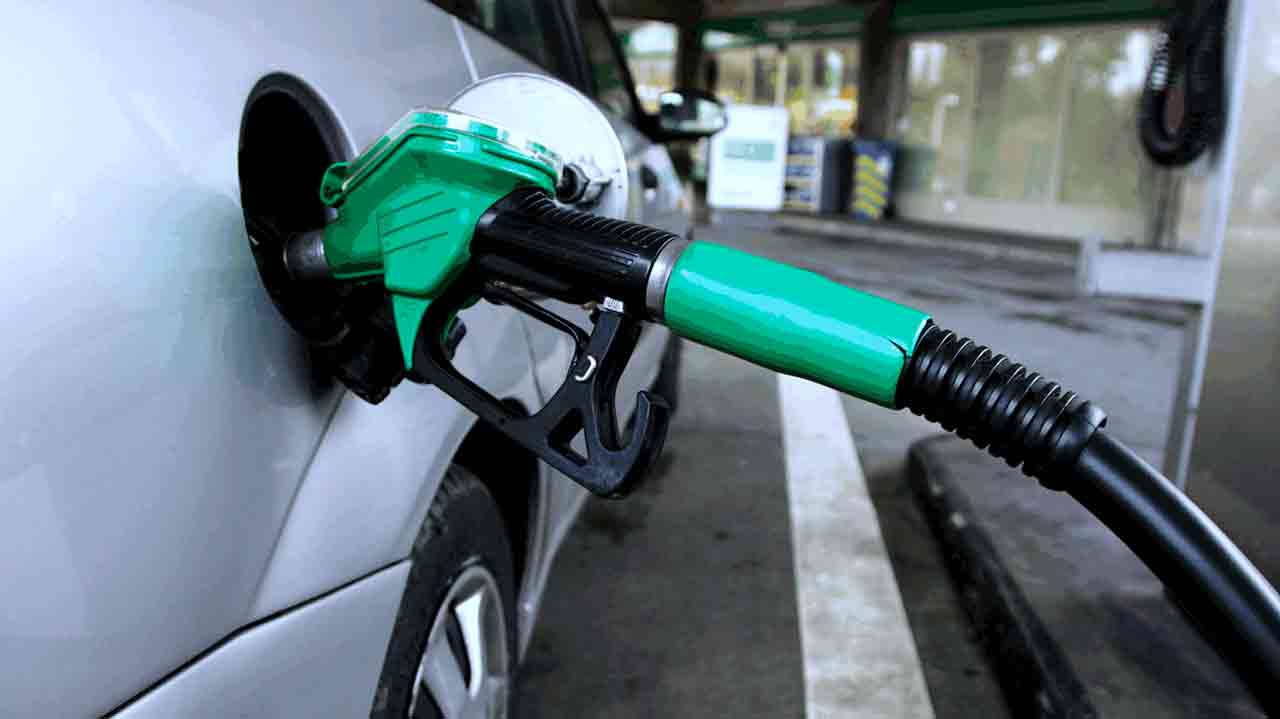
Nigeria’s petrol import bill declined to N87.40 billion in Q1 2026 from N3.54 trillion in the fourth quarter of 2025 representing a slump of about 97.5 per cent, or roughly N3.45 trillion less spent on petrol compared with the previous quarter, data from the National Bureau of Statistics (NBS) has shown.
However, on a year-on-year basis, petrol import spending dropped from N2.27 trillion in Q1 2025 to N87.40 billion in Q1 2026 — a drop of about 96.2 per cent, equivalent to roughly N2.18 trillion.
The data also showed that
Petrol’s share of total imports shrank to 0.64 per cent in Q1 2026 from 13.64 per cent in Q1 2025, removing it from the list of the top 10 imported products for the quarter.
Year-on-year, total imports fell to N13.62 trillion in Q1 2026 from N16.64 trillion in Q1 2025, an 18.2 per cent decline. Within fuels and lubricants, total values dropped from N6.10 trillion in Q1 2025 to N2.51 trillion in Q1 2026 (down about 58.8 per cent).
Within the fuels and lubricants group, processed fuels (which include petrol) fell sharply: processed fuels and lubricants were valued at N605.53 billion in Q1 2026, down from higher levels in Q4 2025, while total fuels and lubricants for the quarter stood at N2.51 trillion.
The sharp decline reflects a major shift toward locally refined fuel, led by increased output from the Dangote refinery.
The data showed that Motor spirit (petrol) — previously one of Nigeria’s largest import items — accounted for just 0.64 per cent of total imports in Q1 2026, down from 13.64 per cent in Q1 2025 and 20.52 per cent in Q4 2025.
According to the data, petrol dropped out of the top 10 imported products for the quarter, due to the high rate of decline.
But the contraction in petrol imports far outpaced the broader decline in the import bill, signalling a structural change in Nigeria’s import composition.
Within the fuels and lubricants category, total imports fell to N2.51 trillion in Q1 2026, down 58.8 per cent from N6.10 trillion a year earlier.
Processed fuels and lubricants — the category that includes petrol — contracted most sharply to N605.53 billion from N4.91 trillion in Q1 2025, an 87.67 per cent year-on-year decline. By contrast, primary fuels and lubricants rose to N1.91 trillion, up 60.48 per cent from Q1 2025.
Supply-side data from the Nigerian Midstream and Downstream Petroleum Regulatory Authority show the volume picture behind the value shifts. Petrol imports fell to about 965.5 million litres in Q1 2026 from an estimated 2.43 billion litres in Q1 2025, a 60.2 per cent decline. Local refinery supply increased to about 3.18 billion litres from 1.996 billion litres a year earlier — a 59.2 per cent rise — meaning domestic refineries supplied roughly 76.7 per cent of petrol in Q1 2026, up from 45.2 per cent in Q1 2025.
The increase in local output was driven in part by the Dangote refinery, which in January 2026 delivered an average of 40.1 million litres of petrol per day, up from 32 million litres per day in December 2025.
Nigeria has historically relied on imports for refined petroleum products despite being a large crude oil producer. Decades of underinvestment in refining capacity and frequent maintenance outages at state-owned and private refineries left the country dependent on imports for PMS (premium motor spirit) and other refined products. The commissioning and ramp-up of the Dangote Petroleum Refinery in 2023–2024 marked a turning point by adding large-scale domestic refining capacity capable of meeting a significant portion of local demand and reducing import needs.
The shift in Q1 2026 follows government policies to stabilise the downstream sector, including deregulation steps taken in previous years and measures to prioritise local refinery offtake. Macroeconomic implications include reduced pressure on foreign exchange reserves and potential improvements in the current account, though analysts caution that sustained benefits depend on consistent refinery operations, adequate product distribution infrastructure, and transparency in pricing and allocation. External factors — such as global crude prices, shipping costs, and regional demand dynamics — will also influence future import patterns.
Nigeria’s import bill for petrol has collapsed as domestic refining ramps up, reducing pressure on foreign exchange and shifting the composition of imports.
Fuels and lubricants remain a significant import category (18.45 per cent of total imports in Q1 2026), but processed petrol has lost its dominance.
Policymakers and market watchers should monitor whether domestic refiners sustain output and how the change affects downstream pricing, distribution and trade balances.
Recall that data from the official data from the NMDPRA had showed that petrol imports fell to 965.52 million litres in Q1 2026 from an estimated 2.43 billion litres in the corresponding period of 2025, representing a 60.2% year-on-year decline.
At the same time, local refinery supply rose from 1.996 billion litres in Q1 2025 to 3.179 billion litres in Q1 2026, an increase of 59.2 per cent.
The figures indicate that domestic refineries accounted for about 76.7 per cent of the total petrol supply in Q1 2026, up from 45.2 per cent in Q1 2025.
Nigeria’s domestic fuel supply received a major boost in January 2026 as the Dangote Petroleum Refinery delivered an average of 40.1 million litres of Premium Motor Spirit (PMS) per day.
The figure was an increase of about eight million litres per day compared to the 32 million litres recorded in December 2025, signalling a steady ramp-up in local refining capacity.
We’ve got the edge. Get real-time reports, breaking scoops, and exclusive angles delivered straight to your phone. Don’t settle for stale news. Join LEADERSHIP NEWS on WhatsApp for 24/7 updates →
Join Our WhatsApp Channel