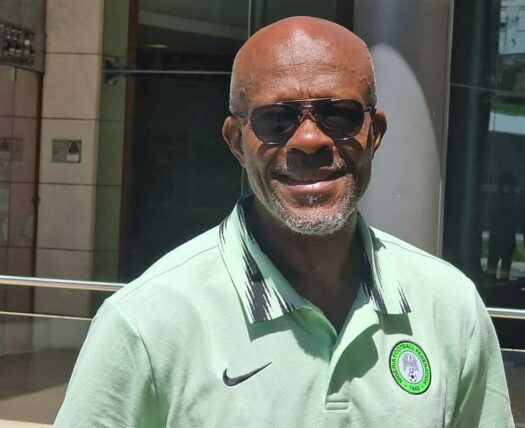
The deputy-general secretary of the Nigeria Football Federation (NFF) and renowned sports psychologist, Dr Emmanuel Edem Ikpeme, has offered a rare glimpse into the inner workings of the Super Eagles dressing room, while identifying poor administration, political interference and the neglect of sports science as the biggest obstacles to Nigeria’s quest for sustained global sporting success.
Speaking in an interview ahead of the public presentation of his new book at the Moshood Abiola National Stadium, Abuja, on 18 June, Ikpeme reflected on his experiences working with Nigeria’s senior national team and outlined a comprehensive blueprint for transforming the country’s sports sector.
Having served in the backroom team during the Super Eagles’ silver-medal campaign at the 2024 Africa Cup of Nations and their bronze-medal finish in 2026, Ikpeme revealed that managing pressure and expectations remained one of the greatest challenges facing the national team.
According to him, the key difference between the two tournaments was the psychological approach adopted by the players and coaching staff. “The major distinction was how the team processed external pressure and redirected its focus towards controllable factors,” Ikpeme explained.
“In 2024, there was an intense desire to break new ground and achieve something special. By 2026, the challenge was maintaining harmony and resilience amid coaching transitions and changing squad dynamics. In both cases, we worked hard to ensure players focused on performance rather than public expectations.”
Ikpeme disclosed that shielding players from the intense scrutiny of Nigerian football fans and the media required a deliberate psychological framework centred on concentration, emotional control and mental resilience.
He said players were encouraged to ignore external criticism, focus on tactical execution and break matches into manageable periods rather than becoming overwhelmed by the enormity of major tournaments.
“We introduced deep-breathing techniques, visualisation exercises and positive self-talk strategies to help players remain calm and mentally prepared during high-pressure situations,” he said. “Footballers today face enormous demands. Many arrive from Europe carrying the pressures of club football and must immediately adapt to representing a nation of more than 200 million people.”
The respected sports administrator noted that one of the most difficult transitions for players was moving from structured club environments into the emotionally charged atmosphere of international football.
He described what he termed the “save the nation syndrome,” in which star players feel compelled to carry the hopes of an entire country on their shoulders, often at the expense of collective team performance.
Beyond psychology, Ikpeme argued that administration plays a decisive role in determining success on the field. Drawing from his years as NFF Deputy General Secretary, he stressed that poor logistics, uncertainty over player welfare and unresolved financial issues can severely affect team morale.
“Players cannot perform at their best if accommodation, travel arrangements or bonuses are in doubt,” he said. “Administrative stability creates the psychological safety athletes need to excel.”
Ikpeme was particularly critical of what he described as the persistent cycle of inconsistent leadership and political interference in Nigerian sports administration.
According to him, frequent changes in leadership positions, coupled with corruption, nepotism and policy inconsistency, have repeatedly undermined long-term development programmes.
“Without continuity, development plans rarely survive beyond one administra…
We’ve got the edge. Get real-time reports, breaking scoops, and exclusive angles delivered straight to your phone. Don’t settle for stale news. Join LEADERSHIP NEWS on WhatsApp for 24/7 updates →
Join Our WhatsApp Channel