Nigeria for some decades has struggled to improve on its industrial outputs, but growth has been hampered by a single bottleneck: the gap between research and commercial production. Ideas are generated in labs and universities, but few make it to factories, markets, and the hands of Nigerian consumers.
The National Agency for Science and Engineering Infrastructure (NASENI) is closing that gap by building a complete value chain—from concept to prototype, from pilot production to market-ready products that industries can adopt today.
To make this a reality, the Agency is adding value to nation’s industrial chains by controlling the high-margin stages of research and development (R&D) design, engineering, branding and after-sales services while using advanced manufacturing, automation, and skilled labour to convert raw materials and imported inputs into differentiated high-quality finished goods.
NASENI is strengthening backward integration by developing local suppliers for components and machinery; building forward linkages through processing and branding to capture more of the final product value, and investing heavily in skills, standards, and innovation ecosystem that enable firms to move up the value chain. This strategy is helping to keep more value jobs and profits domestically while competing on technology and quality rather than just cost.
From Lab Bench to Factory Floor
NASENI’s mandate goes beyond research. The Agency operates a network of Development Institutes and advanced manufacturing centres designed to translate research into tangible products. At the heart of this system is reverse engineering and technology adaptation as well as commercialisation. Instead of waiting for imported equipment, NASENI’s engineers dissect foreign technologies, redesign them for Nigerian operating conditions, and prepare them for local manufacturing. This approach has already produced working models in renewable energy, agriculture, transportation, and capital goods.
The goal is simple: reduce Nigeria’s dependence on imports, cut foreign exchange drain, and create products that are cheaper to buy, easier to maintain and built for local use and create jobs for Nigerians.
The R&D to Market Pipeline
NASENI’s process follows a deliberate 5-stage pipeline that private sector partners can plug into at any point. They are as follow:
- Research & Adaptation
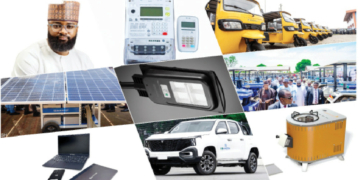
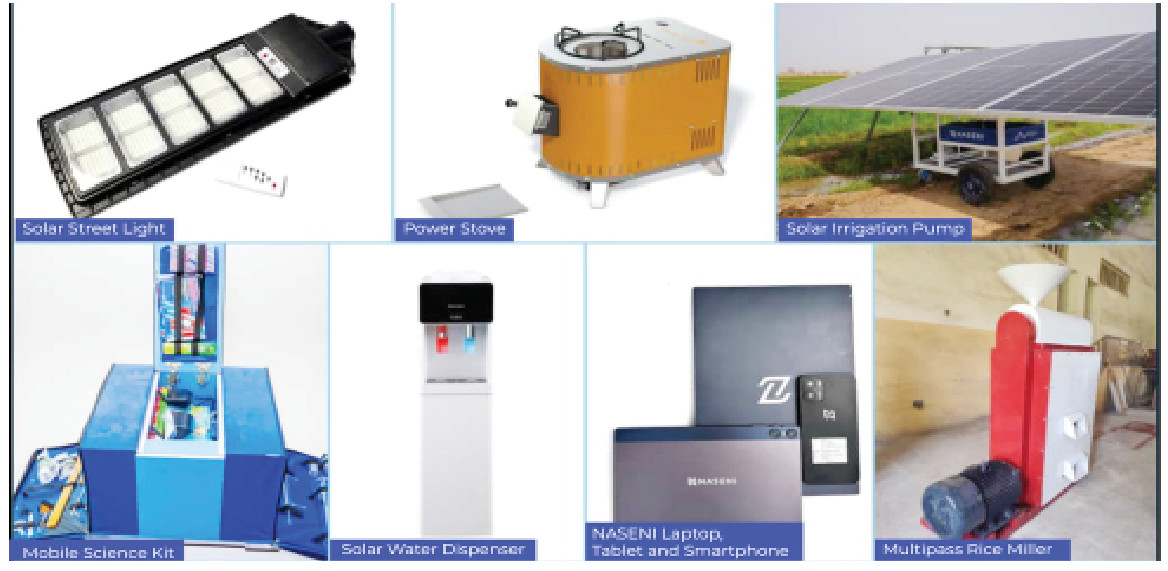
NASENI identifies high-demand capital goods products that Nigeria imports heavily. Engineers adapt designs using locally available materials and skills. These capital goods products cut across the key sectors of the economy. They include Multi-grain Thresher, Rice Milling and Destoning Machines, Solar-powered Irrigation Pump, Oil Extraction System/Oil Expeller, Solar Water Dispensers, Home Solar Energy units, Energy efficient Street Lights, Lithium Batteries, Hybrid and Electric Vehicles, Electric Tricycles, NASENI Laptops, Tablets, and many more.
- Prototype Development & Testing
Prototypes are built and tested in NASENI’s laboratories for durability, efficiency, and compliance with Nigerian standards. Testing reduces risk for partners who want to license the technology.
- Pilot Production
Small-batch production validates cost, quality, and scalability. This is where NASENI de-risks the investment for industry. Stakeholders can inspect pilot lines, assess quality, and negotiate licencing before committing to large-scale production.
- Technology Transfer & Licensing
NASENI offers licencing agreements, joint ventures, and technical support to qualified partners. This means industries can start manufacturing NASENI-developed products without building R&D departments from scratch.
- Market Deployment & After-sales Support
Through partnerships with distributors, cooperatives, and state governments, NASENI products reach end-users. The Agency also provides training for maintenance and troubleshooting, protecting the partner’s brand reputation.
Where Industry Gains
The value for stakeholders is in speed, cost, and reduced risk.
Speed to Market: A partner licencing a NASENI design bypasses 2–4 years of independent R&D. Production can begin once licencing and training are complete.
Cost Savings: Products adapted for local materials and labour cut import costs by 30%–60% in sectors like solar components, agricultural machinery, and electrical equipment.
Data point to source: Comparative cost analysis of NASENI solar panels and imported equivalents are available at the NASENI Energy Directorate.
Risk Reduction: NASENI absorbs early-stage R&D risk. Partners enter at the pilot or licensing stage with proven prototypes and technical documentation.
Local Content Compliance: Products developed under NASENI meet Nigerian local content requirements, making them eligible for government procurement and preferential treatment in public projects.
Real Products, Real Impact
Several NASENI technologies have passed through the licencing stage. Examples include Solar Irrigation Pumps designed for smallholder farmers, Electric Tricycles for urban transport, and Transformer components for the power sector. Each product comes with a technical package: design files, bill of materials, supplier list, and training manual. For industries, this means immediate opportunities.
An agricultural equipment dealer can licence a NASENI Thresher and begin assembly in-house. A renewable energy firm can integrate NASENI’s solar components into its existing projects at lower cost. A manufacturing small and medium enterprise (SME) can use NASENI’s CNC and machining centres to produce parts without buying expensive equipment. There are a number of active licencing agreements, SMEs trained, and jobs created through NASENI technology transfer programmes from 2023–2026.
The Infrastructure Advantage
Nigeria, NASENI operates advanced manufacturing centres equipped with CNC machines, 3D printers, metrology labs, and testing rigs. Partners can use these facilities on a fee-for-service basis, avoiding millions in capital expenditure. This shared infrastructure model is critical for SMEs and mid-sized firms that want to move up the value chain but lack the capital for heavy equipment. It also ensures quality control, as all licensed products are tested against NASENI’s standards before market release.
Partnership Model: How It Works
NASENI’s engagement with industry is structured for clarity and mutual benefit. NASENI assesses technical fit and readiness. The following are how it works.
Agreement & Training: Licencing terms are agreed, and partner staff receives hands-on training.
Production & Rollout: Partner begins production with ongoing technical support from NASENI.
Market Feedback Loop: NASENI collects user feedback to improve future iterations. The model is designed to be flexible. Partnerships range from single-product licencing to joint ventures for large-scale manufacturing plants.
Call to Action:
Nigeria’s industrial transformation will not come from imports alone. It will come from Nigerian companies producing Nigerian solutions, using Nigerian talents and infrastructure. NASENI invites manufacturers, investors, distributors, and state governments to partner in building this value chain. If you operate in agriculture, energy, transportation, or manufacturing, there is a NASENI technology ready for adoption.
For existing or new partner of the Agency, the following steps are available: Review NASENI’s current technology catalogue on the Agency’s website and at zonal offices; Request a technical briefing and factory tour to assess production readiness; Engage NASENI’s Investment and Partnership Directorate to discuss licensing, joint venture (JV) and co-production terms; and Join upcoming NASENI Industry Stakeholder Forums for direct access to engineers and project managers.
NASENI is currently playing a critical role through its indigenous technologies in building Nigeria’s industrial value chain. The infrastructure is in place. The designs are tested. The market is waiting. The next step is for industry to step in, scale production, and make “Made-in-Nigeria” the standard.
We’ve got the edge. Get real-time reports, breaking scoops, and exclusive angles delivered straight to your phone. Don’t settle for stale news. Join LEADERSHIP NEWS on WhatsApp for 24/7 updates →
Join Our WhatsApp Channel