
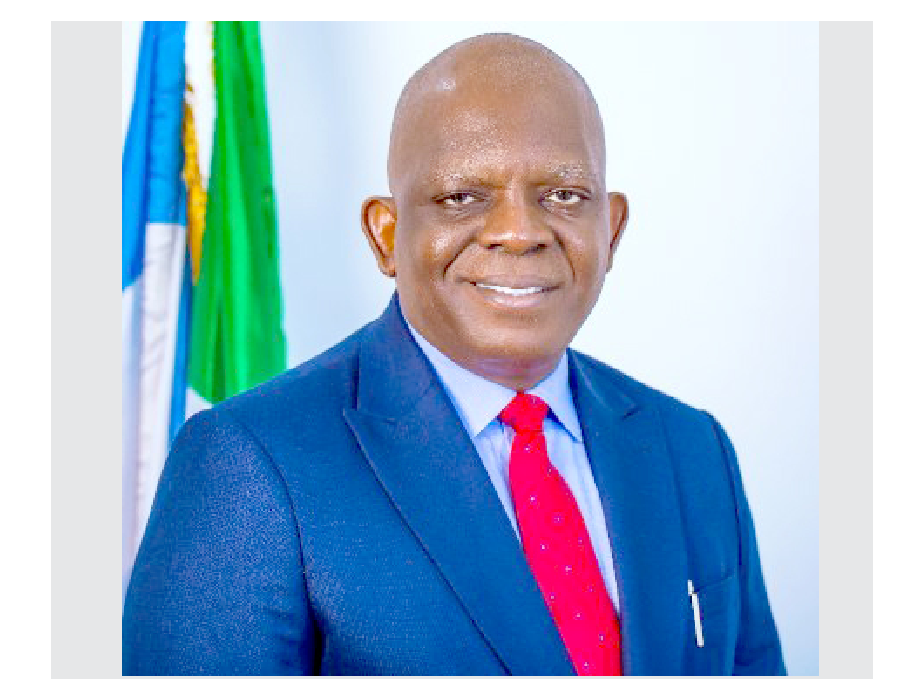
The executive secretary of the Nigerian Shippers’ Council (NSC), Dr Pius Akutah, has charged middle managers in the organisation to embrace innovation, accountability, discipline and professionalism as the Council intensifies efforts to strengthen its role as Nigeria’s Port Economic Regulator and a leading trade facilitation institution.
Akutah gave the charge over the weekend while declaring open the 2026 Operational Retreat for Grade Level 12–14 officers in Abeokuta, Ogun State.
Speaking on the theme, “Middle Managers as Catalysts for Excellence and Innovation: Building the Next Generation of Leaders for Institutional Transformation and Sustainable Growth,” the NSC boss described middle managers as the critical bridge between policy formulation and implementation, stressing that their leadership would be crucial to the success of the Council’s ongoing reforms and strategic initiatives.
He urged participants to move beyond merely executing assigned tasks and begin to see themselves as custodians of institutional outcomes.
“Our operating environment continues to evolve rapidly. The implementation of these initiatives requires officers who are disciplined, innovative, adaptable and results-oriented. The success of these initiatives depends significantly on your commitment and leadership,” he said.
According to him, leaders are distinguished by their ability to provide solutions rather than excuses, noting that the Council’s transformation agenda requires managers who can think creatively and deliver measurable results.
Akutah further emphasized the importance of integrity, teamwork and continuous learning, stressing that public confidence in the Council depends largely on the professionalism, transparency and ethical conduct of its workforce.
“As middle managers, you are the engine room of institutional performance. Your ability to inspire teams, drive innovation and uphold accountability standards will determine the extent to which the Council achieves its strategic objectives,” he added.
At the retreat, the Executive Secretary also unveiled a new Retreat Governance and Performance Management Policy aimed at strengthening accountability, improving performance management and fostering innovation across the organisation.
He explained that the policy would provide a structured framework for the planning, execution, implementation, monitoring and evaluation of strategic and middle management retreats within the Council.
“The policy is intended to strengthen the linkage between the Council’s Strategic Plan, organisational Key Performance Indicators, departmental deliverables and individual Performance Management System targets, ensuring that retreat resolutions are translated into measurable actions, improved organisational performance and sustainable institutional results,” Ukeyima stated.
Under the new framework, approved retreat resolutions, communiqués and action points will be incorporated into departmental work plans and performance assessment frameworks, with clearly defined responsibilities, timelines, reporting obligations and performance indicators.
He disclosed that a Retreat Steering Committee would be established under his supervision to coordinate the planning, execution, documentation, implementation, monitoring and evaluation of retreat outcomes.
Akutah added that the Strategic Planning and Research Department would maintain a Retreat Implementation Scorecard and periodically report progress to management, while the Human Resources Management Department would integrate approved outcomes into leadership development programmes and the Council’s Performance Management System.
He noted that the Council’s key initiatives, including trade facilitation reforms, digital transformation programmes, economic regulatory interventions, cargo protection mechanisms and inland connectivity projects, require innovative and accountable leadership at all levels.
Earlier, the Director of Strategic Planning and Research Department, Rotimi Anifowose, described middle managers as the engine room of the organisation and key drivers of operational success.
In an emotional address, Anifowose reflected on his years of service and hinted that the event could be his final opportunity to address the retreat in his current capacity.
He urged participants to lead with integrity, embrace continuous learning, treat colleagues with fairness and dignity, and recognise that leadership is fundamentally about service.
“The true measure of authority is not how many people answer to you, but how many lives become better because of your influence,” he said.
We’ve got the edge. Get real-time reports, breaking scoops, and exclusive angles delivered straight to your phone. Don’t settle for stale news. Join LEADERSHIP NEWS on WhatsApp for 24/7 updates →
Join Our WhatsApp Channel