BY NSE ANTHONY-UKO, Abuja; ABIODUN SIVOWAKU, KINGSLEY OKOH and OLAMIDE OJUOKAIYE, Lagos
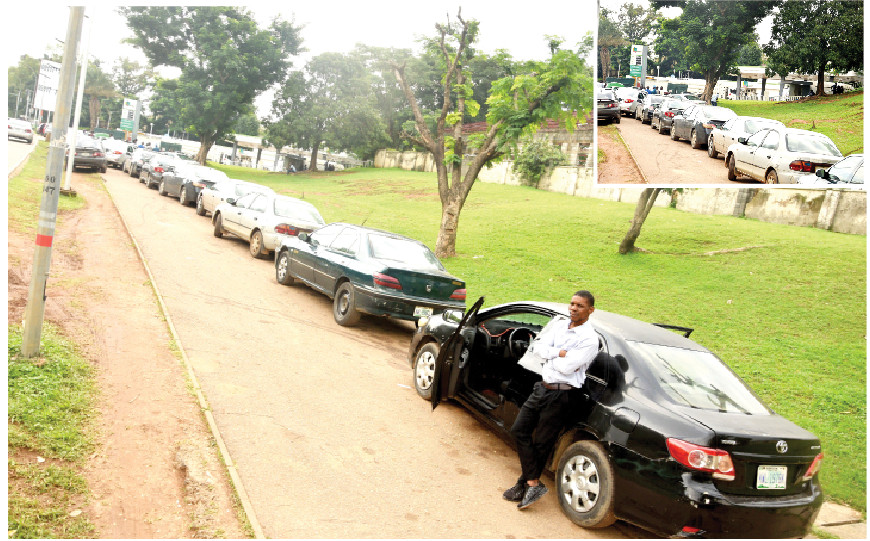
Commercial and private motorists across Lagos, Abuja and other parts of the country continue to endure long queues at Compressed Natural Gas (CNG) filling stations, with many spending up to eight hours daily waiting to refuel their vehicles.
Findings by LEADERSHIP showed that the queues, which have persisted in recent weeks, are largely driven by the rising number of CNG conversions following the increase in petrol prices over the past six months.
Operators said the situation has been compounded by the inadequate number of dispensing stations and infrastructure gaps, rather than a shortage of gas, as more vehicle owners embrace the cheaper fuel alternative.
The Presidential Initiative on CNG and Electric Vehicles (Pi-CNG & EV) said the queues reflect growing public confidence in CNG and assured motorists that more stations would become operational in the coming weeks to ease congestion.
Motorists lament long queues
At the Nigerian National Petroleum Company (NNPC) gas station at Ashade Junction along Agege Road in Lagos, commercial tricycle rider Bayo Oladimeji told LEADERSHIP that long queues have become part of his daily routine.
“There is hardly any time we come here to refill without meeting a queue. One major reason is that there are not enough stations dispensing CNG, so motorists converge on the few places where they are sure of getting gas.
“Another reason is that they stop selling whenever gas is being discharged into the storage tank. During that period, nobody is attended to, so the queue keeps growing.”
Another motorist, Idris Yekeen, who lives in Ikotun, Lagos, said he has no choice but to drive to Agege whenever he needs to refill because there is no CNG station in his area.
He dismissed suggestions that rising prices were responsible for the congestion, noting that the pump price has remained around N380 per standard cubic metre.
Yekeen, however, recommended the deployment of mobile CNG dispensing units, similar to one he saw operating from a mini-trailer in Ogun State.
“I saw one in Ogun State where gas was dispensed from a mini-trailer that could move from one location to another or stay at motor parks. That would help reduce congestion,” he said.
Another CNG user, Olusegun Popoola, attributed the queues to the failure of dispensing infrastructure to keep pace with the growing number of converted vehicles.
“The reason we are seeing queues is simple — inadequate gas stations. We now have more vehicles being retrofitted, but the number of gas stations has not increased. CNG is still affordable, but we need more dispensing points.”
Eight-hour wait in Abuja
The situation was similar in the Federal Capital Territory (FCT), where motorists reported waiting from dawn until midday to refill.
At the NASENI-Portland Centre in Dei-Dei, commercial driver Ahmed said he joined the queue at about 4 a.m. and was not attended to until around noon.
At NIPCO in Kubwa, queues stretched for about two kilometres, forcing many motorists to leave their vehicles while attending to other engagements.
Operators cite pressure, not scarcity
Station attendants said the queues were caused mainly by pressure fluctuations in storage tanks rather than gas shortages.
A gas attendant at Mobil Filling Station in Agidingbi, Ikeja, who spoke anonymously because he was not authorised to speak to the media, said dispensing slows as pressure drops when storage levels become low.
“There is no shortage of CNG. Once the volume in the storage tank drops, dispensing pressure also reduces, slowing the process until another tanker replenishes supplies,” he said.
A station manager also said demand had outpaced the capacity of existing compressors and dispensing units, adding that equipment maintenance and occasional power interruptions further slowed operations.
Infrastructure bottleneck
Energy economist, Prof. Wumi Iledare, has warned that Nigeria risks trading one set of fuel queues for another if investment in CNG refuelling infrastructure fails to keep pace with the country’s vehicle conversion drive.
Similarly, energy lawyer, Dr Ayodele Oni, pointed out that despite the rapid growth in vehicle conversions, only a fraction of approved mother and daughter stations are currently operational, leaving an estimated 70 to 100 functional dispensing points nationwide, well short of what current demand requires.
For his part, a former national secretary of the Independent Petroleum Marketers Association of Nigeria (IPMAN), Mike Osatuyi, described the queues as reflecting a mismatch between the pace of infrastructure development and the federal government’s ambitious CNG adoption targets.
He argued that allowing conventional petrol stations to integrate CNG dispensing facilities would go a long way toward easing congestion.
Federal Govt promises more stations
In his reaction, the chief operating officer of the Presidential Initiative on CNG and Electric Vehicles, Tosin Coker, said the queues reflected surging demand rather than a shortage of gas.
“The queues are largely a reflection of the renewed increase in CNG conversions, particularly in Lagos, Abuja and Kano. They are a sign of growing demand and public confidence in CNG, not a shortage of gas.”
Coker said new refuelling stations were being commissioned every one to two weeks.
“We expect at least 10 additional stations to become operational before the end of this month, with close to 70 more expected before the end of the year.”
She expressed confidence that waiting times would reduce as more stations come on stream.
Savings still outweigh delays
Despite the long queues, many motorists said they had no plans to return to petrol.
Lagos-based ride-hailing driver Adewale Akinyemi said the time spent in queues was reducing his earnings.
“CNG is still cheaper than petrol, but spending half my working day in a queue means I lose passengers and income. Sometimes I even sleep inside my vehicle just to keep my place.”
An Abuja commercial bus operator, Muhammad Sani, said demand had overtaken available dispensing facilities, while private motorist Emmanuel Okonkwo maintained that the savings still made the wait worthwhile.
“I spend less than half of what I used to spend on petrol. The queues are frustrating, but I still save enough money every week to make it worthwhile.”
We’ve got the edge. Get real-time reports, breaking scoops, and exclusive angles delivered straight to your phone. Don’t settle for stale news. Join LEADERSHIP NEWS on WhatsApp for 24/7 updates →
Join Our WhatsApp Channel