By allAfrica Global Media · Kaolack, Senegal · July 2026
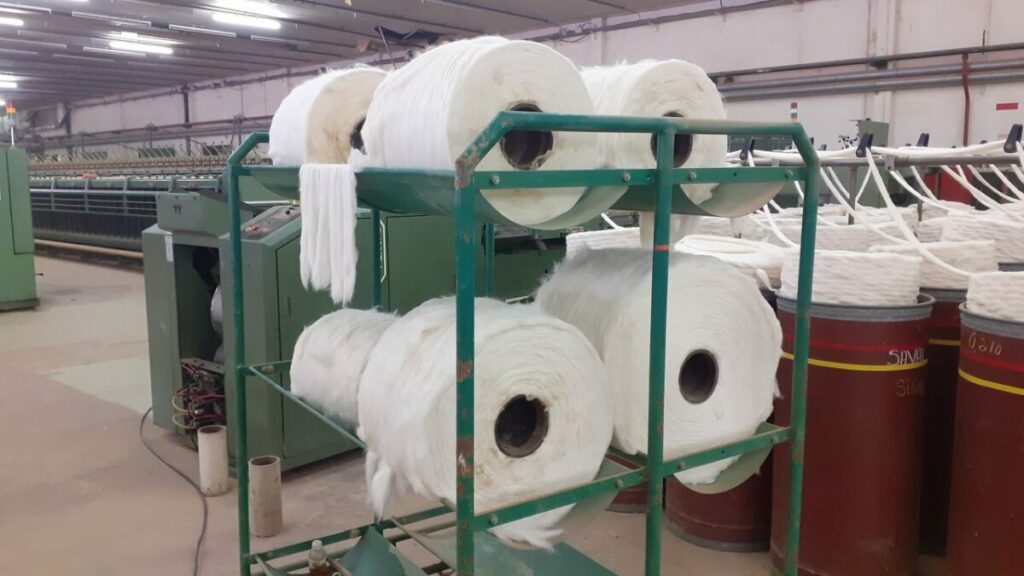
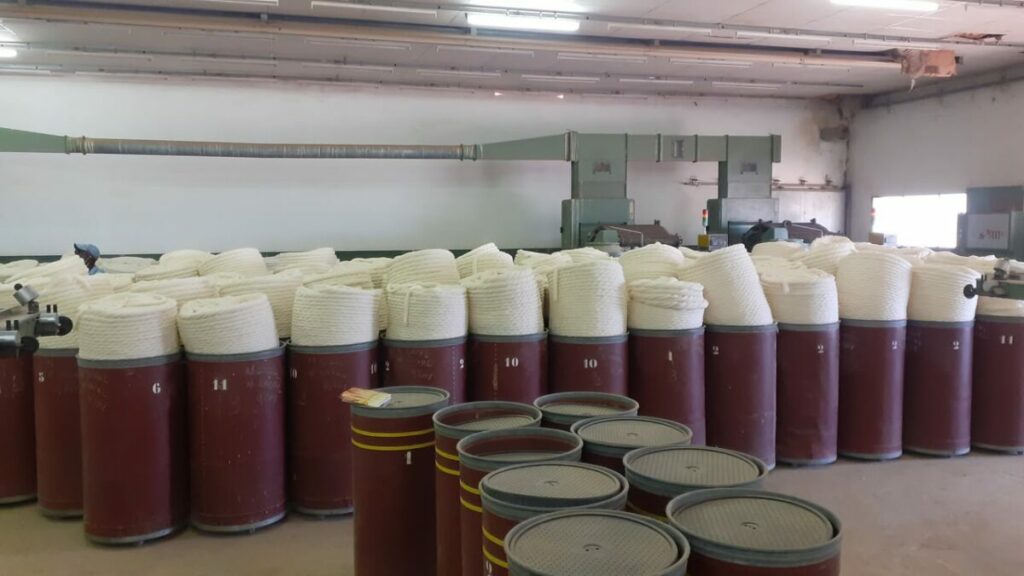
The thread comes off the spool white, clean and taut. Inside the Domitexka workshop in Kaolack, the machines are running, raw Senegalese cotton goes in one end, spun yarn comes out the other. That, in substance, is the point Mass Thiam is trying to prove — that Senegal, and Africa more broadly, can do this.
What has proven harder to overcome is what happens when the financing runs out. Industrial machinery slows to a crawl without capital behind it, and across Africa, financing suited to manufacturers’ needs remains scarce.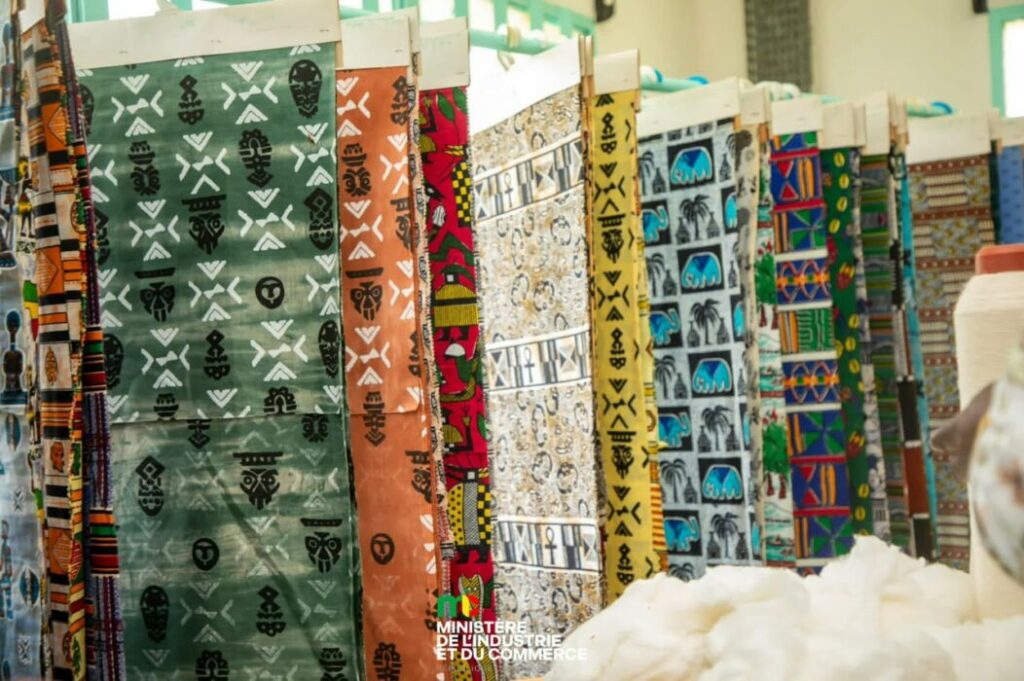
Domitexka Saloum, an industrial spinning mill in Kaolack, sits at the heart of one of West Africa’s cotton belts. It once ran for years before an abrupt shutdown, starved of capital. Serigne Mboup — chief executive of Groupe CCBM, president of the Kaolack Chamber of Commerce, Industry and Agriculture, and the city’s mayor — owns the mill and is the project’s promoter. Thiam joined as general administrator, tasked with turning that ambition into a functioning business. He has spent his tenure fighting on two fronts: rebuilding the plant and persuading financiers that it has a future. That second fight extends well beyond Domitexka. It is the fight of an entire industry.
The Number That Says It All: 5 Per cent
Senegal processes only about 5 per cent of the cotton it harvests. The rest leaves the country raw, crosses an ocean, becomes yarn, then fabric, and then clothing, and sometimes returns to stalls in Dakar’s Sandaga market, priced ten, twenty, or even thirty times higher than the raw fibre that left.
Thiam often cites the figure, not as a statistic. “Senegal processes less than five per cent of its cotton,” he said — a scandal, in his telling, measured precisely against what it costs the country.
The global backdrop has rarely looked more favourable. Asian supply chains have been under strain since the pandemic, and production costs are climbing in Bangladesh, Vietnam and China. New European rules — the end, as of July 1, of the customs exemption for parcels under 150 euros, plus a coming Digital Product Passport and an EU eco-design regulation — are pushing brands toward textiles that are traceable, nearby and clean. Africa fits that brief.
“We see a factory with potential in a world that’s shifting,” Thiam said. “But the traditional banker mainly sees an industrial company that has struggled in the past.”
That gap — between what the plant can produce and what a bank is willing to fund — is the crux of the problem.
“We see a factory with potential in a world that’s shifting. But the traditional banker mainly sees an industrial company that has struggled in the past.” says Mass Thiam, General Administrator, Domitexka Saloum
Manufacturing Runs Long. Bank Loans Run Short.
Textile manufacturing is a capital-heavy business. Carding machines, spinning frames, and looms cost heavily upfront and depreciate over ten to fifteen years. Scaling up, hiring, training a workforce and winning export contracts all take time.
Commercial banks think on a shorter clock — three years, five at the outside. From Kaolack to Lagos, Bamako to Abidjan, manufacturers hear the same answer: the project runs too long, the sector is too risky, the collateral falls short. “The maturities we need are seven to twelve years,” Thiam said — roughly the time an African spinning mill needs to pay off its investments, stabilise its balance sheet, reach full capacity and start turning a net profit.
The math compounds from there. Gross margins in the industry run 25 to 35 per cent, but local bank interest rates as high as 12 per cent eat deeply into that cushion, and collateral requirements often exceed the loan itself. It is a combination that kills off industrial projects across the continent before they get the chance to prove themselves.
“The financing problem has always been there, it’s still there, and it will probably still be there for several more months,” Thiam said — less a complaint than a plain reading of the numbers.
The Arithmetic of Africa’s Cotton Paradox
Africa produces roughly 10% of the world’s cotton, including much of its longest and finest fibre.Less than 5% of that cotton is processed on the continent before export. Finished garments sell for 30 to 50 times the price of the raw fibre. Gross margins in African textile manufacturing: 25% – 35%. Local bank lending rates facing manufacturers: up to 12% loan maturities. Domitexka says the industry needs: 7 – 12 years. Domitexka’s fundraising target: €50 million over 10 years
A Working Mill, Not a Pitch Deck
What sets Domitexka apart is that its story isn’t hypothetical. The mill is operating — cotton in, yarn out.
Thiam inherited a foundation that predates him: a €5.7 million grant from KfW, Germany’s development bank, awarded under its Invest for Employment initiative on the strength of Mboup’s original project. That grant funded the restart of production and allowed Thiam to demonstrate that the mill could actually run.
Domitexka has since built a strategic partnership with Aïssa Dione Tissus, one of West Africa’s most respected textile houses — a commercial, capital and creative alliance that points toward a fully integrated supply chain: Senegalese cotton spun into Senegalese thread woven into Senegalese fabric, without the material ever leaving the continent. Separately, the company is in talks with the International Finance Corporation, the World Bank’s private-lending arm, about backing its next phase of growth.
“Right now, we’re in an initial relaunch phase,” Thiam said. “But tomorrow, we want to build new production lines. Our goal is to raise close to fifty million euros to improve our productivity and reposition the West African textile industry on the international stage.”
The plan is specific: modernise equipment, bring in new investors to strengthen governance, form technical partnerships to lift productivity, and meet the traceability standards European and American buyers now demand.
“Our goal is to raise close to fifty million euros to improve our productivity and reposition the West African textile industry on the international stage”, Thiam noted.
Looking to Asia’s Playbook
Thiam often returns to a comparison: Bangladesh in the 1980s, Vietnam in the 1990s, and Turkey, which built a textile export industry now worth more than $20 billion a year over two decades.
None of those countries started with structural advantages greater than Africa’s today, he argues. What they had was what he calls “patient capital” — long-term financing, manageable interest rates, and institutions willing to underwrite the slow-build economics of manufacturing.
“Africa doesn’t lack potential — it lacks capital,” Thiam said.
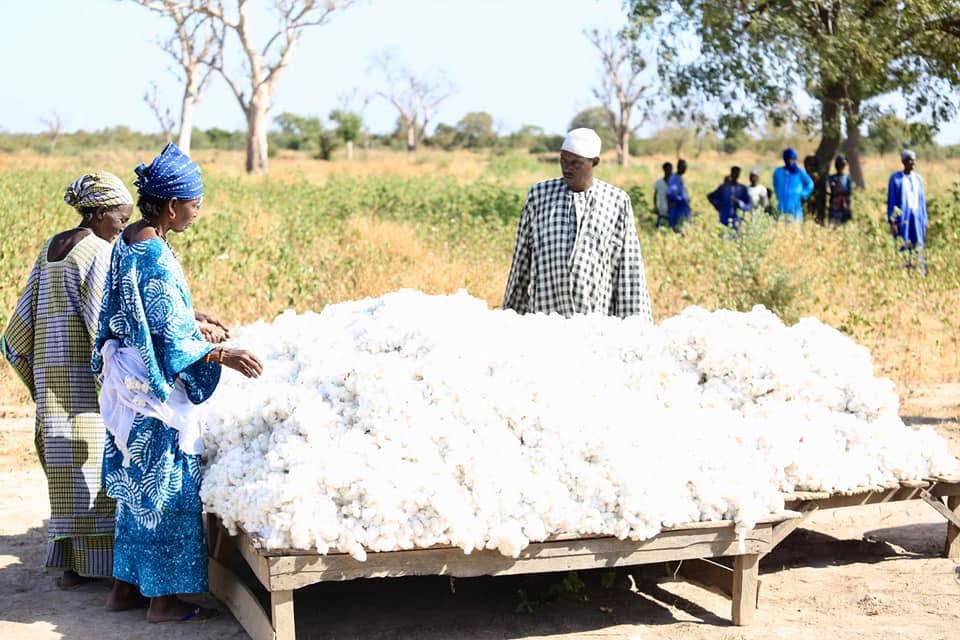
The claim holds up. West Africa grows some of the finest cotton in the world: long, clean, hand-picked fibre that commands a premium internationally. Mali’s Better Cotton-certified output climbed from 34,000 tonnes in 2014 to more than 180,000 tonnes in 2025. Burkina Faso just logged its best harvest in years. The raw material is there. The labour is there. The market is slowly but steadily shifting toward Africa.
What’s missing is the financial bridge between the fibre and the finished garment. “Africa doesn’t lack potential — it lacks capital,” says Thiam
What Lenders Need to Rethink
Thiam isn’t just airing grievances — he has a specific ask, backed by figures he has clearly rehearsed.
He wants financial instruments built for how manufacturing actually works: loans of seven to twelve years; interest rates that leave room for margin; pooled guarantee mechanisms that don’t freeze up a company’s balance sheet; equity investments that strengthen a firm’s capital base without stripping founders of control; industrial bonds; dedicated funds.
“We need more optimised financing tools — bonds, equity stakes, or any other instrument that can bring in resources without weakening companies’ balance sheets,” he said.
It is not an appeal for charity, he argues, but for consistency. Development banks and private lenders routinely name African industrialisation a priority in annual reports, ribbon-cutting speeches and summit declarations. Domitexka’s case is a test of whether they will back that rhetoric with products that manufacturers can actually use.
The regulatory tailwinds are real. The EU has scrapped its duty-free threshold for small parcels. Its ESPR sustainability rules will apply to the entire textile sector by 2027. A Digital Product Passport, due by 2030, will make every garment’s origin, composition and environmental footprint traceable to the buyer. Together, the rules favour cotton that is non-GMO, hand-picked, certified and traceable — attributes West African producers already have.
The opportunity won’t last indefinitely, though. Ethiopia, Morocco and Tanzania are all investing in their own textile infrastructure, and competition for European brands looking to diversify away from Asia is intensifying.
A Test Case for the Continent
Domitexka’s story points to a larger pattern. For decades, Africa has exported what it produces and imported what it consumes: cotton leaves raw and returns as clothing; cocoa leaves as beans and returns as chocolate bars; crude oil leaves the ground and returns as refined fuel. The arrangement carries real economic, social and political costs, keeping the continent a supplier of raw materials rather than a creator of finished value.
Change that won’t happen through declarations at summits. It will happen mill by mill, spool by spool — when entrepreneurs like Thiam find financing at a development bank’s counter or in an investment fund’s office, built to last for the decade their industry actually needs.
In Kaolack, Domitexka’s machines are running. The thread is white. It is waiting for the money.
This article is published as part of Cotton to Cloth: Africa’s Processing Potential, an editorial initiative by allAfrica Global Media in partnership with Afreximbank, dedicated to documenting, analysing and amplifying industrialisation opportunities in Africa’s cotton value chain for institutional investors, policymakers and development finance actors.
We’ve got the edge. Get real-time reports, breaking scoops, and exclusive angles delivered straight to your phone. Don’t settle for stale news. Join LEADERSHIP NEWS on WhatsApp for 24/7 updates →
Join Our WhatsApp Channel