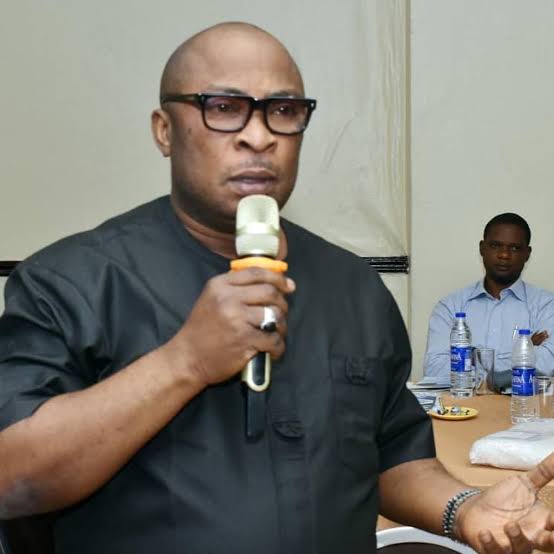
Former acting national president of the Association of Nigerian Licensed Customs Agents (ANLCA), Dr Kayode Farinto, has raised concern over what he described as the growing dominance of foreign firms in Nigeria’s freight forwarding and customs brokerage industry, warning that the trend is threatening indigenous participation, employment, capital retention and national security.
Farinto made the remarks while presenting a position paper at a House of Representatives Breakfast Session convened to gather policy recommendations for legislative reforms aimed at strengthening Nigeria’s economy.
He urged the National Assembly to enact legislation that would reserve strategic aspects of freight forwarding and customs brokerage for indigenous operators, similar to the Nigerian Oil and Gas Industry Content Development Act.
According to him, Nigeria’s logistics industry has gradually slipped into the hands of foreign interests, leaving indigenous freight forwarders increasingly sidelined, particularly in the handling of project cargoes and customs brokerage services.
Farinto explained that while the logistics sector comprises transportation planning, cargo booking, documentation, warehousing, cargo handling and customs clearance, customs brokerage and freight forwarding should be treated as strategic national services because of their direct impact on the economy and security.
He argued that a local content framework for the freight forwarding industry would deepen indigenous participation, create employment opportunities and ensure that revenue generated within the sector remains in the country instead of being repatriated abroad.
“If freight forwarding is left in the hands of indigenous Nigerians, it will create employment opportunities and ensure that revenues generated from the business are retained within the country rather than being repatriated abroad,” he said.
Farinto lamented that foreign companies now dominate the lucrative project cargo segment, alleging that about 90 per cent of project cargoes entering Nigerian ports are handled by expatriate firms.
“I cannot remember the last time an indigenous freight forwarder handled a major project cargo in Nigeria. Today, almost everything is controlled by foreign companies,” he stated.
He also expressed concern over the increasing involvement of international shipping companies in freight forwarding and customs brokerage, saying they have expanded beyond their traditional role of transporting cargo into providing end-to-end logistics services that directly compete with Nigerian practitioners.
Using Mediterranean Shipping Company (MSC) as an example, Farinto said foreign firms now control cargo movement from origin to final destination through door-to-door logistics services, effectively excluding indigenous freight forwarders from significant business opportunities.
Beyond the economic implications, he warned that foreign participation in customs brokerage poses national security risks because operators have unrestricted access to cargo manifests, shipping documents and other sensitive import information.
According to him, Nigeria cannot afford to entrust such strategic responsibilities to foreign interests at a time when the country is confronting insecurity, arms smuggling and other transnational crimes.
Farinto dismissed claims that Nigerian freight forwarders lack the technical expertise to manage sophisticated logistics operations, insisting that the country has developed adequate manpower over the years.
“There is no capacity problem in Nigeria. If countries like Ghana and Benin Republic can successfully empower indigenous operators, there is no reason Nigeria cannot achieve the same thing,” he said.
On the renewal of port concession agreements, Farinto urged the Federal Government to adopt a performance-based approach, arguing that indigenous terminal operators such as Port & Cargo Handling Services Limited and ENL Consortium have made significant investments in cargo handling equipment and port infrastructure.
He maintained that unlike many foreign operators who repatriate profits, indigenous companies reinvest their earnings locally, creating jobs and contributing to economic growth.
Farinto also faulted the operational model of some foreign terminal operators, accusing them of handling cargo volumes beyond the design capacity of their terminals, a situation he said has contributed to congestion, truck gridlock and operational inefficiencies at the nation’s ports.
He called on the National Assembly to champion policies that prioritise indigenous participation in strategic segments of the maritime industry, warning that continued foreign dominance would accelerate capital flight, reduce opportunities for Nigerian businesses and expose the country’s logistics system to greater security vulnerabilities.
“The future of Nigeria’s freight forwarding industry depends on deliberate legislative protection. If we fail to act now, we risk surrendering a strategic sector of our economy entirely to foreign interests,” he warned.
We’ve got the edge. Get real-time reports, breaking scoops, and exclusive angles delivered straight to your phone. Don’t settle for stale news. Join LEADERSHIP NEWS on WhatsApp for 24/7 updates →
Join Our WhatsApp Channel