
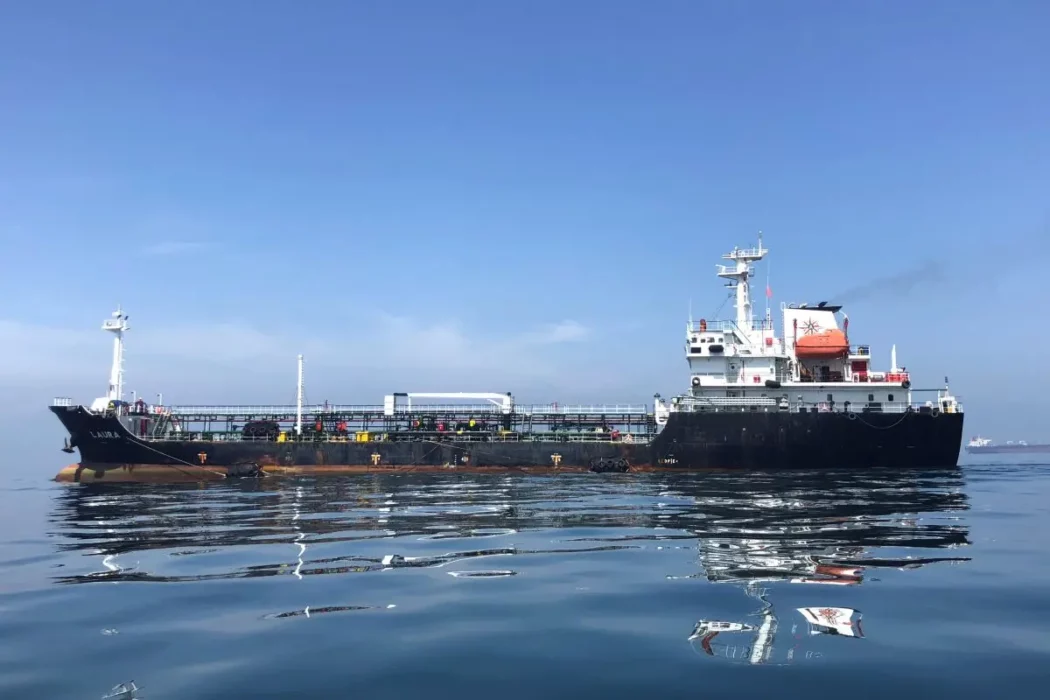
Nigeria’s export sector is facing mounting challenges as over 1,800 export-bound containers remain stranded at seaports, with foreign shipping lines accused of prioritising import cargo while leaving Nigerian exports unattended for months.
LEADERSHIP gathered that the prolonged failure of shipping companies to evacuate export cargo has worsened port congestion, disrupted supply chains and inflicted huge losses on exporters.
Exporters further argued that several export consignments have remained inside port terminals for between four and five months because shipping lines routinely discharge imports but sail out without loading export cargo.
Speaking on the development, a frontline exporter, Olubunmi Olumekun, shipping companies are bringing vessels, discharging imports and leaving without loading exports.
Olumekun who also doubles as the President of the Barge Operators Association of Nigeria (BOAN), said, “as we are talking now, we have a lot of consignments stuck inside the ports that are not going out.”
He continued, “Shipping companies are bringing vessels, discharging imports and leaving without loading exports. Some export containers remain inside the ports for four or five months,” he said.
According to him, the situation has created a backlog of export containers occupying valuable terminal space, making it difficult for fresh export cargo to gain access to the ports.
Olumekun called on the federal government to impose stricter sanctions on shipping companies that fail to evacuate export cargo, insisting that no shipping line should be allowed to bring another vessel into Nigeria until outstanding export containers are cleared.
“The government has to take a decisive policy. If a shipping line refuses to load Nigerian exports, it should not be allowed to bring another vessel into the country. That is the only way they will comply,” he stated.
He recalled that a similar enforcement action by the Nigerian Ports Authority (NPA) against a shipping company compelled it to deploy a vessel to evacuate accumulated export cargo after its incoming vessel was denied clearance.
“They thought it was a joke until the authority refused to clear their vessel. They had to bring another ship to evacuate all the export containers before they were allowed to continue operations. That is the type of enforcement we need,” he added.
The BOAN president also backed the federal government’s policy of promoting local value addition through reduced exports of raw agricultural commodities, but warned that implementation must be gradual and supported by investment in domestic processing capacity.
He argued that Nigeria currently lacks enough processing plants for commodities such as shea nuts, cocoa and cashew, warning that an immediate restriction on raw material exports could hurt farmers, exporters and rural livelihoods.
“It is a good policy, but the timing and implementation must be right. Government should first provide financing, encourage investors to establish processing factories and give industry players enough time, at least three years, before introducing restrictions,” he said.
Olumekun stressed that adding value to agricultural products locally would create jobs, expand Nigeria’s manufacturing sector and significantly increase export earnings.
He further urged the government to ensure adequate planning before embarking on major port modernisation projects, warning that executing infrastructure works without viable alternatives could disrupt cargo movement and further weaken Nigeria’s competitiveness in international trade.
“This is an international business. Every policy must be properly planned. We must have alternatives before embarking on major projects so that trade is not disrupted. We need to make it easier for exports to move if we want to earn more foreign exchange,” he said.
Also speaking, the president of the Shippers Association of Lagos State, Rev. Nicodemus Odolo, said about 1,800 export containers are currently trapped at Nigerian ports, blaming the situation on the country’s dependence on foreign shipping lines, which he said now dictate the pace of Nigeria’s international trade.
Odolo warned that unless Nigeria revives national shipping line and reforms its export logistics system, exporters will continue to suffer losses while the country forfeits valuable foreign exchange earnings.
Speaking on the challenges facing exporters, he lamented that Nigeria has become overly reliant on foreign shipping companies, leaving local exporters at their mercy.
“We are at the mercy of these shipping lines. The current situation is that about 1,800 export containers are abandoned and unlifted. Imagine the economic consequences of such a huge volume of cargo. If we have our own shipping line, export cargo will be prioritised because there will always be vessels available to move them,” he said.
According to him, Nigeria generates sufficient export cargo to sustain a national carrier, stressing that reviving the country’s shipping line would reduce dependence on foreign operators and improve cargo evacuation.
“Nigeria has enough cargo to keep its own shipping line busy. We must bring back our national shipping line just as we need our own national airline. I don’t know what is wrong with this country,” Odolo stated.
He argued that the current export process is inefficient, noting that export containers should receive express clearance from warehouses to the ports instead of being left to accumulate at terminals while waiting for vessels.
“The proper procedure is that once an export container is stuffed and examined by Customs at the warehouse, it should proceed directly to the export terminal and be loaded according to the vessel’s schedule. What we have today is that containers are brought to the port and left waiting until ships arrive, creating unnecessary congestion,” he explained.
Odolo contrasted Nigeria’s operations with global best practices, citing ports in Singapore and the United States where ships discharge imports, load exports and depart within 24 hours.
“In developed countries, ships come in, discharge imports, load export cargo and leave within 24 hours because time is money. Here, delays increase freight costs and make doing business unnecessarily expensive,” he said.
While commending ongoing efforts to digitalise port operations, the maritime stakeholder maintained that technology alone would not solve the problem unless government agencies coordinate their activities and eliminate duplication.
He criticised the practice of security agencies intercepting cargo already cleared by Customs and other regulators, describing it as a major contributor to delays and higher logistics costs.
“Once Customs or any authorised agency has examined and released cargo, no other unit should stop it on the road. If an officer has genuine suspicion, such an officer should be prepared to take responsibility if the cargo is found to be compliant,” he said.
Odolo proposed a bond system that would require officials who stop cleared cargo to compensate exporters for losses if their suspicions prove unfounded.
He also called on freight forwarders and other stakeholders to accept responsibility for mistakes that delay cargo movement, insisting that accountability across the logistics chain is essential to improving Nigeria’s export performance.
The Shippers Association president further urged exporters to maintain international quality standards, warning that rejected exports represent losses not only for exporters but also for Nigeria’s foreign exchange earnings.
“When an export is rejected overseas because it fails to meet the required standards, the exporter loses money, and Nigeria loses foreign exchange. We must ensure quality while making export processes faster and more efficient,” he said.
We’ve got the edge. Get real-time reports, breaking scoops, and exclusive angles delivered straight to your phone. Don’t settle for stale news. Join LEADERSHIP NEWS on WhatsApp for 24/7 updates →
Join Our WhatsApp Channel