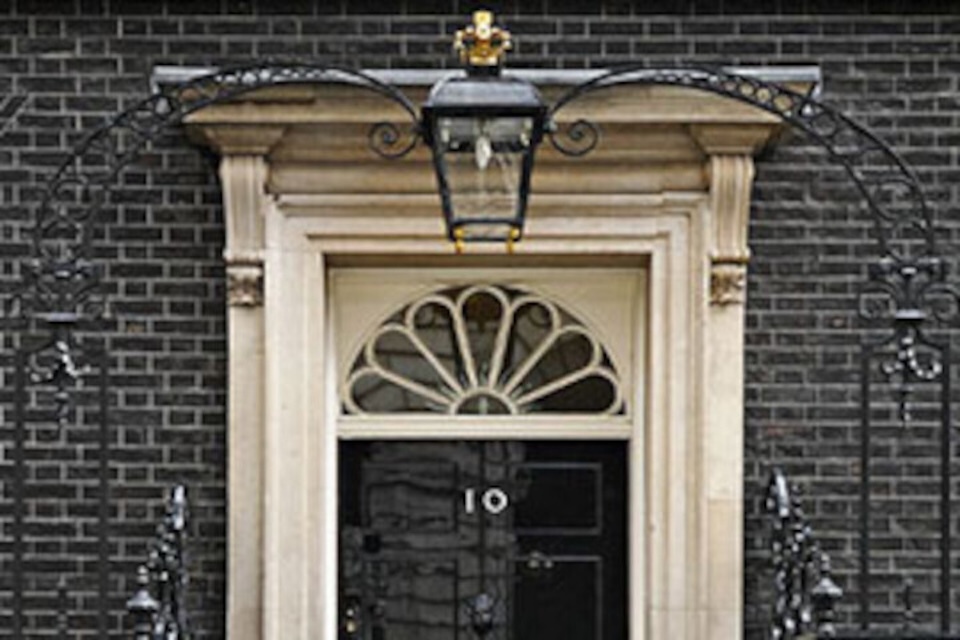
Has number 10 Downing Street become a slaughter slab for the political careers of British prime ministers? On average, six PMs have spent roughly 1.6 years in that office in the last 10 years. This even looks glossy if we consider Liz Truss, who ghosted in and out of that revolving door in just about six weeks.
Truss was changed faster than a class monitor with bullying tendencies. Her ultra-short term was emblematic of the real trouble with the post-Brexit UK economy. Her leadership became “untenable” when her “mini-budget” and rapid back flicks on taxes eroded public confidence. She did not hesitate to admit that she could no longer deliver on the mandate and quit before you could spell “Liz”.
The Truss debacle, which transpired between September and October 2022, was quite confounding. Looking back in time, how did Tony Blair win three successive general elections in Britain? Blair was on the saddle for all of 10 years – just one year short of Margaret Thatcher’s record as the longest-serving British PM of the 20th century.
Compared to the present, the Blair and Thatcher eras seem like a mirage. What took Blair 10 years to achieve – including that disastrous and self-serving quest for weapons of mass destruction in Iraq, has consumed David Cameron, Theresa May, Boris Johnson, Liz Truss, Rishi Sunak, and Keir Starmer – the seventh, Andy Burnham, began his own countdown on July 20.
Since Brexit, political stability in the UK has become short-tempered. British voters have lost patience with their politicians and, one after the other, are putting them to the political guillotine without hesitation. There’s no exception to the rapidly expiring shelf life of the PMs – whether good, poor or just average in terms of performance.
An extended succession of chaos in governance and policy from the Conservative Party ended in a landslide loss to the Labour Party in 2024. But what was expected to be the end of a poor experiment and a return to stability has unravelled again.
That troubling background ushered in Sir Keir Starmer, who entered Downing Street in 2024 with what was considered a rare political advantage. He won a huge parliamentary majority, had a reputation for discipline, and held the promise of an orderly break from years of Conservative turbulence.
He was expected to be, and did initially look like a corrective Prime Minister – inclined and determined to restore basic competence to government.
He projected seriousness and his strongest quality was credibility, fiscal prudence, and a respect for institutions that contrasted sharply with the chaos of the Conservative years. He did score some early policy wins in economic stability, migration, and the NHS. For many voters, that was enough to trust him.
Yet the very traits that made Starmer reassuring also limited him. In a cycle of global economic crises severely escalated by the Israel-US vs Iran war, household budgets in the UK remained severely under pressure.
Starmer came across as cautious to a fault, more comfortable managing the problems that threatened the country and fending off baiting from a virulent opposition. His government struggled and the result reflected in the vote. British politics since Brexit no longer recognises competence and popular endorsement as sufficient basis to remain in Number 10.
Starmer’s perceived weaknesses became a sludge as public expectations rose. Labour had won on a promise of change, but the pace of improvement appeared not to be quick enough. With domestic and global economic shocks, patience ceased being a virtue.
Many social improvements like reduced NHS waiting time, free school meals, upgraded employment rights were, somehow, too thinly felt in daily life. Starmer’s government did not drive a strong message to convince the public that life was better on key issues such as the cost of living, migration, and other economic pressures. He also struggled to keep his own party fully united and to maintain the sense of authority that his landslide victory should have provided.
In the midst of all these challenges, the Mandelson scandal broke. What could ordinarily have passed as a genuine mistake weakened Starmer’s standing significantly, because it cut across the competence, discipline, and cleaner government which were central to his emergence.
The Madelson appointment opened a new chapter on the Epstein saga for Starmer. Instead of the careful and reformist PM that he projected, he was pushed into defending a controversial judgment that even some of his Labour cabinet members found impossible to accept as a mistake.
Starmer did his best to present Mandelson’s appointment as pragmatic diplomacy rather than party patronage. The fellow, after all, was an experienced diplomat with deep contacts in Washington. But it backfired – turning what should have been a routine appointment into a trial of the Prime Minister’s sense of judgment.
The optics went beyond the damage to Mandelson to the broader criticism that Starmer’s government could be technically competent but politically careless. His admission that he would not have appointed Mandelson if he had known then what he knew later fell through as confirmation of error and guilt. The demand for his resignation only meant one thing – the apology was acknowledged, but not accepted.
Mandelson-gate weakened Starmer by splitting his party, with some of his own MPs siding with the opposition. His seriousness and credibility which won him a landslide in 2024 couldn’t sustain him on the job.
Andy Burnham, the new PM doesn’t look, even from afar, to have the kind of charisma and confidence that Starmer enjoyed. Perhaps, Brexit about to claim it next victim in number 10.
The countdown has begun.
– Julius Ogar writes from Utako, Abuja
We’ve got the edge. Get real-time reports, breaking scoops, and exclusive angles delivered straight to your phone. Don’t settle for stale news. Join LEADERSHIP NEWS on WhatsApp for 24/7 updates →
Join Our WhatsApp Channel