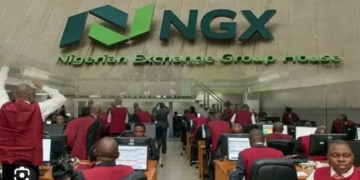
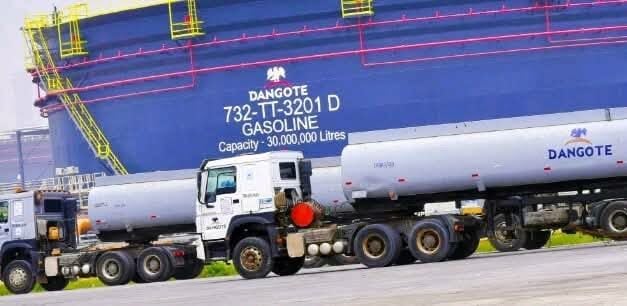
Dangote Group’s speculated plan to invest in a refinery in South Africa has gathered pace following reports that the company is considering a secondary listing on the Johannesburg Stock Exchange (JSE).
However, there is currently no evidence that the group plans to develop or acquire refining assets in South Africa.
Reuters reported that the JSE confirmed that it has been engaging with Dangote Group and expects the company’s petroleum refinery business to list in Nigeria before seeking a listing in South Africa.
“They will list in Nigeria first but with strong intent to hopefully bring the listing to South Africa,” the JSE said in an emailed response to Reuters.
Reuters reported that Dangote Group is targeting a US$5 billion initial public offering for its refinery business. Sources familiar with the matter said the company has made a preliminary filing with Nigeria’s securities regulator and is aiming for an October listing.
The group is also understood to be exploring broader regional participation, with Kenya potentially contributing around US$500 million to the capital raise.
Built by Africa’s richest businessman, Aliko Dangote, the Dangote Refinery was developed at an estimated cost of US$20 billion.
The 650000 barrel per day facility began producing fuel in 2024 and reached full operating capacity earlier this year. It is the largest refinery in Africa, while the Nigerian National Petroleum Company Limited holds a stake of just over 7 per cent.
The prospect of a South African listing has prompted questions about whether Dangote could pursue opportunities in the country’s refining sector, particularly following the closure of the former SAPREF refinery in Durban.
The 180000 barrel per day SAPREF refinery, previously jointly owned by BP and Shell, has remained idle since 2022 after being shut down because of operational challenges and flood damage.
The South African government, through the Central Energy Fund, subsequently acquired the facility for a nominal amount and transferred ownership to the South African National Petroleum Company, which plans to redevelop the site as a modern refinery.
Despite market speculation, Dangote has made no announcement regarding investment in the SAPREF redevelopment or any other South African refining project.
Instead, the group’s next major refining investment is expected to be in Kenya, where Dangote Industries has confirmed plans for a new refinery at the Port of Lamu.
The proposed facility is expected to process 700000 barrels of crude oil per day, making it the largest refinery in East Africa and the second largest on the continent. The project is valued at between US$15 billion and US$17 billion, with construction expected to begin in 2026 and take between 30 and 36 months to complete.
Located on Lamu Island, the refinery will leverage the deep water port and the strategic Lamu Port South Sudan Ethiopia Transport corridor to supply refined petroleum products across Kenya, Uganda, Tanzania, South Sudan and Ethiopia.
Early engineering studies, site surveys and geotechnical investigations are already under way. Dangote plans to fund the development through a combination of internal cash flow, bond issuances and proceeds from its planned initial public offering.
The project is expected to strengthen regional energy security by reducing East Africa’s dependence on imported refined fuels while reshaping petroleum trade across the Indian Ocean corridor.
For now, the JSE listing represents a capital markets opportunity rather than a signal of refinery investment in South Africa. Any future expansion into the country’s downstream sector would require a separate investment decision, and no such plans have been announced.
Meanwhile, the refinery accounts for one fifth of Europe’s jet fuel imports, reinforcing its position as a major force in global aviation fuel trade
Dangote Petroleum Refinery & Petrochemicals has strengthened its position as a global supplier of premium aviation fuel after emerging as Europe’s largest jet fuel supplier for the second consecutive month, overtaking the United States and underscoring the refinery’s growing influence on international energy markets.
Latest European import data compiled by global commodities intelligence firm Kpler show that more than 400,000 tonnes of jet fuel produced by the 700,000 barrels per day Dangote Petroleum Refinery were delivered into Europe in July, accounting for approximately 20 per cent of the continent’s total jet fuel imports during the month. The performance follows a record 466,000 tonnes exported to Europe in June, when Nigeria first displaced the United States as the region’s leading supplier of imported jet fuel.
The sustained export performance marks a significant milestone for the refinery, demonstrating its ability to consistently supply one of the world’s most demanding fuel markets with aviation fuel that meets stringent international quality specifications. Europe imported approximately 2.06 million tonnes of jet fuel in July, with Dangote accounting for the single largest share of those imports, ahead of traditional suppliers from the United States and the Middle East.
Industry observers say the refinery is rapidly reshaping established Atlantic Basin fuel trade flows by offering a competitive alternative to long standing suppliers. While European buyers have traditionally relied on refiners in the United States, the Middle East and Asia, Dangote’s strategic location on Nigeria’s Atlantic coast, combined with its scale, modern technology and export capability, has enabled it to become an increasingly important source of aviation fuel for European markets.
The refinery’s export momentum has been supported by steadily rising production. Jet fuel loadings at Dangote’s Lekki export terminal reached a record 550,000 tonnes in June, while crude deliveries to the refinery climbed to an all time high of 660,000 barrels per day, providing the throughput required to sustain growing exports of refined petroleum products to international markets.
The latest figures come at a time of shifting global energy flows. Although Europe received limited volumes of jet fuel from Kuwait, the United Arab Emirates and Oman in July, market disruptions around the Strait of Hormuz and evolving geopolitical dynamics have encouraged buyers to diversify supply sources. Against this backdrop, Dangote Refinery has emerged as a reliable and competitive supplier, reinforcing Nigeria’s growing importance in global refined products trade.
“Beyond aviation fuel, the refinery has continued to expand exports of diesel, gasoline and other refined petroleum products to destinations across Europe, Africa and other international markets, further strengthening Nigeria’s position as a net exporter of high value petroleum products,” noted David Bird, MD/CEO, Dangote Petroleum Refinery & Petrochemicals.
We’ve got the edge. Get real-time reports, breaking scoops, and exclusive angles delivered straight to your phone. Don’t settle for stale news. Join LEADERSHIP NEWS on WhatsApp for 24/7 updates →
Join Our WhatsApp Channel