
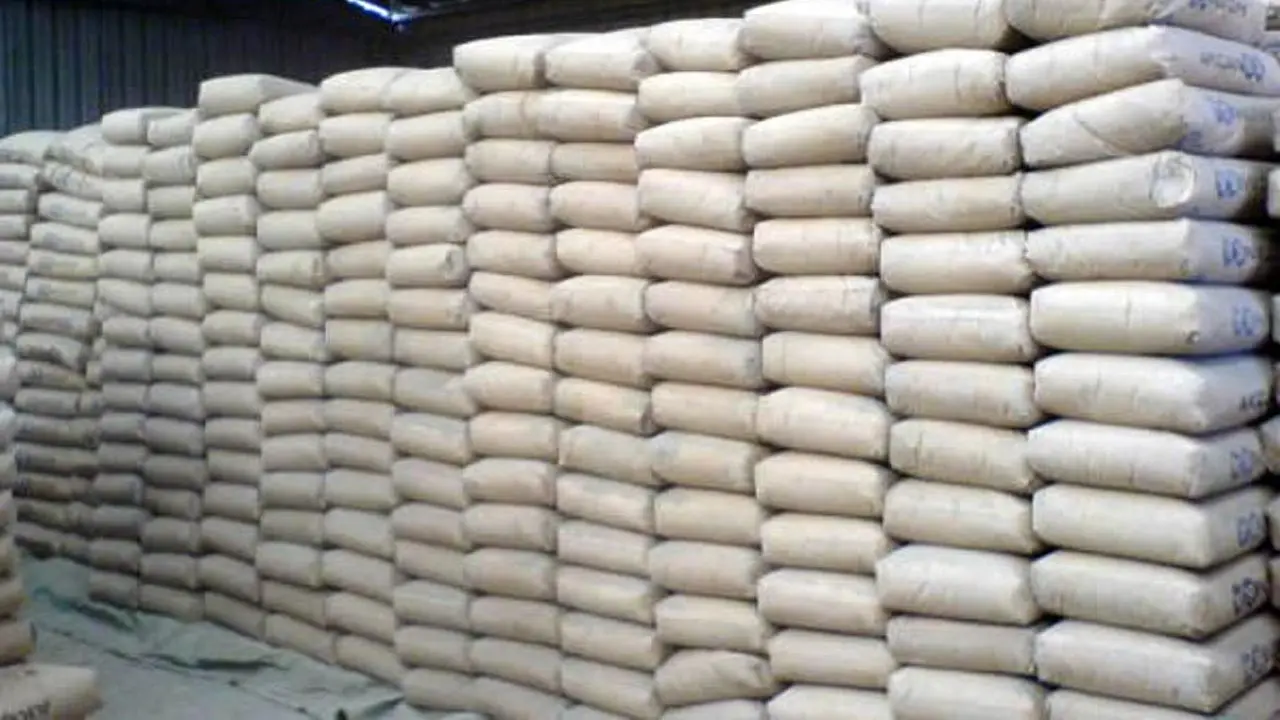
…Commission says product sells for N7,344 in Kenya, N9,180 in Togo
The Federal Competition and Consumer Protection Commission (FCCPC) has summoned major cement manufacturers in Nigeria as it investigates possible price manipulation in the domestic cement market.
The Commission said its preliminary findings showed that cement prices in Nigeria were significantly higher than in some other African countries, despite the country’s large limestone deposits, substantial production capacity and reported surplus supply.
The investigation followed widespread complaints from consumers and businesses about the rising cost of cement, a key material in the construction sector.
According to the FCCPC, the price of a 50-kilogramme bag of cement in Nigeria rose from N9,300-N9,700 in January 2026 to N10,500-N13,000 by mid-year.
By July, the Commission said, prices had reached between N13,000 and N15,000 in some parts of the country.
The FCCPC said the Nigerian price was nearly twice the retail price recorded in Kenya and Tanzania. A 50kg bag sold for about N7,344 in Nairobi, Kenya, and N6,528 in Tanzania, based on the Commission’s market comparison.
The Commission also reviewed cement prices in Togo, where a bag sold for about N9,180, despite the country’s lack of significant limestone deposits.
The findings were contained in preliminary field reports prepared by the FCCPC’s Anticompetitive Practices Department following a three-month cross-border study.
The study covered Kenya, Tanzania and South Africa in Sub-Saharan Africa, as well as Egypt, Morocco and Algeria in North Africa.
The FCCPC said its assessment considered several factors, including the availability of limestone, population, cement production capacity and domestic consumption.
It said Kenya, with a population of about 58.6 million, had domestic cement demand of approximately 9.3 million metric tonnes per annum in 2025. Tanzania, with a population of about 66.3 million, recorded similar demand during the period.
Nigeria, by comparison, has an estimated annual cement production capacity of 60-65 million metric tonnes, while domestic consumption is estimated at 25-30 million metric tonnes.
The Commission said Nigeria was also a net exporter of cement to neighbouring countries.
It said the country’s excess installed capacity should ordinarily encourage competition and place downward pressure on prices.
“Of particular concern to the Commission is that this level of production capacity has not resulted in the downward pressure on domestic prices that might ordinarily be expected in a competitive market with substantial excess capacity,” the FCCPC said in its preliminary assessment.
The Commission said cement manufacturers had identified energy costs, the depreciation of the naira, higher costs of imported machinery and spare parts, transportation and logistics as some of the reasons for the price increases.
However, it said it was testing those explanations against verified information on production costs, capacity utilisation, pricing and market conditions.
The FCCPC said the preliminary findings had provided sufficient grounds for the investigation to continue.
It said the next phase would determine whether the prevailing prices could be justified by legitimate costs and market conditions or whether they resulted from anti-competitive conduct.
The Commission said it would examine possible coordination among cement producers, abuse of market power, restrictions on domestic supply and anti-competitive distribution practices.
It also said it would investigate any other conduct that might violate the provisions of the Federal Competition and Consumer Protection Act.
As part of the process, the FCCPC issued Notices of Commencement of Investigation and Summons to Produce to key companies in the cement industry.
The companies were directed to submit information and records relating to their pricing methods, production levels, capacity utilisation, exports and commercial relationships.
The Commission said all major cement manufacturers had cooperated by providing access to their records, except one company.
Publicly available estimates indicate that three major companies control more than 90 per cent of Nigeria’s installed cement production capacity.
The FCCPC said its investigation was not intended to control the commercial decisions of cement manufacturers or prevent them from making profits.
The Executive Vice-Chairman and Chief Executive Officer of the Commission, Tunji Bello, said the agency’s responsibility was to determine whether the market was functioning competitively and whether consumers were receiving the benefits of effective competition.
“Cement occupies a strategic place in the Nigerian economy,” Bello said.
He said the price of cement affected the cost of building homes, developing commercial property, delivering public infrastructure and running businesses.
“When concerns persist over how such an important market is functioning, the Commission has a duty to look beyond assumptions and establish the facts,” he said.
Bello explained that competition law allowed businesses to make legitimate commercial decisions and earn returns on their investments.
“Businesses are entitled to make legitimate commercial decisions and earn returns on their investments. Competition law does not prevent that,” he said.
He added that the law was designed to protect the competitive process so that prices, production and other market outcomes were determined by genuine competition.
“Its purpose is to protect the competitive process, so that prices, output and other market outcomes are determined by genuine competition rather than conduct that unlawfully restricts it,” Bello said.
He said the distinction was important to the Commission’s ongoing investigation.
We’ve got the edge. Get real-time reports, breaking scoops, and exclusive angles delivered straight to your phone. Don’t settle for stale news. Join LEADERSHIP NEWS on WhatsApp for 24/7 updates →
Join Our WhatsApp Channel