The Nigerian Railway Corporation (NRC) has linked the June 8, 2026, Warri-Itakpe Train Service (WITS) accident to the possible sudden development of a bogie or wheel defect and the manner of brake application.
The NRC, however, stressed that the findings were preliminary and that the definitive cause of the accident would be determined by the Nigerian Safety Investigation Bureau (NSIB), which is conducting an independent investigation.
The accident occurred at about kilometre 177, Owa-Oyibu, near the Goodluck Jonathan Railway Station in Delta State, involving a train that departed Itakpe at 12 noon with 482 people on board, comprising 442 passengers and 40 operational personnel.
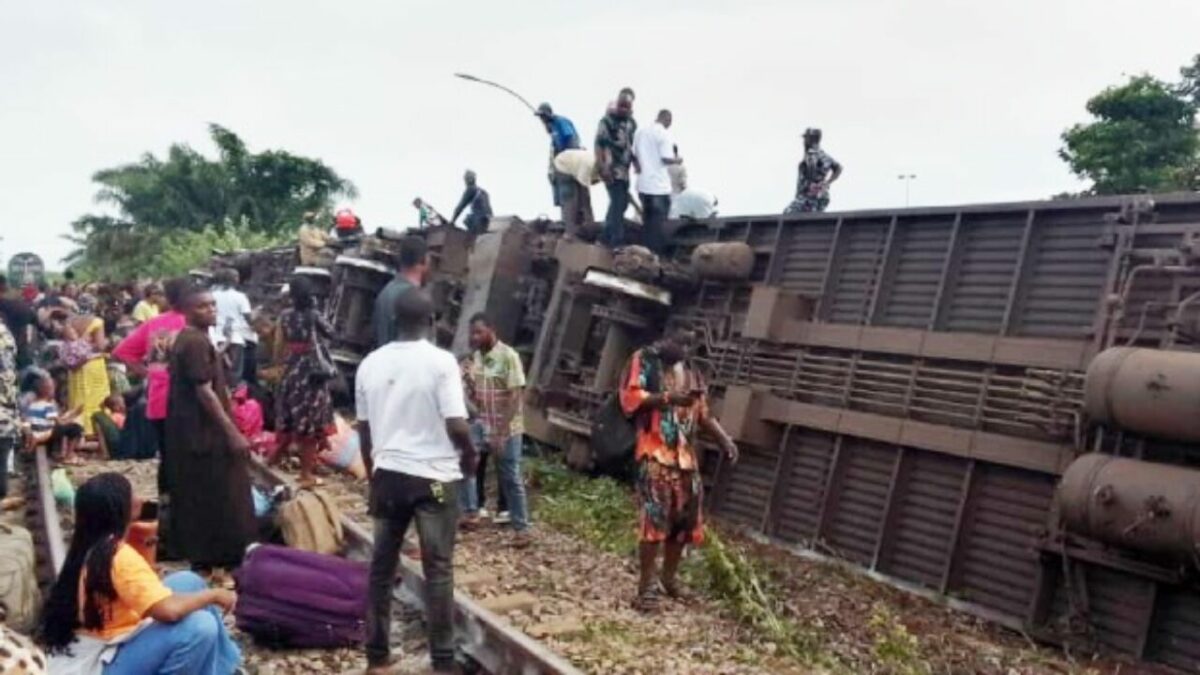
According to the NRC preliminary report with reference number NO.MDP.36/VOL.37/151, the derailment affected five coaches, one locomotive and a power car.
Three coaches and the power car overturned, while other rolling stock derailed but remained upright.
The corporation said emergency response operations were immediately activated with support from the Delta State Government and relevant emergency agencies, including the Nigeria Police Force, the Federal Road Safety Corps (FRSC), the National Emergency Management Agency (NEMA), local authorities, and medical teams.
It said all passengers were evacuated within two hours of the incident.
The accident, however, resulted in four confirmed fatalities comprising three adults and one child, while 64 people were reported injured.
The NRC said the injuries included bruises, deep lacerations, blunt trauma, musculoskeletal strain, lumbar symptoms and maxillofacial injuries, among others.
It added that 28 passengers were treated and discharged at the Railway Hospital, Owa-Oyibu, while 36 others were taken to general hospitals in Owa-Oyibu, Owa-Alero and Central Hospital, Agbor.
Most of those admitted were discharged within 72 hours, while three people, including an NRC staff member who required surgical intervention, remained under specialist medical care. Two of the affected persons subsequently underwent surgery.
The corporation also clarified that the initial report of five fatalities was corrected to four following verification with the Delta State medical team responsible for handling the deceased.
On the possible cause of the accident, the NRC said its internal inquiry identified the sudden development of a bogie or wheel defect while the train was in motion as a possible primary factor.
According to the report, such a defect could have resulted in abnormal wheel-rail interaction, excessive impact loading and loss of running stability.
The inquiry also found that the possible manner in which the brakes were applied may have contributed to the severity of the accident.
The NRC, however, described both findings as working hypotheses pending a comprehensive investigation.
“The definitive cause or causes of the accident will be determined through comprehensive analysis and will be set out in the final report,” the corporation stated.
The NRC also said its site examination found that the railway points were intact and that there was no evidence of track vandalism.
This, it noted, differed from two previous accidents involving the same WITS service on November 1 and November 8, 2025, which were attributed to track vandalism.
The corporation said the NSIB had commenced an independent investigation in line with statutory requirements and that it was fully cooperating with the process.
“The Nigerian Railway Corporation is fully cooperating with the NSIB investigation and will be guided by its findings and recommendations. The NSIB final report remains pending,” it said.
To prevent a recurrence, the corporation recommended comprehensive inspections and safety audits of rolling stock, tracks and railway infrastructure across all operational corridors before equipment is returned to service.
It also called for enhanced maintenance and condition-monitoring programmes, timely replacement of defective components and adequate availability of critical spare parts.
The NRC further recommended continued investment in modern rolling stock and railway infrastructure, alongside a review of operational procedures and replacement of obsolete practices with updated Standard Operating Procedures.
It said operational safety compliance, monitoring and enforcement must also be strengthened across the railway system.
On emergency response, the corporation called for regular emergency drills, improved rescue capabilities, stronger coordination among emergency agencies and better passenger awareness and communication systems.
It also recommended continuous professional development, accident-prevention training and periodic competency assessments for railway personnel.
The NRC further urged the government to provide sustainable funding for railway modernisation, optimisation of existing assets and development of new infrastructure and services.
It also called for a review of its insurance and compensation framework to ensure adequate coverage for medical treatment, disability support and compensation for fatalities, as part of measures to strengthen passenger and staff welfare protection.
We’ve got the edge. Get real-time reports, breaking scoops, and exclusive angles delivered straight to your phone. Don’t settle for stale news. Join LEADERSHIP NEWS on WhatsApp for 24/7 updates →
Join Our WhatsApp Channel