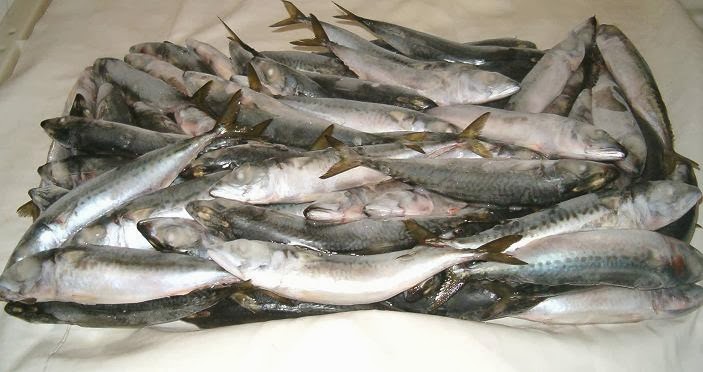
The federal government has commenced a fresh drive to increase domestic fish production and reduce Nigeria’s dependence on fish imports, with the minister of Marine and Blue Economy, Dr Adegboyega Oyetola, inaugurating a technical committee to develop an actionable roadmap for the sector.
Oyetola, who inaugurated the Technical Committee on Accelerating Fish Production in Nigeria in Abuja on Thursday, said the initiative was designed to move beyond policy recommendations and deliver coordinated interventions capable of producing measurable improvements in fisheries and aquaculture.
He said fish remained a major source of animal protein for millions of Nigerians, while the fisheries and aquaculture value chain supported livelihoods across production, processing, marketing, transportation and other related activities.
“Fish is an important source of animal protein for millions of Nigerians. The fisheries and aquaculture sector sustains livelihoods across production, processing, marketing, transportation and related services. However, domestic production remains substantially below national demand, with consequences for food security, household incomes and foreign-exchange resources,” Oyetola said.
The minister identified high production costs, particularly feed prices, inadequate access to quality fish seed and broodstock, weak fish-health and biosecurity systems, post-harvest losses and insufficient cold-chain and storage infrastructure as some of the major challenges limiting the sector.
He also listed limited access to affordable finance, gaps in research and innovation, weak data systems, inadequate standards and traceability, as well as underdeveloped markets among the constraints requiring urgent attention.
According to him, the transfer of fisheries and aquaculture functions to the Federal Ministry of Marine and Blue Economy had created a stronger institutional platform for tackling the challenges as part of the government’s broader blue-economy agenda.
“The transfer of fisheries and aquaculture functions to the Federal Ministry of Marine and Blue Economy has provided a stronger institutional platform for addressing these challenges as part of Nigeria’s broader blue-economy development,” he said.
Oyetola reaffirmed the ministry’s commitment to raising sustainable domestic fish production, strengthening the fisheries value chain and progressively reducing the country’s dependence on fish imports.
He recalled that the ministry, in collaboration with the National Institute for Policy and Strategic Studies (NIPSS), held a strategic roundtable on October 29, 2025, on accelerating fish production in Nigeria.
The roundtable produced recommendations aimed at addressing the production and value-chain challenges facing the industry.
He said the newly inaugurated committee was therefore constituted to review those recommendations and convert validated proposals into a practical and prioritised implementation roadmap.
“Your assignment is not to develop another policy or establish a parallel programme,” Oyetola told members of the committee.
He directed the committee to assess the roundtable recommendations against the National Policy on Marine and Blue Economy, the National Fisheries and Aquaculture Policy, relevant laws, existing government programmes and the statutory mandates of relevant institutions.
The committee is expected to scrutinise each recommendation and determine whether it should be adopted, refined, integrated into existing frameworks, subjected to further study or discarded as unviable.
It will also map existing initiatives across the public, private and development sectors to strengthen proven interventions and avoid duplication in the deployment of scarce resources.
“Your final output should include a clear implementation roadmap and matrix setting out the priority interventions, responsible institutions, timelines, indicative costs, funding options, performance indicators and required approvals,” the minister said.
He added that the committee should identify credible opportunities for private-sector investment, public-private partnerships, development finance and other sustainable funding arrangements.
Oyetola urged members, drawn from government, academia, professional bodies, research institutions and industry, to approach the assignment with urgency, objectivity and a strong focus on results.
He said their recommendations must be realistic, evidence-based and financially responsible, while delivering tangible gains in fish production, job creation and food security.
The minister assured the committee of the ministry’s institutional support, expressing confidence that its work would provide a practical pathway for accelerating growth in Nigeria’s fisheries and aquaculture sector.
Earlier, the Permanent Secretary of the Federal Ministry of Marine and Blue Economy and Chairman of the committee, Mrs Fatima Sugra Mahmood, assured that members would approach the assignment with a strong sense of responsibility.
She said the committee would thoroughly review the recommendations of the 2025 roundtable and translate them into practical interventions capable of delivering measurable results.
Mahmood said the committee would work with relevant government institutions, researchers, industry stakeholders and development partners to identify priority actions, address existing gaps and develop a realistic implementation roadmap.
She said the objective was to accelerate sustainable fish production, strengthen the fisheries value chain and contribute to Nigeria’s food security and economic development.
Also speaking on behalf of other members, Professor Akintola Shehu Latunji, Professor of Fisheries at Lagos State University, thanked the minister for inaugurating the committee.
He said members would collaborate with relevant stakeholders to deliver on the mandate and catalyse fish production across the country.
The committee comprises representatives from government, academia, research institutions, industry associations and development organisations.
Members include Mahmood as Chairman; Mr Omoragbon Wellington, Director, Federal Department of Fisheries and Aquaculture, Abuja; Mr Garba Usman, Director, Federal Department of Fisheries and Aquaculture, Lagos Office; Professor Ayo Omotayo, Director-General, NIPSS; Professor Sule Abiodun, Executive Director, Nigerian Institute for Oceanography and Marine Research; Professor Akintola Shehu Latunji of Lagos State University; and Professor Sadiku Suleiman Omeiza of the Federal University of Technology, Minna.
Others are Dr Faith Izibenua Zibs-Godwin, Bayelsa State Commissioner for Marine and Blue Economy; Dr Charles Okaga, Technical Assistant to the Minister of Marine and Blue Economy; Dr Ebinimi Ansa, President, Fisheries Society of Nigeria; Mr Onoja Sunday, President, Catfish Farmers Association of Nigeria; Mr Mashi Gabriel Sani, President, Fisheries Cooperative Federation of Nigeria; Mr Remi Ahmed, President, Tilapia Development Association of Nigeria; and Dr Charles Iyangbe, Country Representative, WorldFish Nigeria.
The committee has eight weeks to submit its report.
We’ve got the edge. Get real-time reports, breaking scoops, and exclusive angles delivered straight to your phone. Don’t settle for stale news. Join LEADERSHIP NEWS on WhatsApp for 24/7 updates →
Join Our WhatsApp Channel