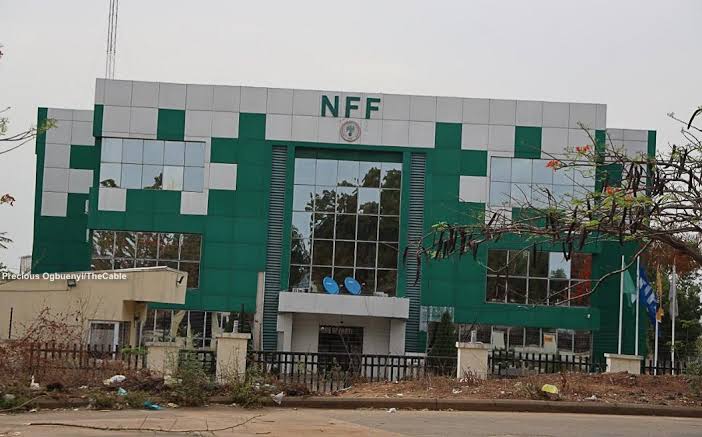
The Nigeria Football Federation (NFF) Congress is set to play a decisive role in shaping the proposed reform of Nigerian football as members begin scrutinising the National Sports Commission’s (NSC) draft reform blueprint this week.
The development marks a critical stage in the federal government’s plan to overhaul the administration of Nigerian football, with the NSC expected to deepen consultations with Congress and other stakeholders before a final roadmap is adopted.
The draft blueprint has already been circulated to members of the NFF Congress, giving them an opportunity to examine the proposals and submit observations, recommendations and amendments.
NSC chairman Shehu Dikko has insisted that Congress, as the NFF’s highest decision-making body, must be fully involved in determining the future direction of the federation.
“The Congress has to be carried along. We have started the consultation with the Congress members. We have given them the blueprint and we are asking them to look at it, give us their input and then we can move forward,” Dikko said.
The latest round of consultations is expected to bring Congress members and representatives of various football constituencies into more detailed discussions on the substance of the proposed reforms.
The process is also expected to involve State Football Associations, clubs, players, coaches, referees, the media and other stakeholders.
Congress members had previously expressed support for a comprehensive reset of Nigerian football following an August 28 meeting with Dikko at the NSC headquarters in Abuja.
Representatives drawn from different zones and football constituencies were briefed on President Bola Ahmed Tinubu’s reform agenda, including governance, infrastructure, funding and the broader sports economy.
While Congress indicated its willingness to support the reform process, members were expected to await the outcome of consultations involving the NSC, FIFA and CAF before endorsing the implementation of a final roadmap.
What Congress will scrutinise
Among the major areas expected to come under scrutiny are NFF governance and accountability, stakeholder representation, the electoral system, domestic competitions, grassroots and elite development pathways, financial transparency and the overall structure of football administration.
The proposed electoral reforms could prove particularly significant. Dikko has previously suggested the possibility of a system under which presidential candidates would present their complete teams and programmes to Congress for consideration.
The NSC has also indicated that the reform programme will be structured around immediate, medium-term and long-term measures, with some reforms extending beyond any transitional administration.
One of the most sensitive issues is the possibility of a FIFA-backed normalisation arrangement. Dikko explained that any such committee would ordinarily be assessed and appointed by FIFA, with a clearly defined mandate and timeline.
He has also warned against individuals with ambitions to contest future NFF elections using a transitional reform structure to advance their personal interests.
The reform process follows President Tinubu’s directive for a comprehensive restructuring of Nigerian football, with emphasis on stronger governance, administration, stakeholder representation, development pathways, domestic competitions and accountability.
Leadership vacuum
The directive came after the resignation of former NFF President Ibrahim Musa Gusau, General Secretary Mohammed Sanusi and members of the federation’s Executive Committee, leaving an unusual leadership vacuum within the football governing body.
The NFF subsequently suspended preparations for the previously scheduled September elective congress, while Dr Emmanuel Ikpeme was endorsed to oversee the Secretariat on an interim basis pending further engagements between the government, FIFA, CAF and football stakeholders.
With the draft reform blueprint now in the hands of Congress members, their recommendations could significantly influence the final shape of Nigeria’s football reset.
The central question is whether the process will result merely in a change of leadership or deliver deeper institutional reforms capable of addressing longstanding concerns over governance, elections, funding, development and accountability.
For Congress, the consultations provide an opportunity to ensure that any final roadmap enjoys broad stakeholder support and establishes a sustainable framework for the next generation of NFF leadership.
For the NSC, the immediate task will be to harmonise the various recommendations and produce a reform framework that can secure the confidence of Congress, the wider football community, FIFA and CAF while maintaining the stability and autonomy of Nigerian football.
We’ve got the edge. Get real-time reports, breaking scoops, and exclusive angles delivered straight to your phone. Don’t settle for stale news. Join LEADERSHIP NEWS on WhatsApp for 24/7 updates →
Join Our WhatsApp Channel