
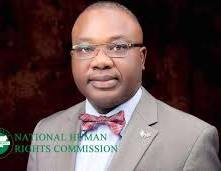
The National Human Rights Commission (NHRC) has recorded 297,943 human rights complaints across Nigeria in August 2026, with renewed attacks on rural communities, hate speech and political violence emerging as major threats to the country’s human rights landscape.
Executive Secretary of the Commission, Dr Tony Ojukwu, made this disclosure while presenting the NHRC’s August 2026 Human Rights Dashboard, saying the figure underscored the scale of rights-related challenges confronting Nigerians.
Ojukwu said the monthly dashboard, supported by data from the Commission’s Human Rights Observatory, was designed to strengthen transparency, accountability and evidence-based monitoring of human rights violations across the country.
He identified insecurity as the dominant human rights concern in August, particularly in Benue and Niger states, where renewed attacks on rural communities were recorded despite ongoing security operations.
The NHRC boss called for thorough and transparent investigations into the killings and urged security agencies to ensure that those responsible for the attacks were brought to justice without further delay.
“Insecurity again dominated the human rights landscape,” Ojukwu said, noting that the situation required sustained action rather than temporary responses.
He, however, commended security agencies for what he described as notable successes in rescuing abducted Nigerians during the month under review.
According to him, 308 Nigerians abducted across Niger and Kogi states were rescued on August 5 in a coordinated, intelligence-led security operation.
He also cited the release of several persons held in captivity in Benue State, as well as the rescue of 15 NYSC corps members abducted in Kogi State while travelling from Abuja after completing their orientation programme in Bayelsa State.
Ojukwu said the successful operations demonstrated what could be achieved when intelligence gathering, political will and inter-agency coordination were effectively deployed.
He urged security agencies to make such coordinated responses a consistent feature of their operations.
The Executive Secretary further stressed that the responsibility of government does not end with rescuing victims of abduction, saying survivors must receive adequate support to recover and reintegrate into society.
He said such support should include medical, psychological and psychosocial care, family reunification and other forms of assistance required by survivors.
Beyond insecurity, Ojukwu expressed concern over what he described as an increase in hate speech and political violence involving political and religious actors.
He said the Commission had condemned what it considered hateful and divisive statements attributed to Sheik Sani Jingir as well as alleged incitement to violence by his mentor, Francis Fadahunsi, stressing that the NHRC had called for appropriate investigation and prosecution.
With preparations for the 2027 general elections expected to intensify, Ojukwu warned political actors to abide by the rules and respect citizens’ fundamental rights.
He said the electoral process was inseparable from the enjoyment of rights, including freedom of association, assembly, expression and movement, as well as the rights to life and dignity of the human person.
“The National Human Rights Commission will remain vigilant to ensure that political actors play by the rules,” he said, promising continued engagement with stakeholders to protect the right of citizens to participate in the democratic process.
Furthermore, Ojukwu used the occasion to express the Commission’s concerns over the Foreign Aid Bill currently before the National Assembly, warning that while transparency and accountability in foreign assistance were legitimate objectives, the legislation must not undermine Nigeria’s civic space.
He said the NHRC was particularly mindful of concerns raised by civil society organisations, the media and international partners over the potential implications of the proposed legislation for the independence of organisations working to promote and protect human rights.
The Commission, he said, was urging the National Assembly to engage constructively with stakeholders, particularly on provisions affecting freedom of association, freedom of expression and the independence of civil society organisations.
Ojukwu disclosed that the Commission would continue to monitor the legislative process from a human rights perspective and intervene where necessary within its statutory mandate.
He said the NHRC’s mandate was not limited to responding to violations after they occurred but also involved preventing violations through early warning, monitoring and evidence-based interventions.
“Our mandate is as much about prevention as it is about redress,” he said.
According to him, the monthly dashboard and Human Rights Observatory enable the Commission to identify emerging risks, highlight violations, demand accountability, recognise effective state responses and intervene early on issues capable of shaping Nigeria’s human rights environment for years to come.
Ojukwu stressed that the 297,943 complaints recorded in August should not be viewed merely as statistics, but as evidence requiring concrete government action.
He said the information gathered by the Commission would be deployed for investigations, referrals, policy engagement, early warning and accountability.
The NHRC Executive Secretary also acknowledged the contributions of development partners, civil society organisations, the media and security agencies to the Commission’s human rights monitoring activities.
He said sustained collaboration among these stakeholders remained critical to strengthening mechanisms for identifying, documenting and responding to human rights violations across Nigeria.
We’ve got the edge. Get real-time reports, breaking scoops, and exclusive angles delivered straight to your phone. Don’t settle for stale news. Join LEADERSHIP NEWS on WhatsApp for 24/7 updates →
Join Our WhatsApp Channel