As women and children descend into dangerous mining pits, deaths continue to mount. But beyond the bodies, a bigger question remains: who profits from the minerals they risk their lives to extract? In this report, CHRISTIANA NWAOGU examines the dangerous and often hidden chain behind Nigeria’s illegal mining economy, where vulnerable Nigerians at the bottom of the chain continue to pay the supreme price.
From Taraba to Zamfara, Niger to Nasarawa states, the sad stories are strikingly similar. Mining pits collapse, claiming lives, while cases of lead poisoning continue to expose the deadly consequences of unsafe mining practices. Yet the victims inside the pits are rarely the people who control the entire business. They are often the most visible and vulnerable part of a much larger economic chain, in which those taking the greatest risks may have the least control over what is extracted, where it goes and who ultimately benefits.
Although the crackdown on illegal mining across Nigeria is gathering momentum, with security agencies stepping up arrests and enforcement operations against individuals and networks accused of unauthorised exploitation of the nation’s mineral resources, the sad reality is that shutting down mining sites and banning underground labourers alone does not necessarily dismantle the system that sustains them.
This is largely because behind the pits lie layers of financiers, buyers, intermediaries, transporters, and other players who help move minerals from remote communities into wider markets, often far removed from the dangers faced by those at the point of extraction.
One of the most disturbing revelations made to LEADERSHIP Sunday is the claim that some illegal mining operators pay host communities as little as N20 million to gain access to mineral-rich areas, even as the same communities are left to bear the consequences of the resulting activities.
This is even as various reports indicate that, beyond environmental degradation and health risks, mining operations in some locations have been linked to insecurity, exposing residents to violence, displacement, and other dangers, while the minerals extracted from their land generate far greater economic value elsewhere. For communities that are already vulnerable, the bargain can therefore come at a devastating cost.
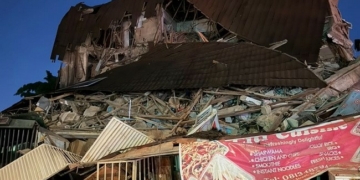
Only days ago, in the local government area of Bali, Taraba State, miners were reportedly inside a pit when the ground suddenly collapsed around them. Among those feared trapped were women and children, a grim reminder that, at the bottom of Nigeria’s illegal mining economy, it is often those doing the most dangerous work who pay the highest price.
By the following day, at least five bodies had been recovered, according to the police, while rescue efforts continued to determine whether more victims remained buried. Earlier reports from residents had put the number feared trapped or dead at more than 20, with the final toll still being established.
Today, for the families of Mayo Kam, the question is painfully simple: where are their loved ones? But on the lips of many Nigerians is a bigger question: why are women and children still entering mining pits where death has become a known occupational hazard?
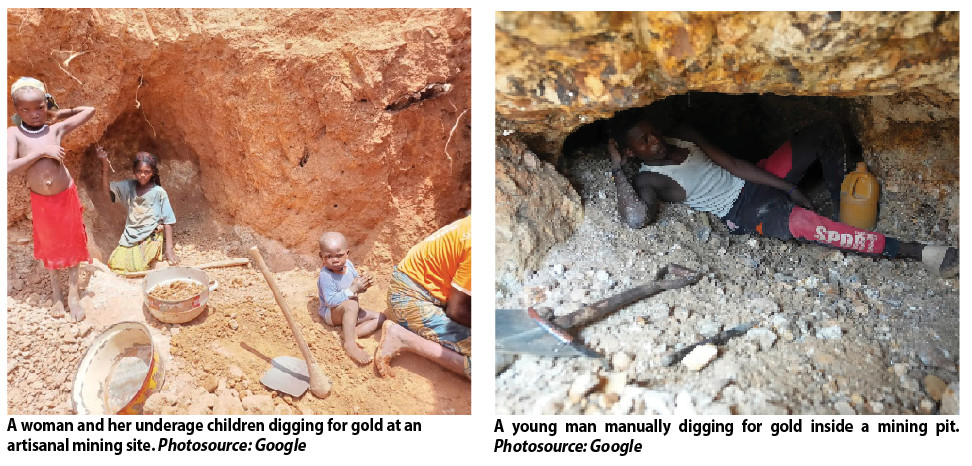
For mining expert Mallam Kofarsoro Abdulrahman, the answer lies in the structure of the mining economy and the desperation that keeps vulnerable people at its lowest rung. A child in a mining community, he explained, may not own a pit, hold a mining licence, operate machinery, or control a mineral-trading company. Instead, the child may be sent to labour in the pits or made to perform other tasks for little pay.
He stated that a woman, on her part, may have no control over the mineral trade either. She may be washing ore, breaking rocks, carrying materials, or performing other low-paid, physically demanding tasks at the mining site.
Abdulrahman said, “And what of the young man? He may enter an unstable excavation because, in a community where formal employment opportunities are scarce, mining offers one of the few immediate sources of cash for him.”
In each case, Abdulrahman’s explanation points to the same reality: those most exposed to the dangers of illegal mining are often not the owners of the pits or the controllers of the mineral trade, but those with the least economic power to walk away from it.
He added that this does not make the activity legal or safe, but it does raise an important policy question.
Another mining expert, Engr Ezekiel Ukagno, argued that if the government removes people from the pits without addressing the economic system that keeps pulling them back, what changes? He asked.
‘The pits may be closed today, but poverty remains tomorrow,’ he buttressed.
Deadly Pits, Recurring Tragedies Across Nigeria’s Mining Belt
The history of mining-related deaths in Nigeria is littered with tragedies that have occurred across different states and over several years. In Zamfara, one of the most devastating episodes was the lead-poisoning crisis linked to artisanal gold mining that emerged in 2010. The contamination associated with the processing of lead-rich gold ore resulted in the deaths of hundreds of children.
The World Health Organisation and subsequent assessments documented the scale of the crisis, with later estimates putting the number of children who died at between 400 and 500.
The dangers have not been limited to pit collapses or environmental contamination. In November 2016, about 40 gold miners were reportedly killed when gunmen attacked mining operations in Zamfara. Around the same period, a mining site in Nasarawa State also came under attack, leaving four people dead, including a Chinese national.
Aside from Taraba State, this recent record also includes deadly incidents involving mining. In December 2017, a clash between security personnel and suspected illegal miners reportedly left about 15 people dead.
Years later, in 2024, another tragedy occurred inside the Gashaka-Gumti National Park, where at least five miners were reported killed after a mining pit collapsed.
In Niger State, the pattern has been equally grim. In June 2024, a mining pit at Galkogo in Shiroro local government area collapsed after heavy rainfall, trapping dozens of miners underground. Initial reports said at least one person had died, while the number feared trapped varied between 30 and 50. A subsequent investigation put the eventual death toll at 15, illustrating how casualty figures can change as rescue operations and investigations progress.
A few weeks after the Galkogo incident, another mining pit in Niger State collapsed, killing three people and injuring another. The incidents continued into 2025. In the Paikoro local government area, five women were reportedly killed when an illegal mining pit collapsed. In contrast, another collapsed in Farin-Doki, Shiroro, reportedly claimed the lives of two suspected illegal miners.
In Niger State, the latest tragedy is the death of 37 suspected illegal mining labourers in NSCDC custody, reportedly linked to poor ventilation at the facility where they were detained.
Nasarawa State has also recorded its own share of tragedies, including incidents in which people who were not necessarily miners became victims of abandoned or active mining sites. In January 2024, three people were reportedly killed when a sand excavation collapsed at Unguwar Tandu in Karu local government area.
In April 2025, two children, aged seven and nine, also drowned in an abandoned mining excavation at Udege Mbeki after the pit filled with water.
Zamfara again recorded a deadly pit collapse in September 2025, when at least 13 miners were reportedly killed after mining pits collapsed in Kadauri, Maru local government area. Two other miners were initially reported missing as rescue operations continued.
In Plateau, another mining pit collapsed in the Dura community, Jos South LGA, just a day after the September 2025 Zamfara disaster. Four miners were reported dead.
Sokoto, Bauchi, Other Tragedies
Sokoto state also recorded fatal excavation incidents. In May 2026, two brothers, both children, died after an excavation pit collapsed on them in Boyekai, Goronyo local government area. Reports said the children had been digging for laterite at a site used by residents to source building materials when the pit caved in. Other children were reportedly at the site, and some were rescued with injuries.
Bauchi State also has several documented cases. In April 2023, two women were reportedly killed when a mining pit collapsed on them at Bar Kudu in the Bogoro Local Government Area, while three other women were injured.
Then, in August 2023, four suspected illegal miners were reported killed after a mining site collapsed at Kogo Kadage in the Ningi local government area. The miners were reportedly excavating lead when the pit collapsed.
In March 2024, in Cross River State, two suspected illegal miners died when a mining well collapsed at Buya in the Obanliku local government area, while three others were injured. The miners were reportedly extracting tourmaline, a rare mineral found in the area. A source told our correspondent that the victims had been engaged for several months and were paid to dig for the mineral.
Our correspondent further gathered that a 2025 investigation by CrossRiverWatch identified Biase, Yakurr, Akamkpa, Boki, Obubra, Ikom, and Obanliku among the Cross River LGAs hosting unregulated mining operations.
The investigation followed the deaths of two young men at an illegal mining site in Obanliku.
Taken together, these incidents reveal a pattern that extends well beyond isolated pit collapses. From lead poisoning in Zamfara to attacks on mining communities and collapsing excavations in Niger, Nasarawa and Taraba, the human cost has repeatedly fallen on miners, their families and host communities. In several cases, the true scale of the loss only became clear after rescue operations or subsequent investigations, suggesting that the figures publicly recorded may represent only part of the toll.
Nasarawa Bans Teenage Miners
The question has become so urgent that the Nasarawa State Government has banned anyone under 18 from engaging in mining activities across the state.
Announcing the measure on 18 September, the state government also set up a special monitoring and enforcement team to tackle illegal mining and child labour at mining sites.
Mining expert Romanus Ikighe described the decision as significant but said its real test would be enforcement, particularly whether authorities would go beyond removing children from mining sites to identify and sanction the adults who recruited them, the operators who benefited from their labour, and the mineral buyers who ultimately profited from the trade.
Who Profits When These Pits Collapse?
The person descending into the pit may receive only a fraction of the eventual value of what is brought out of it. But where does the rest of the money go, and who controls the chain linking the miner at the bottom to the final buyer at the top?
These are questions that security expert Captain Lengs Timothy said must be addressed if Nigeria is serious about tackling illegal mining. He argued that the investigation should not end with the arrest of the miners found inside the pits. It should extend to those who finance operations, provide logistics, buy minerals, and ultimately profit from the trade.
According to him, reports and allegations have repeatedly pointed to the possible involvement of powerful interests, including some government officials and former and serving political office-holders, but something can still be done.
He further stated: “The Taraba tragedy is not simply another mining accident. It comes against the backdrop of government efforts to curb illegal mining in the state. Channels Television reported that a state task force had recently dispersed miners from the Mayo-Kam site, seized machinery and sent away alleged illegal miners from several states and neighbouring countries. The state had also banned illegal mining through an executive order.”
“Yet the miners returned. Or, perhaps more accurately, the economic activity returned. And then the pit collapsed.
“This raises questions that go beyond the immediate cause of the disaster. If the government knows a site is dangerous, who continues to operate there? If a task force shuts down an illegal operation, who reopens it?
‘‘Who supplies the machinery? Who pays the workers? Who buys the minerals? And how does a mineral extracted from an illegal pit eventually enter a legitimate commercial chain? Those questions for me are more difficult to answer than counting bodies.”
The spokesperson for the Taraba State Police Command, ASP Victor Mshelizah, confirmed the incident but said only five people lost their lives.
He said efforts were ongoing to search the pit further to determine whether any more miners were still trapped.
The state task force team had recently dispersed miners from the site, seized their machines, and sent away alleged illegal miners from Zamfara, Bauchi, Sokoto, the Republic of Cameroon, and Chad.
Mining Deaths Spark Wider Safety Concerns
The deaths of suspected illegal miners in detention in Niger State, alongside a series of fatal mining accidents across the country, have renewed concerns about the safety of mining workers and communities.
The government, labour unions and experts have called for stronger regulation, improved awareness and urgent measures to prevent further loss of lives.
Alake Dispatches Ministerial Probe Team
Minister of Solid Minerals Development, Dele Alake, has deployed a high-powered team of officials to Niger State to investigate the deaths of detainees in Minna who were allegedly arrested over suspected involvement in illegal mining activities.
Alake, in a statement issued on Friday, 18 September 2026, expressed condolences to the government and people of Niger State, describing the incident as a tragic loss of lives.
He sympathised with Governor Mohammed Umaru Bago, the affected families and communities, while commending the governor for declaring a period of mourning and establishing an investigative framework to determine the circumstances surrounding the deaths.
The minister said a thorough, transparent and independent investigation was necessary to establish accountability and prevent similar incidents in detention and correctional facilities.
“Given the allegation that the detained persons were arrested on suspicion of carrying out illegal mining, I have deployed a high-powered team of officials to Niger State to investigate the circumstances and ascertain the facts of the matter,” Alake said.
Union Raises Safety Concerns
Beyond the deaths in detention, the National Union of Mine Workers (NUMW) has raised concerns over the growing number of mining-related fatalities in the country, attributing the problem to poverty, weak enforcement of safety regulations and the activities of unregistered miners.
Speaking on recent incidents in Taraba and Niger states, as well as mining accidents in Kogi State, NUMW President, Comrade Hamza Muhammed, said the union was still working to establish the total number of people who had died in mining accidents across the country this year.
55 Miners Earlier Died In Kogi – NUMW
He said some incidents were yet to be fully verified, but recalled recent mining-site collapses in Kogi State, including one in which about 50 people were reportedly killed. Two other incidents in the state, he said, claimed two and three lives, respectively.
Muhammed said the union had visited some affected communities and warned miners and residents not to enter unstable mining pits, particularly during the rainy season, when the risk of collapse increases.
He said the problem was not limited to union-registered workers, stressing that the union’s primary concern was the protection of human life.
“Some of them are inside with the union. Some of them are not registered. But our concern is for human life,” he said.
He said workers who attempt to organise or participate in collective bargaining sometimes risk losing their jobs, making it difficult for the union to identify workers and advocate for their safety.
Muhammed said the union had previously engaged with the International Labour Organisation (ILO), the Ministry of Labour and other stakeholders on issues such as unionisation and child labour in the mining sector.
While the stakeholders had responded positively to some of the union’s proposals, he said the main challenge remained implementation. “The only thing we are looking at is implementation,” he said.
The union called for stronger enforcement of mining and labour regulations, improved collaboration between government agencies and workers’ representatives, and greater protection for miners seeking to organise.
Expert Calls For Greater Awareness
A geologist and former president of the Nigerian Mining and Geosciences Society (NMGS), Prof. Olatunji Akinade, described the ongoing loss of life in mining activities as unfortunate, attributing some incidents to poverty, ignorance and the pursuit of short-term economic gains.
Akinade, of the Department of Geology at the University of Ibadan, said that despite government efforts to raise awareness of the dangers associated with mining, some individuals continued to expose themselves to serious risks.
He said the situation was not unique to Nigeria, noting that the economic incentives associated with mining could encourage people to ignore safety warnings.
“It’s unfortunate that despite all the enlightenment by the government at a state level, individuals should risk their lives at mine sites. And unfortunately, we are recording this kind of catastrophic event, which is not good at all,” he said.
According to him, increased public awareness and sensitisation remained critical to reducing mining-related deaths.
The former NMGS president also advocated involving traditional rulers and religious leaders in educating mining communities about the dangers of unsafe and unregulated mining.
“We cannot, because of money, risk our lives. We encourage people to engage. Engagement must not stop,” he said.
He suggested that religious and traditional institutions could help government agencies communicate safety messages more effectively to people in mining
We’ve got the edge. Get real-time reports, breaking scoops, and exclusive angles delivered straight to your phone. Don’t settle for stale news. Join LEADERSHIP NEWS on WhatsApp for 24/7 updates →
Join Our WhatsApp Channel