
Lagos State Government has intensified its drive to strengthen digital infrastructure, with more than 3,000 kilometres of fibre-optic infrastructure already deployed between 2019 and 2025 and plans to expand the network to about 6,000 kilometres.
The development is expected to strengthen broadband connectivity, improve digital public services and reduce some of the infrastructure constraints confronting technology companies, startups and other businesses operating in the state.
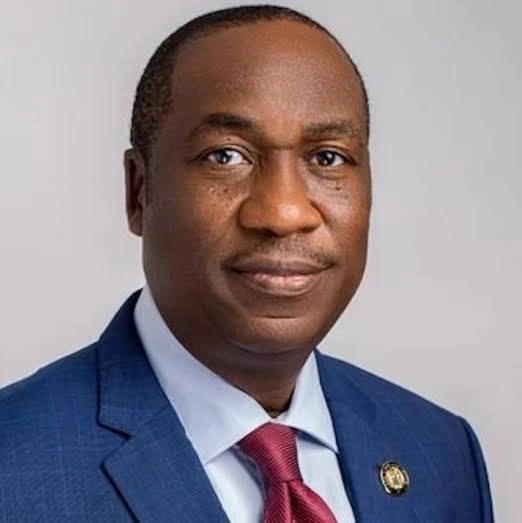
The Deputy Governor of Lagos State, Dr Kadri Obafemi Hamzat, disclosed this while speaking on the state’s digital infrastructure investments at PodFest 2026.
Hamzat said the government had moved beyond viewing digital infrastructure as an auxiliary component of development, describing it as critical infrastructure required to support the modern economy.
He said the next phase of the fibre rollout would extend ducts along strategic corridors, while the Lagos State Infrastructure Maintenance and Regulatory Agency (LASIMRA) had also attracted more than $22 million in direct investment commitments for further cable expansion.
According to him, the benefits of the fibre expansion would cut across sectors, from technology businesses and creative industries to healthcare and education.
“For a creator, that means faster uploads. For a startup, it means lower cost. For a school or a health centre, it means access. And for our hospital, it means faster record retrieval,” Hamzat said.
The push comes as demand for reliable and high-capacity connectivity continues to rise in Nigeria. Data from the Nigerian Communications Commission (NCC) showed that broadband subscriptions reached 124.42 million in July 2026, while internet data consumption rose to 1.66 million terabytes in the same month.
The figures underline the growing pressure on the country’s digital infrastructure as more Nigerians, businesses and public institutions depend on internet connectivity for payments, commerce, education, healthcare, entertainment and government services.
However, the concentration of fibre infrastructure in major economic centres remains a national challenge. NCC data analysed in July showed that Lagos had about 11,586.7km of deployed fibre, representing 11.46 per cent of the national total, while Lagos and the Federal Capital Territory together accounted for 18.35 per cent of Nigeria’s deployed fibre infrastructure.
This has raised questions about how rapidly digital infrastructure can be extended beyond major commercial centres, particularly as businesses increasingly require reliable broadband connectivity to operate from secondary cities and underserved communities.
At the national level, the Federal Government is pursuing a much larger fibre expansion programme under Project BRIDGE, which is designed to facilitate the deployment of 90,000km of fibre infrastructure across the 36 states and the Federal Capital Territory, connecting more than 770 local government areas.
The Lagos expansion therefore forms part of a broader push to address the infrastructure gap that has constrained broadband growth and increased the cost of delivering digital services in several parts of the country.
Hamzat said Lagos was also expanding its smart-city infrastructure, including the use of geographic information systems to map and manage digital infrastructure and the deployment of 5G-enabled smart poles.
He disclosed that about 650 surveillance cameras had been deployed across the state, with a long-term target of 3,000 cameras, although he acknowledged the high cost of the project.
The deputy governor also highlighted the state’s efforts to digitally connect its hospitals, allowing patient information to be accessed across healthcare facilities using a patient’s name and record number.
He explained that the initiative is intended to improve continuity of care by enabling hospitals to retrieve relevant patient information when individuals seek treatment at different facilities.
Lagos is also seeking to deepen digital payments in public transportation. Hamzat said about 6.2 million Lagos residents currently use Cowry Cards, with the government working towards a system that would allow the cards to be used seamlessly across the Bus Rapid Transit, rail and ferry systems.
Industry observers say the effectiveness of the fibre expansion will ultimately depend not only on the kilometres of cable laid but also on affordability, open access, network maintenance, electricity supply, right-of-way arrangements and the ability of operators to extend last-mile connectivity to homes and businesses.
For Lagos, the 6,000km target could therefore represent more than an infrastructure milestone if the network is efficiently shared and translated into wider access, better service quality and lower connectivity costs for residents and businesses.
The state government has also linked its digital infrastructure strategy to innovation and enterprise development, with Hamzat disclosing that the Lagos State Research and Innovation Council was supporting at least 90 research and development projects across sectors including health, education, mobility, technology, film, climate and culture.
He said more than N1.2 billion had been committed to innovators and researchers, while the Lagos State Employment Trust Fund had supported more than 200,000 small and medium-scale businesses with N15 billion in loans and grants.
The combination of fibre infrastructure, digital public services, innovation funding and smart-city systems, he said, is intended to position Lagos for an economy increasingly driven by technology, creativity and enterprise.
Consequently, the scale of Nigeria’s national fibre ambitions means Lagos will need to maintain coordination with federal digital infrastructure programmes and private telecom operators to ensure that multiple networks complement rather than duplicate one another.
We’ve got the edge. Get real-time reports, breaking scoops, and exclusive angles delivered straight to your phone. Don’t settle for stale news. Join LEADERSHIP NEWS on WhatsApp for 24/7 updates →
Join Our WhatsApp Channel