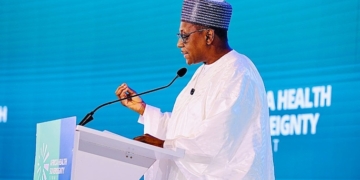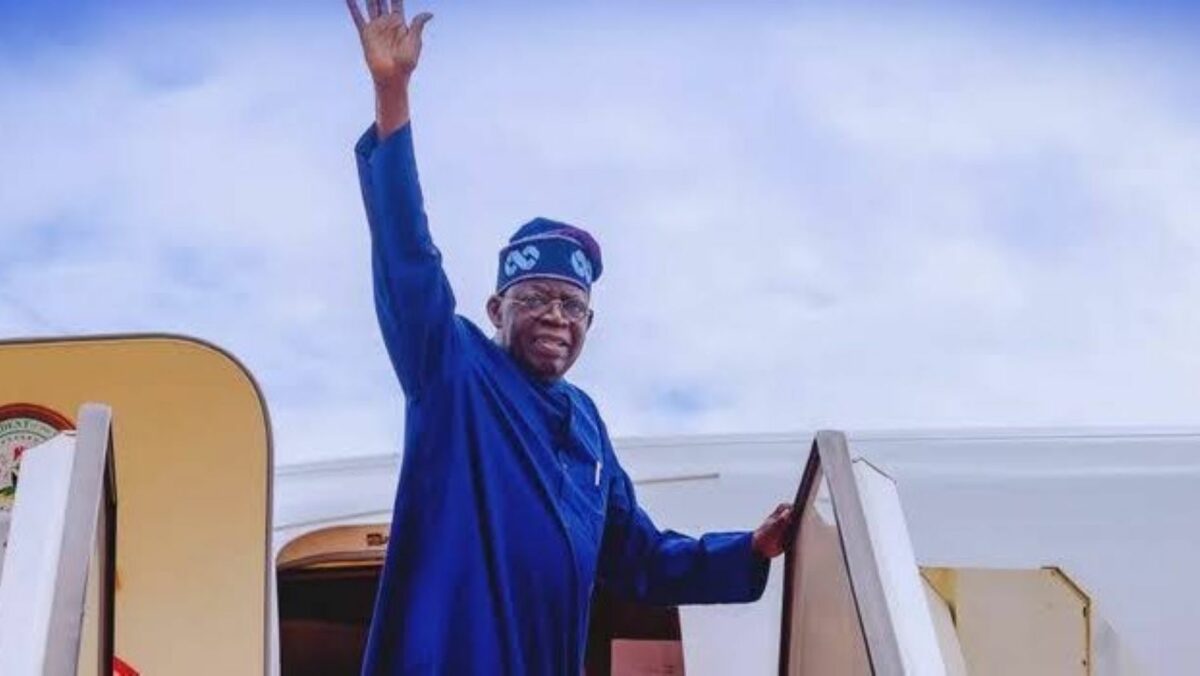
The true test of a presidency is not only what the President says when the world is listening but who he can trust to say it when he is not in the room. At the 81st Session of the United Nations General Assembly, the Vice President, Senator Kashim Shettima, passed that test with a performance that redefined deputyship in Nigerian foreign policy. To understand why it resonated so deeply, one must trace the shuttle diplomacy that brought him to New York.
Senator Shettima completed one of the most consequential diplomatic shuttles by any Nigerian Vice President in recent history. Moving within three weeks from the Atlantic coast of Luanda to the power corridors of New Delhi and then to the global podium of New York, he carried one President’s voice, one country’s pride, and one continent’s frustration. It was not just an outing; it was a statement about what intelligent loyalty looks like when it meets competence on the global stage.
What emerged across these capitals is a coherent doctrine—a Tinubu doctrine—that insists Africa can no longer be lectured about development while being denied tools to develop, that it can no longer supply the world while remaining poor, and that it can no longer be asked to keep the peace while others profit from its wars. While each stop mattered, New York was the anchor where all threads converged into demands for peace, prosperity, and human capital.
In Luanda, Angola, for the 21st Extraordinary Session of the Assembly of Heads of State and Government of the African Union, the agenda was supposed to be about mechanisms, roadmaps, and communiques—the usual alphabet soup of African diplomacy. Then, Nigeria took the floor and refused to whisper any longer.
For years, the elephant in the continental room has been the cyclical humiliation of Nigerians and other Africans in South Africa. Governments issued condemnations and the AU voiced concerns, but no one had the political will to institutionalise a solution. Vice President Shettima, delivering President Bola Ahmed Tinubu’s message, changed that. He did not shout. He did not threaten. He tabled the motion.
Nigeria formally expressed concern over recurring xenophobic and Afrophobic attacks. While it recognized South Africa’s sovereign right to enforce immigration laws and its contributions to the continent, Nigeria stressed that such attacks undermine African solidarity and require urgent collective attention. It then requested that the matter be placed on the agenda of the 40th Ordinary Session in January 2027 for appropriate action. In diplomatic language, this is not a mere request; it is a formal referral, moving xenophobia from social media trends into the official African Union archives.
Beyond that, he delivered President Tinubu’s subtle but sharp critique of Africa’s new scramble, warning against fragmented peace initiatives and a reliance on foreign military forces, mercenaries, and private contractors littering the Sahel and Central Africa, which erodes African ownership.
Then the Borno man stripped the veneer. To journalists, the Vice President took a leaf from Chinua Achebe, saying “those whose palm kernels were cracked by a benevolent spirits should learn to be humble.” He recalled Nigeria’s role in Southern African liberation, declaring that the government will no longer countenance the dehumanization of its people but will pursue robust conversations with South African brothers without overheating the polity, making it vehemently clear that certain situations are unacceptable. Speak softly, carry a big memory. That became the Shettima doctrine.
If Luanda was about dignity, New Delhi was about destiny. At the 18th BRICS Summit, the message was clear: the outdated rules of global governance must be rewritten to reflect today’s economic and demographic realities. Nigeria positioned BRICS not as an anti-West bloc, but as a lever to amplify the agency of the Global South.
The message was unmistakable—1945 is over and 2026 is here; an Africa of 1.5 billion people can no longer remain a spectator in institutions it did not design. Moving from protest to proposal, Nigeria invited investors to view the nation as the gateway to the AfCFTA, redefining resilience as an economy that withstands shocks while creating opportunities—the very core of the Renewed Hope Agenda.
On technology, he issued the summit’s defining directive: Nigeria is buoyantly open for deep cooperation across artificial intelligence, digital public infrastructure, fintech, telecommunications, cybersecurity, biotechnology, and advanced manufacturing. Developing countries must produce technology, create knowledge, and own intellectual property; a nation that owns no technology risks renting its future. We export what we do not own and import what we do not control, and that must end. He cited 3MTT training three million talents, Project BRIDGE expanding broadband, and national AI programmes for an open, secure, and inclusive digital ecosystem.
New York then became a synthesis where all threads fused and fidelity became a strategic weapon. For five days across four stages, VP Shettima carried Tinubu’s vision without dilution. At the General Debate, he demanded that Africa no longer fill the UN Security Council agenda from the margins. He insisted on two permanent seats with veto power plus five non-permanent seats, per the Ezulwini Consensus and Sirte Declaration. He channelled the conviction that 2026 cannot be governed by a 1945 distribution of power, invoking Nigeria’s peacekeeping sacrifices in Liberia, Sierra Leone, Darfur, Mali, and The Gambia as credentials.
– Nkwocha is Senior Special Assistant to the President on Media & Communications (Office of The Vice President)
We’ve got the edge. Get real-time reports, breaking scoops, and exclusive angles delivered straight to your phone. Don’t settle for stale news. Join LEADERSHIP NEWS on WhatsApp for 24/7 updates →
Join Our WhatsApp Channel