By Dr. George Agbakahi
When Abraham Lincoln stood before the Illinois State Capitol on June 16, 1858, and declared that “a house divided against itself cannot stand,” he was addressing an eternal truth about the lethal nature of internal fragmentation to any ruling coalition. It is within this context that the rising political temperature in Abuja must be made to cool down.
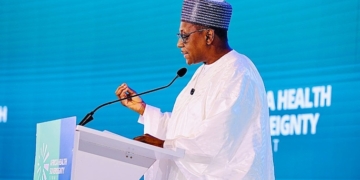
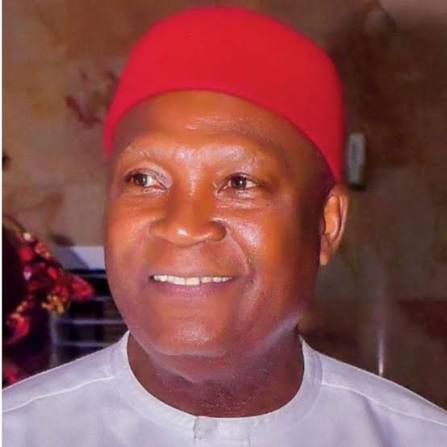
What began as a strategic disagreement over the architecture of President Bola Ahmed Tinubu’s 2027 re-election campaign has hardened into an open confrontation between the Minister of the Federal Capital Territory (FCT), Nyesom Wike, and two of the President’s most loyal and strategically positioned allies: Governor Hope Uzodinma of Imo State, Chairman of the Progressive Governors’ Forum (PGF), and Governor AbdulRahman AbdulRazaq of Kwara State, Chairman of the Nigeria Governors’ Forum (NGF).
At the centre of the dispute is Wike’s “Rainbow Coalition,” a cross-party arrangement bringing together politicians from the APC, PDP, Labour Party, and Action Alliance to mobilise support for Tinubu’s second term. On September 14, 2026, the PGF, meeting in Abuja under Uzodinma’s chairmanship, rejected the arrangement outright, resolving that its members would not participate in, support, or endorse any political alliance capable of undermining the re-election of Mr. President or weakening the APC.
Wike’s response has been characteristically unsparing. He named Uzodinma and Governor AbdulRazaq as leading the opposition to the coalition, dismissed the governors as “lazy politicians,” and declared flatly: “I will never support a character of Hope Uzodinma to be Senate President of Nigeria.” He has gone further, suggesting the governors’ real objection is about who controls the emergence of Senate and House of Representatives leadership after 2027, and not altruistic. This is the genesis of the gathering storm.
The Case for Wike
Nyesom Wike is one of the most consequential political operators in Nigeria today. When he was appointed Minister of the Federal Capital Territory in 2023, he was the only member of an opposition party in Tinubu’s cabinet, a status that has since been joined by Bianca Ojukwu of APGA, who was made Minister of State for Foreign Affairs in October 2024 and promoted to substantive Minister of Foreign Affairs in March 2026. Far from being an aberration, cross-party appointments have become something of a quiet pattern in this administration.
But Wike’s place in this administration is not merely that of a tolerated outsider. He is, by every measure ‘what matters’ in Nigerian politics, one of President Tinubu’s closest allies and most die-hard loyalists. No one should make the mistake of assuming that it is a ‘marriage of convenience’ or a transactional arrangement that could dissolve at the next political season. Wike did not merely support Tinubu’s candidacy from a distance; he staked his considerable political capital on it, at a time when doing so cost him dearly within his own party. He was the most visible member of the so-called “G5,” a bloc of aggrieved PDP governors, and openly worked for Tinubu’s election even as the PDP retained the Rivers State governorship.
Since then, Wike has been unstinting in his public defence of the President and his administration. He has repeatedly described Tinubu as a leader who keeps his word, who does not interfere in the affairs of states, and who has shown uncommon courage in taking difficult decisions, most notably the removal of the fuel subsidy, those previous administrations lacked the will to take. He has defended the administration’s economic reforms when it would have been easier to stay quiet. He has taken on the President’s critics directly, including those within his own former party, and he has not hesitated to draw political blood in the President’s defence. In a political culture where loyalty is often rhetorical and fleeting, Wike’s has been conspicuous, and consistent.
Wike’s value lies in his ability to mobilise support beyond the APC’s traditional base. He has validly pointed to his own records. In 2023, he was the most visible member of the G5 and openly worked for Tinubu’s election even as PDP retained the Rivers State governorship. He argues the same model can work again in 2027: support for Tinubu at the presidential level, with coalition members free to contest other offices under their own party platforms. He argues that governors opposing the coalition should first prove they can deliver the presidential vote at home. Wike’s political dexterity, his capacity to command attention, and his willingness to operate outside conventional party lines have made him a uniquely valuable asset to the President.
It is precisely because of this closeness to Mr. President, and this loyalty, that his proposal deserves to be taken seriously rather than dismissed as a distraction. When a man who has put his political life on the line for the President, who has defended him when others fled, and who remains one of his most trusted operators outside the APC’s formal structures, proposes a strategy for 2027, he is not speaking as a meddlesome outsider. He is speaking as someone with a proven record of delivering for the President and a legitimate stake in the coalition’s success. Whatever the outcome of this dispute, his contributions to the administration and to the President’s political project cannot be dismissed. He has earned the right to be heard.
The Case for Governors Uzodinma and AbdulRazaq
Governor Hope Uzodinma and Governor AbdulRahman AbdulRazaq occupy roles that are institutional rather than merely personal. Uzodinma, as Chairman of the Progressive Governors’ Forum, speaks for governors who control the party’s state structures, its primaries, and its grassroots machinery, the infrastructure without which no national campaign is actually won at the polling unit.
AbdulRazaq, as Chairman of the Nigeria Governors’ Forum, represents the collective voice of all 36 state governors, giving him a unique vantage point on the practical implications of any political arrangement for governance and party cohesion across the federation.
But Uzodinma’s significance extends far beyond the PGF. He is also the Chairman of the “Renewed Hope Ambassadors,” a crucial mobilisation platform for the Tinubu Administration, and the Secretary of the Presidential Campaign Council (PCC). These positions place him at the very heart of the President’s re-election architecture. When Uzodinma speaks on campaign matters, he speaks not as a mere governor with a personal opinion, but as one of the principal architects of the President’s political strategy. His voice carries institutional weight that transcends his state.
Furthermore, Uzodinma is widely recognised as a political leader of the South-East, a region where the APC has historically struggled to gain traction. His position as the party’s most prominent figure in the zone carries immense symbolic and strategic value. For the APC to make any meaningful inroads into the South-East in 2027, Uzodinma’s leadership and credibility in the region are indispensable. He is, in many ways, the party’s bridgehead into a region that has been resistant to its appeal.
Crucially, both Uzodinma and AbdulRazaq are close to President Tinubu. Their loyalty is not in question. They have been consistent allies, steadfast in their support of the President’s agenda. When they raise concerns about the Rainbow Coalition, they do so not as adversaries of the President’s re-election, but as custodians of the party’s institutional integrity. Their argument is straightforward: the APC governors have already committed to delivering their states for Tinubu and for APC candidates; a parallel structure operating alongside them, backing non-APC candidates for governorship and legislative seats, risks confusing voters and diluting party discipline.
Of course, a political party’s structures exist to produce candidates and win elections as a party. A coalition that asks voters to back the APC’s presidential candidate while working against APC candidates elsewhere creates exactly the kind of divided loyalty parties are built to prevent. Uzodinma and AbdulRazaq are not opposing the President, they are protecting the party that will deliver him. More recently, the governors’ position has received a significant boost from Governor Dauda Lawal of Zamfara State.
Speaking on the sidelines of the 81stUnited Nations General Assembly in New York, Lawal confirmed his opposition to the Rainbow Coalition and aligned himself squarely with the APC governors’ position. He stated unambiguously: “I’m part of that mission, and our message is very, very clear: be on one side. You can’t be on two sides.”
The South-East Question: the Rainbow Coalition May Not Work in the South-East There is a critical dimension to this debate that Wike’s argument, for all its strategic merit, does not fully address: the peculiar political dynamics of the South-East. Unlike in 2023, when the APC had very limited foothold in the region, the party now controls three of the five South-East states: Imo, Ebonyi, and, following Governor Peter Mbah’s defection from the PDP in October 2025, Enugu. This means that the APC now has a governing structure, a network of party officials, and the machinery of state in three of the five states that make up the South-East.
In Abia state, Governor Alex Otti of Abia State, a Labour Party governor when asked directly about Tinubu’s 2027 re-election bid, said: “I’m not in a position to oppose his candidacy.” He went further to explain that opposing Tinubu while serving as a governor and member of the National Economic Council would amount to driving the government towards “implosion.” Most tellingly, he acknowledged that several of Tinubu’s policies, including the removal of the fuel subsidy, resonate with his own thinking, describing the subsidy as “unsustainable” in its previous form. When a Labour Party governor from the South-East says publicly that he cannot oppose Tinubu, and that their policy positions are interwoven, it becomes much harder to sustain the narrative that the South-East is monolithically hostile to the President.
The picture in Anambra is even more striking. Governor Chukwuma Soludo, despite belonging to APGA, has openly declared support for President Tinubu. In July 2026, Soludo and APGA’s national leadership formally endorsed Tinubu’s re-election and said the party would not field a presidential candidate in 2027. Soludo calls APC and APGA “brothers and sisters” and credits Tinubu’s inclusive appointments of APGA members, particularly Ambassador Bianca Ojukwu as Minister of State for Foreign Affairs and later Minister of Foreign Affairs. In fact, Bianca Ojukwu’s role is particularly significant.
Soludo has also publicly challenged Peter Obi’s record and credibility. For instance, his administration alleged that Obi left N127 billion in outstanding loans, salaries, pensions and gratuities, publishing a statement titled “Facts Beyond Propaganda and Lies.” Obi denies borrowing or owing such liabilities. Soludo has also called Obi a “frustrated politician without a club” and accused him of damaging Anambra’s education system. When Obi claimed he and his wife were godparents to Soludo’s children, the First Lady’s office called the claim “false,” saying he “simply misspoke,” suggesting embellishment and further questioning Obi’s reliability. These developments now weaken Obi as the South-East’s foremost opposition figure and show Soludo has calculated that aligning with
Tinubu is the more advantageous path. Thus, unlike in 2023, when Tinubu polled just 5,111 votes in Anambra (0.83%) while Obi won 584,621; with APGA’s machinery, Bianca Ojukwu’s cabinet role, and Soludo’s open support now oriented toward the President, that political architecture has shifted. Tinubu’s fortunes in Anambra, and definitely in other South East states, are likely to improve markedly in 2027.
What has done more to change the calculus in the South-East is what the Tinubu administration has actually delivered in the region. The establishment of the South-East Development Commission (SEDC), signed into law in July 2024 and inaugurated in February 2025, has been described by Deputy Speaker Benjamin Kalu as one of the most significant institutional developments for the region since the civil war. The Commission has been funded at N140 billion in the 2025 and 2026 budgets, has run a Venture Capital Programme that funded twenty-five regional startups, and has launched a “South East Vision 2050” planning process. President Tinubu also approved a N150 billion South-East Investment Company (SEIC) to accelerate industrialisation across the region.
On infrastructure, the administration has moved beyond rhetoric to an infrastructural revolution in the South East. In Abia, for instance, the Federal Government and Abia State Government are jointly developing the 1,325-hectare Abia State International Cargo Airport at Mbubo Nsulu as a full-fledged international cargo facility, giving the state’s commercial centres a direct logistics gateway to global markets. The Second Niger Bridge access roads, Phase 2A in Asaba and Phase 2B in Anambra State, were flagged off in March 2025, converting a stranded bridge into a functioning corridor. The 112-kilometre Enugu-Port Harcourt Expressway is under active reconstruction, with the Aba-Umuahia stretch reaching over 85 per cent completion as at late 2025. The $3 billion reconstruction of the full Eastern Rail Corridor from Port Harcourt through the South-East to Maiduguri is the largest rail commitment the region has received in decades. Beyond these, the administration is pursuing a wider network of strategic projects: the Onitsha-Owerri Road, the Enugu-Onitsha Expressway, the 9th Mile-Oturkpo-Makurdi corridor, the Enugu-Lokpanta Expressway, the Artisan Market Bridge in Enugu, the New Akpoha Bridge in Ebonyi State, and the Abia-Enugu Road, among others.
There is also a polling dimension that should give pause to those who assume that Peter Obi Obi’s 2023 sweep in the region will simply repeat itself. The Oxford-Metro Analytics National Trust Poll, which closed on 7 September 2026 with 69,110 approved responses, put Tinubu ahead of Obi nationally by 1,067 responses, or approximately 1.54 percentage points. Obi still recorded his strongest regional performance in the South-East, with 63.97 per cent of responses from the zone. Perhaps, the South-East may still favour Obi at the presidential level, but the margin is no longer the foregone conclusion it once appeared to be. The assumption that 2023 can simply be repeated in 2027 ignores how much the
political landscape of the South-East has shifted since then, and how much President Tinubu has won the hearts and minds of the region.
This is precisely why Uzodinma’s caution about the Rainbow Coalition is not obstructionism but wisdom. As the APC’s leading figure in the South-East, he understands the region’s political temperature better than most. He knows that a coalition built in Abuja may not translate into votes in Awka, Enugu, or Owerri. He knows that the same voters who backed Tinubu at under 14.22 per cent in Imo in 2023 may not be moved by a “Rainbow Coalition” that includes figures they do not trust or identify with. And he knows that the APC’s best hope in the South-East lies not in a rainbow arrangement but in patient, grassroots-based party-building, work that is now yielding results.
In effect, the APC’s South-East leadership has made its position unmistakably clear. In a joint statement signed by the APC National Vice Chairman (South-East), Dr. Ijeomah Arodiogbu, alongside the party chairmen in Abia, Anambra, Ebonyi, Enugu and Imo states, the party’s South-East leadership threw its weight behind the Progressive Governors’ Forum and rejected what it described as the “rainbow (chameleon) coalition.” The leaders warned that the party would resist any attempt to weaken or undermine its structures ahead of the elections and urged members to work for the success of all APC candidates from the presidency to the state Houses of Assembly.
The South-East APC leadership also took exception to Wike’s attacks on the Progressive Governors, describing them as “most unfortunate, reprehensible and completely unacceptable” and insisting that elected governors deserved respect regardless of political differences. They pointed out that the governors targeted by Wike had demonstrated leadership through development initiatives in their states. The party’s governors are performing leaders whose records speak for themselves, and they should not be subjected to unwarranted attacks or attempts to undermine their authority.
Wike’s “Rainbow Coalition” strategy may be sound on paper, and it may work in other regions. But in the South-East, the APC’s own structures, the party chairmen, the national vice chairman, the governors, have collectively rejected it. They have done so not because they oppose the President but because they understand that a coalition that asks voters to back the APC’s presidential candidate while working against APC candidates elsewhere creates exactly the kind of divided loyalty parties are built to prevent.
The South-East’s political dynamics remain unique, and Obi’s political prowess in the region should not be dismissed. But the assumption that 2023 will simply repeat itself is no longer tenable. The APC now controls three states in the region, has delivered tangible federal projects that voters can see, and has a governor from the Labour Party acknowledging that he cannot oppose the President. The
region’s APC leadership has closed ranks behind the party’s strategy. The South-East may not be delivered for Tinubu in a landslide in 2027, but the idea that it is Obi’s for the taking, as it was in 2023, is a misreading of how much the ground has shifted. The APC’s position on strategy should prevail, and the supporting personalities and groups that have aligned themselves with it are not merely following the party line; they are responding to a political reality that has changed.
Uzodinma’s Restraint
It is worth noting that Uzodinma has not engaged Wike in a public war of words. He has not responded to the personal attacks, the dismissals, or the provocations. This restraint is not a sign of weakness; it is a mark of wisdom. Uzodinma understands that his position as Chairman of the Renewed Hope Ambassadors and Secretary of the Presidential Campaign Council places him above petty squabbles. He understands that every public exchange between himself and Wike is a gift to opposition parties watching for signs of APC fracture. And he understands that his role requires him to rise above personal pique and focus on the larger goal: the President’s re-election.
This is the kind of discipline that should be commended, not condemned. Uzodinma has chosen to let his institutional actions, the PGF resolution, his work with the Renewed Hope Ambassadors, his coordination of the PCC, speak for him. He has not taken the bait. He has not allowed himself to be drawn into a media circus. He has, in short, behaved like a leader worthy of the trust President Tinubu has placed in him. Wike, for all his brilliance, might learn something from this example. The FCT Minister’s combative style has served him well in many contexts, but there are moments when strategic restraint is more effective than verbal warfare. Uzodinma’s silence is not an admission of defeat; it is a strategic choice that reflects his understanding of the stakes.
What Unity Would Buy, and What Division Would Cost
The stakes are not abstract. In 2023, Tinubu was elected with 36.61 per cent of the vote, meaning nearly 65 per cent of Nigerians who voted chose someone else. A fragmented opposition allowed that plurality to be enough. There is no guarantee the opposition remains as fragmented in 2027. Thus, unity has concrete advantages to wit, that Wike’s coalition can extend the party’s reach into constituencies APC’s own structures may not reach; the PGF governors under Uzodinma, and the NGF under AbdulRazaq, could deliver the disciplined ground game, the wards, the local government structures, that no external coalition can replicate; and the two roles, disruptor and institutional consolidator, are genuinely complementary rather than competing, if their principal actors choose to see it that way.
Division carries real costs. A confused electorate is a demobilised one. Every public exchange between Wike and the governors is a gift to opposition parties
watching for signs of APC fracture. Energy spent on internal combat is energy not spent on the actual contest. And the party has its own cautionary tale close at hand: the PDP’s loss of power in 2015, after sixteen years in office, is generally attributed less to opposition strength than to the complacency and internal fracture of a party that had stopped fighting for itself. The APC does not need to relearn that lesson the hard way.
A Call to Sheath Swords
To Wike: The argument for the coalition’s value has been made, repeatedly and publicly. Strategic restraint now would serve that argument better than further escalation. Working out an accommodation with the governors—one that protects both the coalition’s reach and the party’s institutional integrity—costs less than continuing to litigate this in public. Your contributions are invaluable, but so is the unity of the party you seek to serve.
To Uzodinma and AbdulRazaq: Institutional protectiveness is a legitimate instinct, but it need not mean treating every cross-party arrangement as a threat. There is a difference between insisting on party discipline in governorship and legislative races, which is defensible, and refusing any accommodation with a coalition that is, by its own account, aimed at re-electing the same president the governors say they support. Your loyalty to the President is unquestioned; your concerns are valid. But a negotiated understanding is better than a protracted conflict.
To all parties: The 2027 contest should not be between two of the President’s most prominent loyalists. Every resource spent on this feud is a resource not spent on the actual campaign. I therefore appeal to President Bola Ahmed Tinubu, as the Father of the Nation, to intervene, broker peace, and obtain a binding understanding on the coalition’s scope, if necessary, backed by the APC’s National Working Committee. This would serve the party better than allowing the dispute to play out indefinitely in the press.
Conclusion
By and large, the Wike-Uzodinma feud should freeze because of common interests. It is the kind of contest that, left to fester, hollows out ruling coalitions from within. Both men, and Governor AbdulRazaq, are serious political operators. All have legitimate grounds for their positions. And all, if this dispute is not resolved, stand to be blamed if the coalition they are each trying to build for 2027 comes apart instead.
Hope Uzodinma, in particular, deserves recognition for his strategic restraint and his institutional leadership. As Chairman of the Progressive Governors’ Forum, Chairman of the Renewed Hope Ambassadors, Secretary of the Presidential Campaign Council, and a political leader of the South-East, he carries responsibilities that few others in the party can match. His wisdom in not engaging
Wike in a public war of words reflects a maturity that should be applauded. He should be accorded the respect that his positions demand.
Wike, too, deserves credit for his political acumen and his contributions to the President’s project. His coalition may yet prove its worth, particularly in the South-South and other regions where his influence is strong. But in the South-East, it may not work. There is an old African communal wisdom, sometimes rendered “I am because we are,” the idea that individual standing is inseparable from the health of the collective. All parties involved should do well to remember it.
Dr. George Agbakahi, a political scientist, public affairs analysts and South East Leader of the Tinubu Support Organisation (TSO), writes from Abuja.
We’ve got the edge. Get real-time reports, breaking scoops, and exclusive angles delivered straight to your phone. Don’t settle for stale news. Join LEADERSHIP NEWS on WhatsApp for 24/7 updates →
Join Our WhatsApp Channel