
The International Monetary Fund (IMF) has warned that poverty remains high and Nigerians are still suffering despite sustained economic growth, urging the federal government to introduce targeted cash transfers to cushion vulnerable households against rising food and energy costs.
The Fund, which raised Nigeria’s 2026 economic growth forecast by 0.1 percentage point to 4.2 per cent, said the government must balance the need to protect households from the cost of living crisis with efforts to maintain fiscal stability.
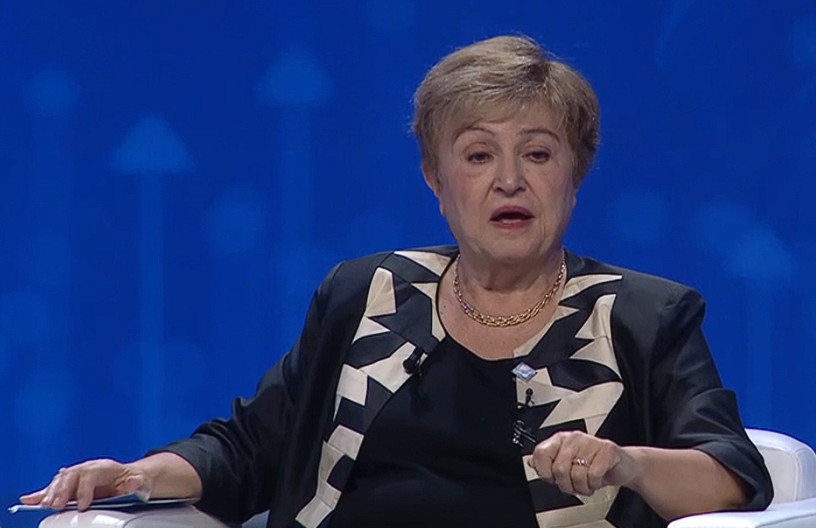
In its 2026 World Economic Outlook titled “Resilience Under Strain, Urgent Choices,” presented in Bangkok, Thailand, the IMF retained its growth projection for the country for 2027 at 4.3 per cent. Speaking on fiscal policy responses to rising living costs in Africa, IMF Research Department Division Chief, Deniz Igan, said policymakers must prioritise immediate household needs, particularly food and energy security, without compromising medium term economic stability.
“What we are advocating for is for policymakers to balance the near term needs of the population, and that involves food security. That involves energy security, given that the prices of food and energy are increasing disproportionately, while also keeping in mind medium term stability,” she said.
Igan said the Fund had examined fiscal policy measures that could effectively address a cost of living crisis in which essential goods become more expensive than other items in the consumption basket. Using Nigeria as an example, she said economic growth had held up, partly supported by the country’s position as an energy exporter, but high poverty levels continued to expose households to hardship.
“While the growth held up in Nigeria, given that it is an energy exporter, poverty rates are still very high, and we are very mindful that the population is suffering when it comes, especially to food security, with also risks from El Niño,” she said.
To address the situation, Igan recommended temporary financial assistance targeted at the most vulnerable households. “In that environment, what we’re advocating for is cash transfers, income support, targeted temporary income support for the most vulnerable households in Nigeria,” she said.
She added that such interventions could alleviate poverty and improve food security but must be backed by sustainable public finances. “That can be done by the cash transfers that alleviate high poverty and ensure food security, and that needs to be coupled with a medium term fiscal framework, and what that involves is improving expenditure quality and improving revenue collection,” she said.
The IMF’s assessment highlighted the challenge of ensuring that economic growth translates into improved living standards, particularly as rising prices continue to erode household purchasing power.
Nigeria has implemented major economic reforms in recent years, including changes to the foreign exchange market and the removal of petrol subsidies, as part of efforts to improve macroeconomic stability. However, the adjustment has coincided with significant pressure on household budgets.
The Fund’s latest projections also come after the World Bank raised its forecast for Nigeria’s economic growth to 4.3 per cent in 2026, from an estimated four per cent in 2025. It projected growth of 4.4 per cent in both 2027 and 2028, citing improving macroeconomic stability, stronger investor confidence and a gradual recovery in private investment.
Meanwhile, the National Bureau of Statistics reported that Nigeria’s real Gross Domestic Product grew by 4.43 per cent year on year in the second quarter of 2026, compared with 4.23 per cent in the corresponding period of 2025.
We’ve got the edge. Get real-time reports, breaking scoops, and exclusive angles delivered straight to your phone. Don’t settle for stale news. Join LEADERSHIP NEWS on WhatsApp for 24/7 updates →
Join Our WhatsApp Channel