The Nigerian Economic Summit Group (NESG) has said insecurity is the biggest obstacle to Nigeria’s economic goals, warning that jobs, industrialisation and shared prosperity cannot be achieved while farms, oil facilities and infrastructure remain under threat.
In a statement, the group said safety is the basic requirement for every part of economic life. “Where security fails, productivity collapses, investment retreats, and development stalls,” it said.
The group has made security a central part of the agenda for the 32nd Nigerian Economic Summit (NES #32), arguing that no other economic goal can be met while insecurity persists.
At the summit, themed “Growth that Works: Delivering Jobs, Productivity and Shared Prosperity,” coming up on October 26 and 27 2026, in Abuja, its Secure Nigeria sub-theme will bring together security experts, policymakers, business leaders, community representatives and development partners.
The NESG pointed to three areas where insecurity is costing the economy.
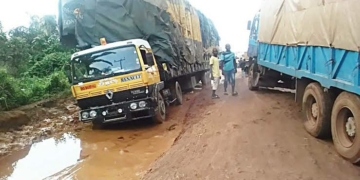
On food, it said farmer-herder conflict, banditry and terrorism have driven millions of farming households off their land. The North-West, historically one of the country’s main food-producing zones, has seen sharp falls in cultivated land as farmers abandon their fields. The group said the World Food Programme and the Food and Agriculture Organisation have repeatedly ranked Nigeria among the countries with the highest food insecurity in Africa.
On oil, the NESG said crude theft takes a significant share of export revenue and has at times pushed production well below official targets. It said losses have at times reached hundreds of thousands of barrels per day. It added that the Nigerian National Petroleum Company Limited (NNPCL), international oil companies and independent operators all cite security as a main limit on output and new investment.
On infrastructure, it said attacks on power transmission equipment and telecom masts disrupt electricity supply and cut communities off from mobile money, digital markets and emergency services.
Investor confidence
The group said insecurity also raises the cost of doing business. Investors price in the risk, it said, which leads to higher financing costs, lower investment and a preference for short-term, extractive activity over long-term, productive projects.
It said restoring security would therefore pay off twice, by cutting direct losses and by signalling that Nigeria is a viable place for productive investment.
Beyond the military
The NESG said it does not see security as only a military or policing matter. Poverty, inequality, unemployment and exclusion are among the root causes of insecurity, it said, and development programmes, social protection and conflict-sensitive governance should support security operations.
“Security and development are not alternatives, they are complements,” the group said.
The summit will look at community-based security models, law enforcement deployment in key farming corridors, early warning systems for conflict, and policies to address competition over land and water.
It will also consider a national framework for protecting critical infrastructure, combining physical security, community engagement, fast repair capacity and tougher penalties for attacks. On oil theft, it will discuss more transparency in the upstream sector, better monitoring technology, greater economic inclusion for Niger Delta communities, and stronger action against the networks that enable theft.
We’ve got the edge. Get real-time reports, breaking scoops, and exclusive angles delivered straight to your phone. Don’t settle for stale news. Join LEADERSHIP NEWS on WhatsApp for 24/7 updates →
Join Our WhatsApp Channel