
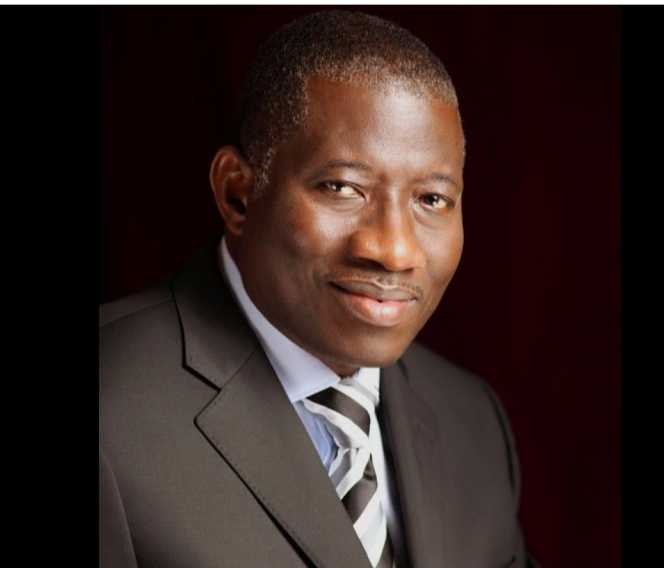
Former President Goodluck Jonathan and industrialist Aliko Dangote have called on the federal government to prioritise job creation and revive abandoned social intervention programmes to tackle terrorism, banditry, and other security threats.
Jonathan urged the government to revisit the Almajiri education programme and the Great Green Wall project. At the same time, Dangote stressed that military operations alone could not defeat terrorism without addressing unemployment and poverty.
They spoke at the public presentation of Beyond the Bullets: Policing Terrorism in a Democratic System, a book written by former Inspector-General of Police, Mohammed Abubakar.
Jonathan’s speech, delivered by his former chief of staff, Chief Mike Oghiadomhe, said the two programmes introduced during his administration were designed to address socio-economic problems that could fuel insecurity.
He said the Almajiri schools initiative was intended to equip millions of young people with vocational skills beyond religious education, helping them earn a living and reducing their vulnerability to recruitment by criminal groups.
“My administration engaged in the establishment of Almajiri schools, aimed at providing skills to millions of youth beyond religious education only,” he said.
Jonathan also said the Great Green Wall project could combat desertification, expand land for farming and animal husbandry, and create hundreds of thousands of jobs.
“I therefore use this opportunity to call on government to revisit and review these programmes,” he said.
The former president warned that terrorism required sustained national commitment, urging successive administrations to build on existing security policies rather than treat the fight as the responsibility of a single government.
“The fight against terrorism is not the responsibility of one administration or the other. It is a continuing national and global challenge that requires sustained commitment, institutional learning, and cooperation across successive governments and generations,” he said.
Dangote, who also spoke at the event, said unemployment and limited economic opportunities would continue to undermine efforts to restore peace unless the government and private sector worked together to create jobs.
“If you don’t create jobs, it’s difficult to fight terrorism and get it out of the way,” he said.
The industrialist urged entrepreneurs to invest in businesses that generate employment and economic growth, arguing that economic opportunities must complement military operations.
“On our own side as entrepreneurs, we have to partner with government, create jobs, create growth, and also prosperity, and that will help when they are also fighting with force,” he said.
He added that combining economic empowerment with security operations could help Nigeria overcome terrorism, banditry and other violent crimes.
Citing the economic consequences of the insurgency in the North-East, Dangote said a UNICEF report estimated the cumulative national economic loss at about $100bn since the conflict began.
He, however, argued that the actual cost could be significantly higher, considering the impact on agriculture and other sectors.
Dangote called on Nigerians to support the government’s security efforts, describing the fight against terrorism as a collective responsibility.
“Fighting terrorism is not only for government alone, but it’s also our collective responsibility,” he said.
Meanwhile, Abubakar warned that counterterrorism operations must not come at the expense of human rights, democratic institutions and the rule of law.
The former police chief said security agencies must protect citizens without treating entire communities as suspects, warning that discriminatory practices could erode public trust and weaken intelligence gathering.
“The book insists on a vital point that I learned in service. Fighting terrorism should never mean treating the whole community as suspects,” he said.
He cautioned that excessive use of state power could damage relations between security agencies and the communities they were mandated to protect.
“When fear becomes policy, discrimination becomes security,” he said.
Abubakar also defended the role of democratic institutions, including the judiciary, legislature, media and civil society, saying they should not be viewed as obstacles to national security.
He stressed that effective counterterrorism required intelligence sharing, coordination among security agencies, accountability and respect for the law.
“Democracies must answer violence with process,” he said, adding that credible investigations, evidence-based prosecutions and justice for victims were essential to democratic security.
He said the central message of Beyond the Bullets was that defeating terrorism required more than force, insisting that effective security operations must be matched with fairness, accountability and respect for human dignity.
We’ve got the edge. Get real-time reports, breaking scoops, and exclusive angles delivered straight to your phone. Don’t settle for stale news. Join LEADERSHIP NEWS on WhatsApp for 24/7 updates →
Join Our WhatsApp Channel