Three years after President Bola Tinubu declared a state of emergency on food security, rising agricultural input costs, limited access to government support and insecurity continue to test the effectiveness of the federal government’s interventions.
Farmers said the cost of producing food has increased despite efforts to boost output.
The emergency declaration, issued on 13 July 2023, aimed to increase food production, improve availability, and make essential commodities more affordable.
Since then, the government has continued to pursue several measures, including the recapitalisation of the Bank of Agriculture (BOA), the National Agricultural Growth Scheme and Agro-Pocket (NAGS-AP), increased funding for the National Agricultural Development Fund (NADF), a 2,000-tractor mechanisation programme and the recent introduction of the Guaranteed Minimum Price (GMP) programme, among others.
However, farmers’ and market experiences raise questions about how far the programmes have improved conditions on the ground.
The federal government claimed that the National Agricultural Growth Scheme and Agro Pocket (NAGS-AP) had produced 2.53 million metric tonnes of crops, valued at N2.31 trillion, across four farming seasons.
The minister of state for agriculture and food security, Aliyu Sabi Abdullahi, in February 2026, said the output was recorded across the project’s focus on six staple crops: wheat, rice, maize, sorghum, soybean, and cassava, under the federal government’s food security emergency support programme.
While the reported output points to increased production under the scheme, it does not, on its own, establish whether food production costs have declined.
A market check by LEADERSHIP showed that the cost of fertiliser, agrochemicals and tractor services had increased significantly since 2023, adding to the financial burden on farmers.
A 50kg bag of urea fertiliser, which sold for between N40,000 and N46,500 in 2025, now costs between N47,500 and N55,000. NPK 20:10:10 rose from N35,000–N40,000 to N38,000–N45,000, while NPK 15:15:15 increased from N40,000–N50,000 to N55,000–N64,000.
The cost of agrochemicals has also risen from N2,000-N4,000 per litre in 2023 to N5,000–N7,000 per litre in 2026, depending on the brand. Similarly, the cost of hiring a tractor to plough a plot of land in the Federal Capital Territory and Nasarawa State has doubled from about N5,000 in 2023 to N10,000.
The rising costs mean farmers must invest more in cultivation before harvest, increasing their exposure to losses when yields are poor, or market prices fail to cover production expenses, thereby driving up food prices.
The Minister of Agriculture and Food Security, Abubakar Kyari, recently claimed that essential food prices had dropped by up to 50 per cent compared to pre-2023 levels.
However, Nigerians from across the country, especially traders and sellers of food items, disputed the claim in a LEADERSHIP report.
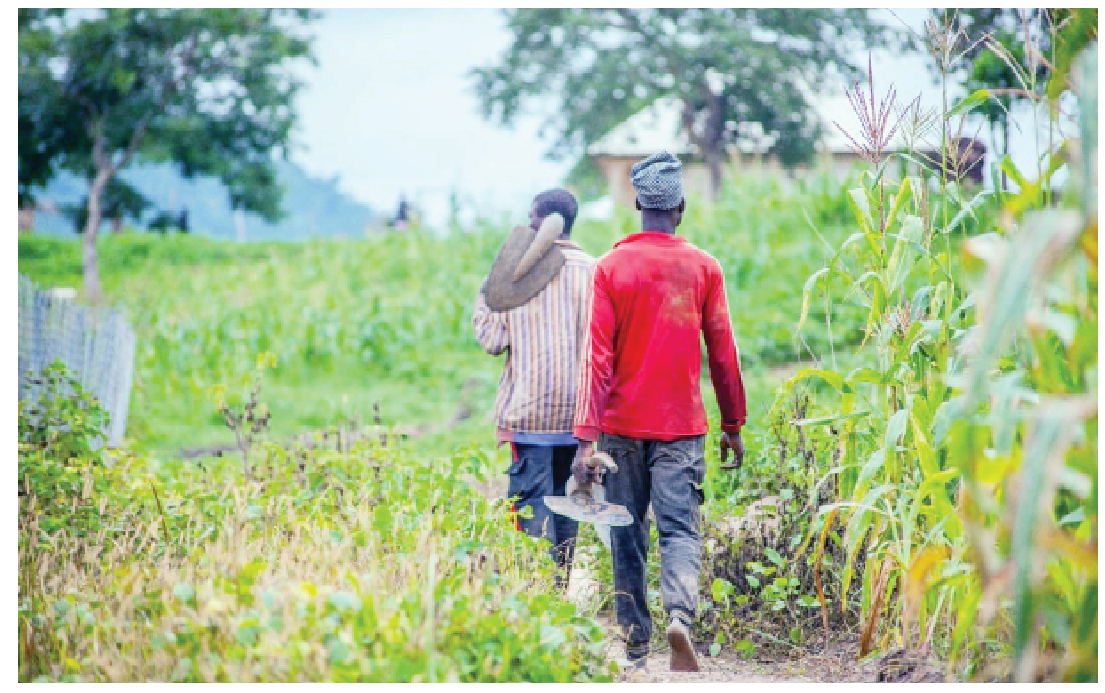
For farmers in the FCT, the impact of government interventions remains uneven. Peter Abraham, a maize farmer in Orozo, said he had yet to benefit from any government agricultural support programme.
“I think the government intervention is only reaching a privileged few; I am yet to benefit from any intervention, if any exist,” Abraham said.
Another farmer, Joseph Audu, who farms beans, said the cost of cultivation had increased considerably since the emergency declaration, despite the government’s efforts to support agriculture.
“I can say things were better in 2023 than now. I spent less to plant that time than now; the cost of fertiliser and chemicals (agro) has increased, and even the money we pay labourers has gone up as well,” he said.
Insecurity has further complicated the situation, with farmers in affected communities such as North-West, Central and East facing restricted access to farmland, displacement and disruptions to planting and harvesting.
The Food and Agriculture Organisation (FAO) of the United Nations, in its September 2026 assessment, highlighted insecurity and high agricultural input costs among the factors affecting food production and access in Nigeria.
It estimated that nearly 36.3 million Nigerians faced severe acute food insecurity during the Jun -to-August 2026 lean season.
According to the UN agency in its September 2026 country brief, annual food inflation also rose to 20.3 per cent in July, up from 8.9 per cent in January.
A farmers’ association said gaps persist between the government’s production objectives and vulnerable households’ ability to access sufficient food.
The All Farmers Association of Nigeria (AFAN) said agricultural growth figures should be assessed against their actual impact on farmers’ productivity and earnings.
AFAN deputy national president, Daniel Okafor, said agricultural inputs such as fertiliser, seeds, labour, transportation and machinery remained expensive.
Okafor also stressed that insecurity continued to limit agricultural production, as farmers in some areas could not safely access their farms while others had been displaced from their communities.
Okafor called for stronger collaboration between government and farmers’ organisations, arguing that agricultural policies would deliver better results if farmers were involved in their formulation and implementation.
He said, “Government support should translate into practical interventions that reach the farmer at the grassroots, particularly in the areas of affordable agricultural financing, quality inputs, mechanisation, irrigation, extension services, storage, processing, rural infrastructure, security and market access.
“There is also a need for stronger collaboration with farmers’ organisations such as AFAN in the formulation and implementation of agricultural policies and programmes. The farmer must remain at the centre of agricultural development.
”If farmers cannot work their land safely, it will be difficult to sustain agricultural growth and achieve food security. Therefore, improving security in farming communities must remain a priority.”
POINTS AT ISSUE
1. Three years after President Bola Tinubu declared a state of emergency on food security on July 13, 2023, food remains expensive despite government interventions.
2. The government rolled out programmes to boost production, including the National Agricultural Growth Scheme and Agro-Pocket (NAGS-AP), funding for the National Agricultural Development Fund, a 2,000-tractor mechanisation scheme and the Guaranteed Minimum Price programme. It claims NAGS-AP produced 2.53 million metric tonnes of crops worth N2.31 trillion.
3. But on the ground, farmers say costs have risen, not fallen. A bag of urea fertiliser now costs up to N55,000 from N46,500 in 2025, agrochemicals have more than doubled since 2023, and tractor hire in Abuja and Nasarawa has doubled to N10,000 per plot.
4. Insecurity is compounding the problem. Farmers in the North-West, North-Central and North-East cannot access farms, while many have been displaced.
5. The result is visible in markets. The UN Food and Agriculture Organisation estimates 36.3 million Nigerians faced severe food insecurity in mid-2026, with food inflation rising to 20.3 per cent in July.
We’ve got the edge. Get real-time reports, breaking scoops, and exclusive angles delivered straight to your phone. Don’t settle for stale news. Join LEADERSHIP NEWS on WhatsApp for 24/7 updates →
Join Our WhatsApp Channel