
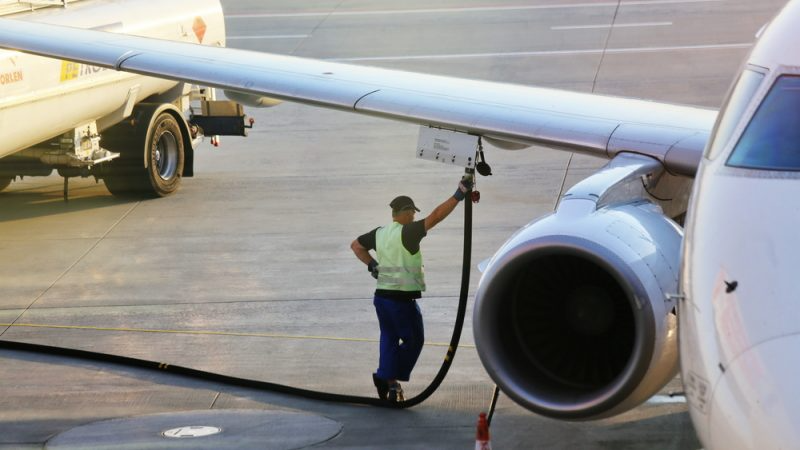
High aviation fuel costs and rising financing expenses are putting increasing pressure on airlines’ operating budgets, with indigenous aviation fuel marketer, CITA Energies, warning that pricing disparities in locally refined Jet A1 could further worsen the industry’s financial burden.
The Chairman of CITA Energies, Dr Thomas Ogungbangbe, who made the call in Lagos during a ceremony to mark the company’s 20 years of operation, called for a review of the pricing structure of aviation fuel supplied by Dangote Petroleum Refinery, saying the current arrangements were increasing costs for fuel marketers and airlines despite improved local supply.
Ogungbangbe said that although local refining had improved aviation fuel availability, pricing disparities and additional financial requirements imposed on buyers continued to increase operating costs across the aviation industry.
He said the pricing structure needed to be reviewed to ensure that the benefits of domestic refining translated into more competitive prices for fuel marketers and airlines.
According to him, aviation fuel marketers operate under a global pricing framework, while the pricing arrangements for locally refined products create discrepancies that complicate procurement, sales and financial planning.
“We are priced on the global formula pricing, and the contracts are signed using the average of prices published daily during the preceding month,” he said.
He explained that marketers selling aviation fuel in October might base their prices on the September benchmark average, while Dangote Petroleum Refinery operated a different pricing structure.
The difference, he said, created uncertainty for marketers, who could be selling fuel without knowing the final price at which the product had been purchased.
Ogungbangbe identified an additional premium introduced by the refinery in March amid unrest in parts of the Middle East as another factor contributing to the high cost of aviation fuel.
He warned that marketers would have to pass additional expenses on to customers to remain in business, further increasing the financial burden on airlines already grappling with high operating costs.
The CITA chairman appealed to the refinery to reconsider the premium, saying its removal could improve pricing alignment and ease pressure on the aviation industry.
He also faulted the refinery’s requirement that 25 per cent of a financial instrument submitted by a buyer be placed under lien, arguing that the arrangement increased financing costs and ultimately raised the price paid by customers.
Despite the pricing concerns, Ogungbangbe acknowledged that Dangote Petroleum Refinery had significantly improved aviation fuel availability in Nigeria.
He described the refinery’s entry into Jet A1 production as a major development, noting that the country had previously relied on imported aviation fuel because its earlier refineries did not produce it.
“With Dangote, the issue of scarcity is already eradicated; availability is assured but the challenge is in the pricing,” he said.
He added that some aviation fuel marketers might consider importing the product if they could secure more favourable prices under the global pricing formula.
The chairman said the Federal Government and industry stakeholders needed to ensure that the gains from local refining translated into competitive prices capable of lowering operating costs across the aviation value chain.
He disclosed that businesses in the aviation fuel sector were struggling to maintain profitability amid rising costs and the need to pass additional expenses on to customers.
“Before now, I could say it was profitable, but I cannot say for sure about profitability now,” he said.
Ogungbangbe described CITA Energies’ financial experience over the past two years as difficult, adding that some companies in the aviation fuel business had been forced to turn down business opportunities where the cost of supplying fuel could result in losses.
He said operators had to balance their commitments to customers with the need to avoid losses that could undermine their businesses.
On the broader operating environment, he stressed the need for policy stability to enable businesses to plan investments, manage costs and remain competitive.
He noted that the technical nature of aviation fuel operations and the need to maintain international quality standards placed additional demands on operators.
According to him, aviation fuel handling and into-plane fuelling were largely dominated by international oil companies three decades ago, but CITA Energies had demonstrated that indigenous companies could successfully operate in the technically demanding segment of the aviation industry.
He said the company had trained thousands of people and expanded its operations over the years, attributing its survival and growth to perseverance, continuous adaptation and the commitment of its workforce.
Ogungbangbe urged stakeholders to address the structural and pricing challenges confronting the aviation fuel market to ensure that domestic refining supports a more sustainable aviation industry.
He also commended President Bola Tinubu, the Minister of Aviation and Aerospace Development, Festus Keyamo, and the Nigeria Civil Aviation Authority for their roles in creating an environment in which indigenous aviation businesses could thrive.
We’ve got the edge. Get real-time reports, breaking scoops, and exclusive angles delivered straight to your phone. Don’t settle for stale news. Join LEADERSHIP NEWS on WhatsApp for 24/7 updates →
Join Our WhatsApp Channel