By the Nigerian government’s own admission, no fewer than 80 million children in the country are exposed to lead poisoning, which occurs when lead accumulates in the body over time.
To say that this figure, which represents about 76.19% of the country’s 105 million children, is staggering is an understatement. The fact that this data was presented by the federal Ministry of Health makes it official.
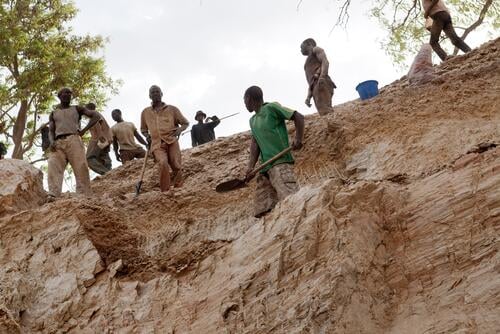
People can be exposed to lead in many ways, including inhaling airborne particles, drinking contaminated water, or eating lead-contaminated food. Children, like adults, can be exposed to lead from paint, leaded petrol, batteries, and even from gold mining.
Lead exposure can damage many body systems, including the brain, kidneys, bones, and the nervous system, and cause lower IQ scores and growth problems in children.
Additionally, it can cause stunted growth, anaemia, weakened immunity, lower IQ, reduced attention span and memory, and increase the risk of learning difficulties and behavioural problems. The most worrisome is the fact that children exposed to very high levels of lead often die.
Experts say that while lead poisoning is difficult to spot, with many children showing no clear signs until the damage is done, there may be some signs, such as sudden mood changes, low energy and persistent tiredness, recurring stomach aches not linked to digestion, frequent headaches that affect daily activities, reduced interest in eating, skipped meals and a noticeable drop in weight.
Among states with a high incidence of this disaster is Zamfara State, where residents of some highly affected communities reported that one-fourth of all the children in their communities had died. In these communities, most homes had unsafe levels of lead, and the water from the wells also contained high levels of lead.
With an estimated 76% of its children affected by lead poisoning, the disaster is at an alarming level in Nigeria. The urgent questions are: Why does Nigeria have such a high number of children affected by lead poisoning, how aware are citizens of this menace, and what is the government doing to address it?
It must be noted that the menace is not peculiar to Nigeria. According to a UNICEF study, globally, an estimated 800 million children have blood lead levels high enough to raise serious concerns.
In a speech to mark the 2026 International Lead Poisoning Prevention Week, themed “From Detection to Prevention”, the Minister of State for Health and Social Welfare, Dr Isiaq Salako, called for stronger measures to address the public health and environmental threat posed by exposure to lead.
“Exposure can have serious and lasting consequences, and individuals may be exposed without immediate, obvious symptoms. This makes prevention, early identification and timely action essential components of any national response,” he said.
The minister said the government had established an Inter-Agency Working Group on Lead Poisoning Prevention and Elimination to coordinate efforts among relevant Ministries, Departments and Agencies, development partners and other stakeholders.
In 2025, the government launched the National Policy and Action Plan on Lead Poisoning Elimination, which seeks to help the federal government ‘work strategically and collaboratively to reduce exposure to lead and improve children’s health”
As a follow-up, the government launched a Five-Year Strategic Plan on Lead Poisoning Elimination covering 2026–2030, along with a costed three-year national road map developed to translate the plan’s priorities into time-bound actions.
The plan aims to guide stakeholders in coordinated efforts to prevent exposure, strengthen surveillance, and address environmental and occupational sources of exposure.
We are constrained to remind the Nigerian government that, as beautiful as the plan may be, it does not automatically translate into results unless implemented diligently.
As with any other nation, Nigeria cannot treat its way out of lead poisoning. It must prevent exposure wherever possible. That is a challenge that requires the collective efforts of all, not just the Inter-Agency Working Group.
However, the bulk of the responsibility for addressing this menace rests with the government. To demonstrate its commitment to mitigating the disaster, the government must do everything it can to ensure the strategic plan is effectively implemented. That is the least the citizens, especially the children who continue to die or be adversely affected by lead poisoning, demand of their government.
We’ve got the edge. Get real-time reports, breaking scoops, and exclusive angles delivered straight to your phone. Don’t settle for stale news. Join LEADERSHIP NEWS on WhatsApp for 24/7 updates →
Join Our WhatsApp Channel