Gabi Hibbatullah, Abuja
The Resource Centre for Human Rights and Civic Education (CHRICED) has highlighted its activities over the past 20 years, including efforts to promote democratic participation.
Its activities also include strengthening accountability and advance citizens’ rights in Nigeria.
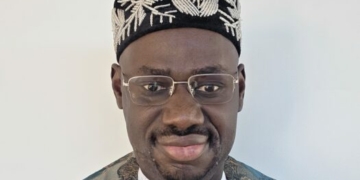
The executive director of CHRICED, Ibrahim Zikirullahi, stated this in his welcome address at the organisation’s 20th anniversary celebration in Abuja on Monday.
He said the organisation was established in 2006 during a critical period in Nigeria’s democratic journey, when many citizens remained excluded from governance, public institutions were fragile, and democratic accountability was still evolving.
Zikirullahi said CHRICED had worked with communities across the country to deepen democratic participation, strengthen accountability and electoral integrity, expand educational opportunities, protect vulnerable populations and improve access to healthcare and public services.
He said the organisation’s work was driven by the belief that democracy could only flourish when citizens were informed, empowered and actively involved in shaping their future.
Zikirullahi recalled the contributions of the organisation’s pioneer chairman, the late Professor Abubakar Momoh, and former board member, the late Alhaji Alhassan Isah, to its development.
He also acknowledged the contributions of its first staff member, Sulaiman Muniru, during its formative years, as well as the Executive Chairman of HEDA Resource Centre, Olarewaju Suraju, who provided office accommodation for CHRICED when it began operations in Lagos.
He said the organisation had since established its permanent headquarters, Professor Abubakar Momoh House, in Abuja, and CHRICED Legacy House in Kano.
Zikirullahi said the publications presented at the anniversary reflected the organisation’s commitment to civic education, democratic learning and citizen empowerment.
Also speaking, the Chairman of CHRICED’s Board of Directors, Professor Momodu Kassim-Momodu, said the organisation had expanded its work in civic education, community engagement and public dialogue over the past two decades.
In his opening remarks, Momodu said the organisation’s journey had involved building relationships with communities, development partners and other stakeholders.
He said the anniversary provided an opportunity to reflect on the organisation’s beginnings, its growth and the contributions of those who had supported its activities over the years.
Momodu acknowledged the contributions of CHRICED’s founders, the late Professor Abubakar Momoh, former and serving board members, management, staff and volunteers.
He identified the MacArthur Foundation, European Union, WeltFilme, MISEREOR-KZE, OSIWA, Anti-Slavery International, British Council, the United Kingdom’s Foreign, Commonwealth and Development Office, and the University of Abuja among the organisation’s partners.
Delivering a lecture titled “Reclaiming Civic Space: The Rule of Law, Democratic Accountability, and the Future of Citizen Participation in Nigeria,” a former Resident Electoral Commissioner of the Independent National Electoral Commission (INEC), Professor Sam Egwu, expressed concern over the state of democracy and civic participation in Nigeria.
Egwu said the enthusiasm that greeted the third wave of democracy had significantly declined, noting that while many celebrated democratic consolidation across several countries, including Nigeria, during its first decade, ominous signs now suggested that the gains were being reversed.
He said the Constitution contained provisions designed to protect citizens’ human and political rights against intimidation and state brutality but expressed concern that such protections were not being adequately upheld.
The guest lecturer described civic space as the bedrock of an open and democratic society, explaining that it enables citizens and civil society organisations to organise, participate, communicate and interact with the government.
He said the state had a responsibility to recognise citizens’ rights to freedom of association, peaceful assembly and freedom of expression.
Egwu said his lecture would also examine civil control, citizens’ ability to respond to violations of their rights, and the challenges and reforms affecting Nigerians.
Also speaking, CHRICED board member Dr Dayo Olaide said protecting democracy required collective action beyond the work of civil society organisations.
“Making democracy work is a collective responsibility that requires the commitment and participation of all of us. It starts with speaking up. It goes beyond simply going out to vote. We must also ensure that our votes count and that the will of the people is reflected in the outcome of elections,” he said.
Olaide urged Nigerians to judge elections by what they deliver for citizens and their contribution to making democracy work.
In her goodwill message, the Head of Misereor Dialogue and Partnership Services, Nigeria, Mrs Julia Krojer, described CHRICED as a trusted and principled partner in advancing human dignity and good governance.
She said Misereor’s partnership with CHRICED had demonstrated the power of locally driven solutions to governance challenges and reaffirmed the organisation’s commitment to supporting civic education and human rights initiatives in Nigeria.
The anniversary, held under the theme, “20 Years of Voice and Justice: Empowering Citizens, Shaping Tomorrow,” featured an anniversary lecture and the presentation of two publications: The Action Civics Manual for Nigerian Students: A Practical Guide for Civic Engagement and Advocacy and Voices of Vigilance: CHRICED’s Public Interventions in a Defining Era, Volumes One and Two.
We’ve got the edge. Get real-time reports, breaking scoops, and exclusive angles delivered straight to your phone. Don’t settle for stale news. Join LEADERSHIP NEWS on WhatsApp for 24/7 updates →
Join Our WhatsApp Channel