
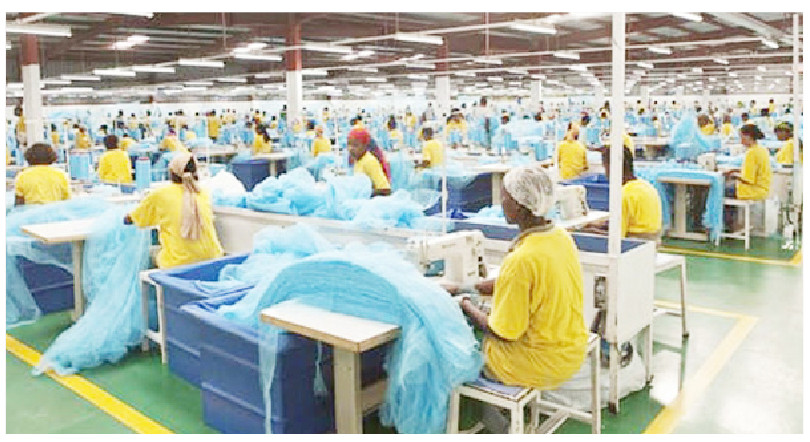
Nigeria’s ambition to become Africa’s leading manufacturing hub is facing significant obstacles as high energy, logistics and financing costs continue to undermine the competitiveness of local industries, stakeholders have warned.
They said despite the country’s large consumer market and duty-free access to about 1.4 billion people under the African Continental Free Trade Area (AfCFTA), Nigeria cannot attract large-scale manufacturing investments or compete effectively in global markets without addressing the high cost of production.
Stakeholders who spoke at the BusinessDay 2026 Mobility and Logistics Conference stressed that the cost of essential manufacturing inputs, particularly electricity, transportation, and credit, has continued to put Nigerian manufacturers at a disadvantage relative to their counterparts in other countries.
Data from the Manufacturers Association of Nigeria (MAN) showed that manufacturers spent an estimated N1.34 trillion on alternative electricity solutions in 2025, representing a 21 per cent increase from the N1.11 trillion recorded in 2024.
The development underscores the burden of unreliable electricity supply on businesses, many of which are compelled to generate their own power to sustain production.
The stakeholders also noted that Nigeria loses approximately N3.2 trillion annually to logistics inefficiencies, with logistics costs accounting for about 30 per cent of the cost of goods, compared with the global average of 11 per cent.
Nigeria currently ranks 88th out of 139 countries on the World Bank’s Logistics Performance Index, trailing manufacturing powerhouses such as Vietnam and China.
Speaking at the conference, the Chief Executive Officer of the Centre for the Promotion of Private Enterprise (CPPE), Dr. Muda Yusuf, said Nigeria could not achieve industrialisation without stable electricity, noting that manufacturers’ dependence on self-generated power was making locally produced goods uncompetitive.
“We need to fix our energy. Energy is very critical for industrial development.
There is no country in the world that is industrialised that doesn’t have stable electricity. We are operating in the manufacturing sector, where practically all manufacturers generate their own electricity. That cannot make us competitive. So power is number one,” he said.
Yusuf also identified logistics as a major constraint, explaining that manufacturers depend on efficient transportation systems to move raw materials from ports to factories and finished products to markets.
He said delays and high transportation costs increase production expenses, weaken supply chains and make Nigerian products more expensive than competing imports.
The CPPE chief executive further expressed concern over the high cost of borrowing, noting that Nigerian manufacturers face significantly higher financing costs than their competitors in other economies.
He called for a more supportive financial environment, stressing that affordable credit was necessary to enable manufacturers to expand production, acquire modern equipment and improve their competitiveness.
Yusuf also emphasised the importance of policy consistency, arguing that manufacturing investments require long-term commitments and substantial capital that cannot be easily recovered when businesses are disrupted by frequent changes in government policies.
Similarly, the Director-General of the Manufacturers Association of Nigeria (MAN), Segun Ajayi-Kadir, lamented the high cost of borrowing, saying manufacturers were struggling to access affordable credit amid elevated interest rates.
He noted that despite the reduction in the Monetary Policy Rate (MPR) to 23 per cent, actual lending rates could rise to between 27 and 30 per cent, making it difficult for businesses to finance operations and expansion.
According to him, the decline in bank credit to manufacturers from N8.53 trillion in December 2024 to N6.61 trillion in December 2025 further illustrates the financing challenges confronting the sector.
Ajayi-Kadir said the prevailing borrowing costs were unsustainable for manufacturers seeking to compete with businesses in countries where access to credit was considerably cheaper.
The President of the Association of Small Business Owners of Nigeria (ASBON), Dr. Femi Egbesola, said Nigeria must move beyond relying on its large consumer market and deliberately create an economy where manufacturers can produce at globally competitive costs, quality and scale.
He said achieving the ambition would require prioritising reliable and affordable industrial energy, efficient transportation and port infrastructure, access to affordable long-term financing, stable government policies and a tax system that encourages production rather than penalises businesses.
Egbesola also called for stronger local supply chains, increased investment in technology, research and technical skills, as well as the development of industrial clusters around the country’s competitive resource advantages.
He urged the government to address smuggling, dumping, and unfair import competition while supporting local manufacturers in meeting international standards and accessing export markets, particularly through AfCFTA.
“Most importantly, Nigeria must move from announcing industrial policies to consistently implementing them, with measurable targets and accountability. We must create an environment where producing in Nigeria is not only possible but commercially more attractive and competitive,” Egbesola said.
He added, “Our ambition should be to make Nigeria a production base for Africa, not merely a major market for products manufactured elsewhere.”
The stakeholders also advocated a procurement policy that gives preference to locally manufactured goods, arguing that increased government patronage would help domestic industries expand capacity, achieve economies of scale and reduce production costs.
Yusuf similarly urged the government to prioritise locally produced goods in its procurement decisions to stimulate demand, support manufacturers and strengthen domestic industrial capacity.
Despite having a population of more than 230 million people, manufacturing contributes only about eight per cent to Nigeria’s Gross Domestic Product (GDP), while capacity utilisation in the sector stands at 57.7 per cent.
The figures underscore the gap between the country’s industrial potential and actual manufacturing performance, particularly as high operating costs continue to constrain production and investment.
The Federal Government has set a target of increasing manufacturing’s contribution to GDP to between 20 and 25 per cent by 2030.
However, stakeholders warned that achieving the target and positioning Nigeria as a major manufacturing hub in Africa would depend on the government’s ability to address structural challenges, including electricity shortages, expensive logistics, high interest rates, inconsistent policies and weak local patronage.
We’ve got the edge. Get real-time reports, breaking scoops, and exclusive angles delivered straight to your phone. Don’t settle for stale news. Join LEADERSHIP NEWS on WhatsApp for 24/7 updates →
Join Our WhatsApp Channel