
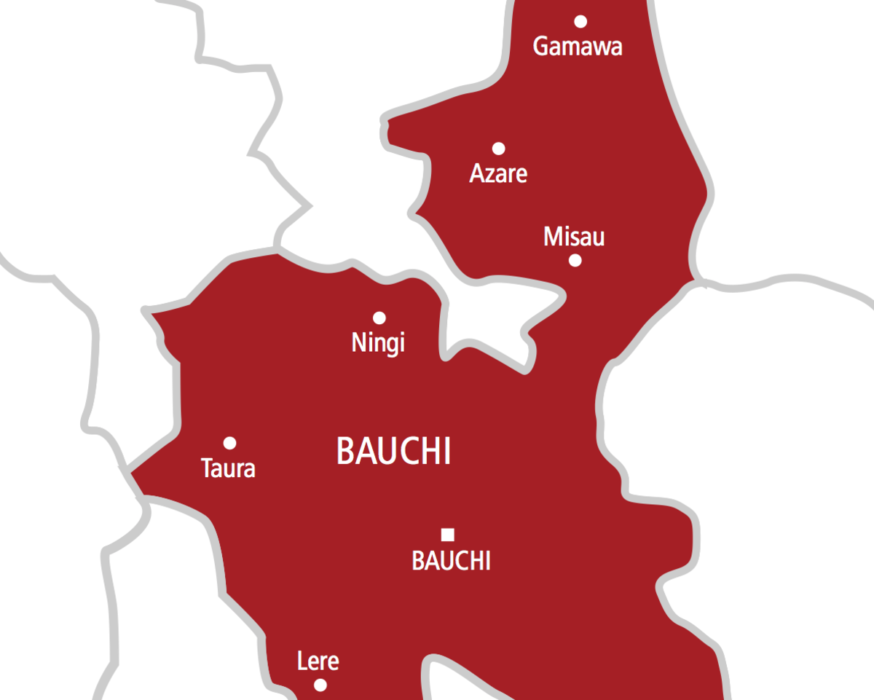
The partnership between Global Affairs Canada (GAC) and the United Nations Children’s Fund (UNICEF) in Bauchi State has recorded significant progress in strengthening gender-responsive health governance, improving healthcare delivery and empowering women and communities.
The chief of field office, UNICEF Nigeria, Bauchi Field Office, Dr. Nuzhat Rafique, disclosed this on Monday during a visit by a delegation from Global Affairs Canada to Bauchi State, where the team assessed development interventions and their impact on the state’s healthcare sector.
Rafique, who was represented by Dr. Abdulrahman Ibrahim Ado, said Canada’s investment through the partnership was producing tangible results, particularly in addressing challenges affecting children, adolescents and women.
She explained that the collaboration was strengthening healthcare systems, promoting gender equality, empowering girls and women, building resilient communities and improving health outcomes for children and young people.
She said the programme had mobilised and engaged 6,460 women through Mama2Mama support groups, positioning them as community advocates for improved healthcare practices.
She added that the intervention had contributed to an 18.6 per cent increase in women’s participation in decisions relating to contraceptive use, antenatal care and institutional delivery, including skilled birth attendance.
On strengthening governance and leadership in health and nutrition, Rafique disclosed that sustained engagement and advocacy with government institutions had helped mobilise hundreds of million of naira in funding from local and state governments for nutrition commodities in 2025.
She described the development as an important step towards increasing domestic financing, strengthening government ownership and ensuring the sustainability of nutrition interventions.
The UNICEF official further revealed that 398 health workers had been trained in Essential Newborn Care, the management of Postpartum Haemorrhage (PPH), Health Logistics Management Information Systems (HLMIS) and the District Health Information Software 2 (DHIS2).
She said the training was aimed at improving the quality of healthcare services, strengthening the management of medical commodities and enhancing the use of routine health data for evidence-based decision-making.
On child nutrition, she disclosed that the project supported Vitamin A supplementation during the first half of 2026, reaching 1,626,825 children aged between six and 23 months with two doses.
According to her, the intervention is contributing to the prevention of vitamin A deficiency and strengthening child survival efforts across the state.
Rafique also highlighted the programme’s interventions in adolescent and young people’s health, saying it supported the operationalisation of 102 Adolescent and Young People’s Health Clubs across 11 MAMI local government areas.
She said the initiative reached 208,920 adolescents and young people in 2025 with integrated information and services covering sexual and reproductive health, HIV prevention and nutrition.
She added that 1,058 women and adolescent girls had benefited from practical skills development in reusable sanitary pad production, an intervention designed to improve menstrual health and hygiene knowledge while encouraging healthy practices.
The UNICEF chief also disclosed that school-based demonstration farms established in 10 schools had equipped 192 adolescent girls with practical agricultural skills, nutrition knowledge and climate-smart livelihood opportunities through the cultivation and utilisation of biofortified and nutrient-dense crops.
She stressed that UNICEF would continue to work closely with the Bauchi State government, development partners, civil society organisations and communities to improve health and nutrition outcomes for women and children.
She listed the organisation’s strategic priorities to include strengthening health governance, leadership and coordination through evidence-based planning, data analysis, accountability and advocacy to improve the availability, accessibility and quality of maternal, newborn and child healthcare services.
Other priorities, she said, include promoting equitable access to essential health and nutrition services, reducing home deliveries and the number of unimmunised and zero-dose children, as well as expanding high-impact interventions for children under five, adolescents, pregnant women and breastfeeding mothers.
She further identified gender equality and women’s empowerment, increased domestic resource mobilisation for health, nutrition, education and water, sanitation and hygiene (WASH) as key areas of the partnership.
On sanitation, she said UNICEF was supporting efforts to improve hygiene practices, promote sanitation facilities and help Bauchi attain Open Defecation Free (ODF) status through the implementation of the Clean Nigeria Campaign.
Rafique also emphasised the importance of community participation through Ward Development Committees, Mother-to-Mother Support Groups, School-Based Management Committees and Fathers-for-Good-Health initiatives to encourage positive health-seeking behaviours and address barriers preventing families from accessing essential services.
She said UNICEF was equally supporting the state technically and financially to strengthen emergency preparedness and response to disease outbreaks, including cholera, vaccine-preventable diseases and Lassa fever.
In his remarks, the Bauchi State Commissioner for Health, Dr. Sani Muhammad Dambam, appreciated the Global Affairs Canada delegation for the visit and expressed the state’s readiness to consider recommendations that would emerge from the assessment of the healthcare sector.
Dambam expressed satisfaction with the contributions of development partners to the growth of the state’s health sector, noting that the Bauchi State Government had continued to prioritise healthcare delivery.
He assured the delegation of the state’s willingness to welcome constructive recommendations and strengthen collaboration with development partners to address existing challenges and improve healthcare services for residents.
We’ve got the edge. Get real-time reports, breaking scoops, and exclusive angles delivered straight to your phone. Don’t settle for stale news. Join LEADERSHIP NEWS on WhatsApp for 24/7 updates →
Join Our WhatsApp Channel