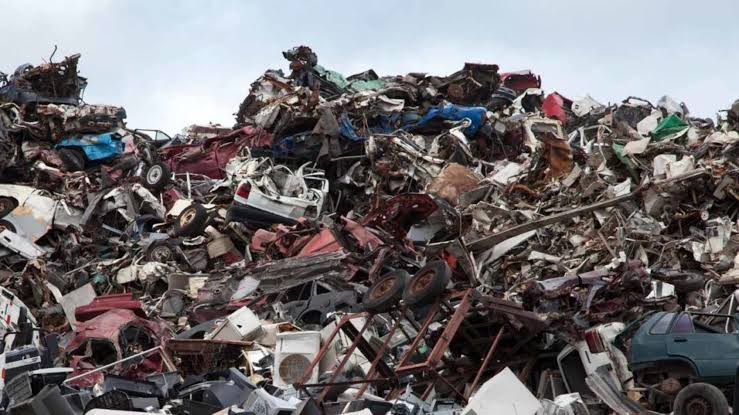
The federal government is moving to regulate Nigeria’s scrap metal industry to curb infrastructure vandalism, protect legitimate businesses and secure raw materials for the steel industry.
The Minister of Steel Development, Prince Shuaibu Abubakar Audu, disclosed this at a stakeholders’ engagement to validate the proposed Scrap Metal (Collection, Trading, Recycling and Regulation) Regulations, 2026, held in Lagos from 9 November to 10.
Represented by Ime Eprikpo, director of Metallurgical Raw Material Development and Investment Promotion, Audu said the regulations would establish a transparent and sustainable scrap metal value chain to support industrialisation.
He described scrap metal as a vital raw material for steelmaking and manufacturing, with the potential to create jobs, reduce waste and promote a circular economy. However, he warned that poor regulation encouraged infrastructure theft, unsafe dismantling and environmental degradation.
The proposed framework provides for operator licensing, regulation of collection centres, transaction traceability, safety standards and stronger enforcement against illicit trade.
“Our objective is not to suppress legitimate commercial activity. Rather, it is to establish a system in which lawful businesses can operate with greater clarity and confidence, while activities involving stolen materials, unsafe practices or environmental harm are addressed through appropriate regulatory and legal measures,” he said.
Audu assured small-scale operators, many of whom depend on scrap trading for their livelihoods, of a pathway to formalisation with requirements proportionate to their business scale.
Expressing concern over the theft of electrical cables, railway components, manhole covers, and other public infrastructure, he called for stricter supplier verification, improved transaction records, and collaboration with security agencies to curb the trade in stolen metals.
He urged stakeholders to submit practical recommendations to strengthen the draft regulations and address potential implementation challenges.
FG Targets Steel Industry Growth: The Permanent Secretary, Ambassador Nura Abba Rimi, represented by Christopher T. Wanje, Director of Metallurgical Inspectorate and Environmental Protection, said the initiative aligned with President Bola Tinubu’s Renewed Hope Agenda to build a competitive and self-sustaining steel industry.
He described effective scrap metal regulation as essential to securing raw materials, improving resource efficiency and strengthening local manufacturing.
“Our objective is not to stifle legitimate businesses or discourage investment, but to establish a transparent, accountable and sustainable operating environment in which genuine entrepreneurs can thrive, investors can have confidence, and the steel industry can access reliable raw materials to support increased domestic production and value addition,” he said.
Industry Backs Regulation: The National President of the National Association of Scrap and Waste Dealers Employers of Nigeria, Comrade Pastor Engr. Ogbu Luke Uchechukwu, described the engagement as a landmark step towards an organised and economically viable scrap industry.
Similarly, NESREA Director-General, Dr Innocent Bariate Bariko, represented by Engr. Walter Okoye, welcomed the initiative, noting that although scrap metal was vital to steel production and the circular economy, poor regulation posed environmental and public health risks.
Busari Olanrewaju of Kam Steel Integrated Company Ltd. also pledged the company’s support through training for scrap collectors, standardised grading, modern sorting and shredding technologies, and increased local utilisation of Nigerian scrap metal.
We’ve got the edge. Get real-time reports, breaking scoops, and exclusive angles delivered straight to your phone. Don’t settle for stale news. Join LEADERSHIP NEWS on WhatsApp for 24/7 updates →
Join Our WhatsApp Channel