The federal government has given a presidential working group until December 11, 2026, to produce a plan for fixing the funding gaps at Nigeria’s embassies and high commissions.
The deadline comes from a presidential directive dated October 14, 2026, which ordered a comprehensive fiscal and technical review of how the country’s diplomatic missions are funded. The group must submit its report, together with a programme of action for implementation, not later than that date.
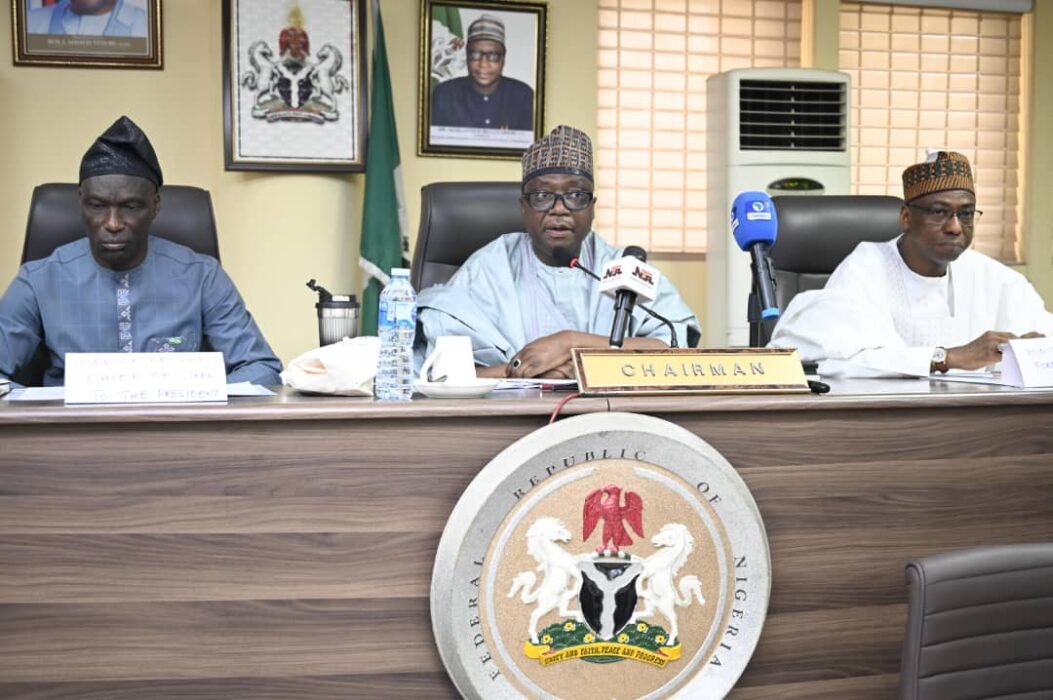
The chairman of the Revenue Mobilisation, Allocation and Fiscal Commission (RMAFC), Dr Mohammed Bello Shehu, disclosed this on Tuesday in Abuja while chairing the inaugural meeting of the Presidential Technical Working Group on the Review of Funding Arrangements for Nigeria’s Foreign Missions.
He said the exercise must produce a framework that is transparent, predictable, affordable and sustainable, and that the President expects a solution that works and can be implemented.
Dr. Shehu said the review was prompted by what the Commission observed during study visits and interactions with staff of Nigerian missions in several countries. Those engagements, he said, showed the operational consequences of funding constraints and the need for a more dependable response.
He warned that the missions’ ability to protect Nigerians abroad, advance trade and investment, and manage diplomatic relations should not be weakened by recurring uncertainty over resources.
“Mr President is very passionate about this exercise. So he expects us to come up with something that is workable, that can be implemented and that can solve this problem once and for all,” he said.
The RMAFC chairman cautioned against treating higher budgetary allocations as the only answer. He said the group must also examine how quickly and predictably funds are released, how budgets are prepared and executed, foreign exchange measures, expenditure management, and how critical diplomatic commitments are prioritised.
Members were also urged to study how other countries fund their missions, while keeping proposals within Nigeria’s constitutional, legal and institutional framework.
The group is expected to assess current arrangements candidly, identify the causes of financial instability, weigh alternatives, and recommend a framework that is transparent, predictable, affordable and sustainable given the state of public finances.
Dr. Shehu said the final report must go beyond describing problems. It must present evaluated funding options, recommend a preferred course, and set out an implementation plan with timelines, institutional responsibilities, and any administrative or legal changes required.
He cited Paragraph 32(c), Part I of the Third Schedule to the 1999 Constitution (as amended), which empowers the Commission to advise federal and state governments on fiscal efficiency and ways of raising revenue. He said RMAFC’s role was to complement, not encroach on, the statutory duties of other institutions.
Three principles will guide the work: conclusions based on reliable financial, budgetary and operational data; inclusive deliberations involving all participating institutions; and recommendations that are implementable, legally sound and realistic given fiscal constraints.
He stressed that the exercise was not meant to apportion blame or probe institutional failings, but to achieve greater coherence across government.
“Nigeria’s diplomatic presence abroad could not be sustained by ceremony alone,” he said, adding that it depended on the institutional capacity to meet the country’s obligations, protect personnel, serve citizens and engage international partners with confidence. He called for a balance between the operational needs of the missions and fiscal discipline and accountability.
The group’s immediate tasks are to agree its Terms of Reference, draw up a work plan, identify the data and documents it needs from participating agencies, and decide how to consult wider stakeholders. RMAFC will provide secretariat and technical support.
Federal Commissioners of RMAFC at the meeting included Ibrahim Bako Shettima (Niger), Rakiya Tanko Ayuba Haruna (Kebbi), Steve Ugba (Benue), Ayuba Jacob Ngbako (FCT), Muhammed Kabir Mashi (Katsina) and Enefe Ekene (Anambra).
Others present were the Permanent Secretary, Federal Ministry of Foreign Affairs, Dr. Dunoma Umar Ahmed; the Senior Adviser to the President on Foreign Affairs, Amb. Oluremi Olumide; and Deputy Comptroller-General of the Nigeria Immigration Service, Franka Halliday. The National Salaries, Incomes and Wages Commission and the Office of the Accountant-General of the Federation were also represented.
The group’s secretary is Usman Kukandaka Umar, Director, Allocation Department, RMAFC.
We’ve got the edge. Get real-time reports, breaking scoops, and exclusive angles delivered straight to your phone. Don’t settle for stale news. Join LEADERSHIP NEWS on WhatsApp for 24/7 updates →
Join Our WhatsApp Channel