The Nigerian Institute of Quantity Surveyors (NIQS) has warned that persistent delays in the payment of contractors handling government projects could trigger widespread business failures in the construction industry, urging President Bola Tinubu to intervene before the situation worsens.
The Institute said the inability of government agencies to settle outstanding payments for completed and certified projects had left contractors struggling to pay suppliers, subcontractors and workers, threatening the survival of businesses that had operated in the industry for decades.
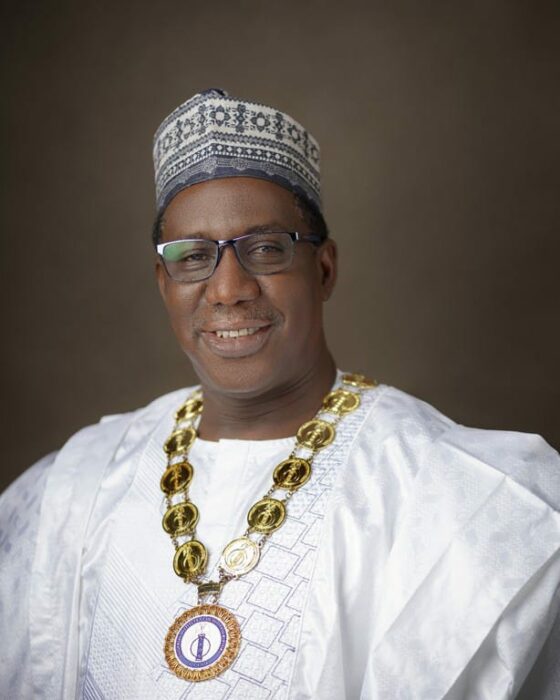
President of NIQS, Dr Aminu Muhammad Bashir, who raised the concern at a press conference ahead of the Institute’s 2026 National Conference and Annual General Meeting in Abuja on Wednesday, said the financial crisis facing construction companies required urgent attention.
He observed that while building collapses often attract public concern, the gradual collapse of construction businesses arising from unpaid government obligations was receiving insufficient attention, despite its implications for employment, investment and infrastructure delivery.
Bashir appealed to Tinubu to personally examine the plight of contractors, warning that prolonged delays in settling payment certificates were undermining their capacity to remain in business.
According to him, the crisis had become so severe that contractors executing federal government projects were being encouraged to take their complaints to the Office of the Accountant-General of the Federation.
He disclosed that a federal government agency had recently asked contractors handling its projects to establish a committee to present their grievances over unpaid certificates and inadequate project funding to the Accountant-General’s office.
The NIQS president further identified the continued reliance on previous budget cycles, particularly the operation of the 2025 budget in November 2026, as one of the factors worsening contractors’ financial difficulties.
He explained that some contractors had reached a point where accumulated interest on outstanding certificates had substantially eroded their value, making further pursuit of the payments economically unattractive.
While acknowledging the financial challenges confronting the government, Bashir insisted that capital expenditure must be tied to available resources to avoid creating contractual obligations that public authorities cannot meet.
He called for timely release of approved capital funds, prompt settlement of certified payments and prioritisation of ongoing projects before the commencement of new ones.
The Institute maintained that appropriating funds without ensuring their actual release would do little to advance infrastructure development, stressing that budgetary allocations must translate into funded projects and completed infrastructure.
Beyond the financial difficulties confronting contractors, Bashir called for measures to reduce the cost of building materials, arguing that the rising cost of construction was making decent accommodation increasingly inaccessible to ordinary Nigerians.
He urged the Federal Government to consider removing taxes on locally manufactured building materials, particularly cement, as part of efforts to lower construction costs and improve housing affordability.
According to him, the affordability of housing should be measured by the ability of intended occupants to purchase or rent completed properties, rather than simply by the cost of putting up the buildings.
He noted that even federal government employees and other working-class Nigerians were finding it increasingly difficult to afford accommodation amid rising construction and housing costs.
Bashir said the relative stability of the naira against the dollar was encouraging but stressed that additional policy measures were necessary to reduce the cost of building materials.
Citing figures from the National Housing Data Technical Committee, he put Nigeria’s housing deficit at nearly 15 million units, identifying expensive building materials, high land costs, inadequate infrastructure and limited access to long-term financing as major obstacles to addressing the shortfall.
The Institute’s 2026 National Conference and Annual General Meeting, scheduled for November 16 to 20 in Ilorin, Kwara State, will focus on strategies for mobilising sustainable financing for mass housing.
With the theme, “Financing Sustainable Mass Housing: Synergising Cost Management and Capital Markets for Affordable Shelter in Nigeria,” the conference is expected to bring together policymakers, financial institutions, property developers and construction professionals to explore alternative funding mechanisms for affordable housing delivery.
Bashir also disclosed that the Institute planned to engage the Securities and Exchange Commission (SEC) on proposals to make independent cost certification and verification of project progress by registered quantity surveyors requirements for housing developments financed through capital-market instruments.
He added that the Institute would introduce its Cost Data Bank at the conference to provide dependable construction cost information for professionals, investors, developers and government institutions.
We’ve got the edge. Get real-time reports, breaking scoops, and exclusive angles delivered straight to your phone. Don’t settle for stale news. Join LEADERSHIP NEWS on WhatsApp for 24/7 updates →
Join Our WhatsApp Channel