
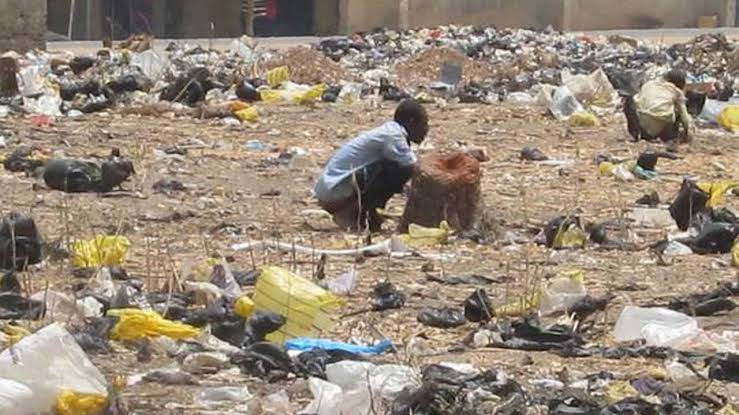
The Nasarawa State Government has declared zero tolerance for open defecation, describing the practice as a national embarrassment and a severe public health emergency that must be eradicated.
The Commissioner for Environment, Solid Minerals and Mining, Dr Margaret Elayo, made the declaration yesterday in Lafia during a media briefing ahead of this year’s World Toilet Day, scheduled for November 19.
Dr Elayo said sanitation remains a top priority of the administration of Governor Abdullahi Sule, stressing that the state would no longer treat open defecation as a mere cultural habit but as a direct threat to lives, dignity and development.
“Open defecation is not just an embarrassment. It is a public health emergency. It pollutes our water, spreads disease and strips our people, especially women and children, of their dignity,” she said.
Painting a grim picture of the sanitation crisis, the commissioner disclosed that over 3.5 billion people across the world still lack access to safely managed sanitation services.
In Nigeria, she said, millions of people still practise open defecation, a situation that continues to fuel preventable waterborne diseases such as cholera, typhoid and diarrhoea, which claim the lives of thousands of children every year.
She warned that unless deliberate and sustained action is taken, the health and economic consequences would continue to undermine the well-being of communities.
Dr Elayo outlined the state government’s multi-pronged strategy to end open defecation under Governor Sule’s leadership.
Central to the plan, she said, is close collaboration with local government councils, traditional rulers and community leaders to progressively declare communities Open Defecation Free (ODF).
She said the government is promoting the construction of clean, safe and functional public toilets in markets, motor parks, schools and health centres, with deliberate design considerations for women, children and persons with disabilities.
Every toilet built, the commissioner said, should be seen as a river protected, and every toilet maintained as a disease prevented.
She explained that poor sanitation does not only affect human health but also contaminates rivers, farmlands and underground water sources on which many communities depend.
Dr Elayo called on all stakeholders to play their part in the fight against open defecation.
She charged community leaders to enforce sanitation guidelines within their domains; schools and teachers to prioritise hygiene education and proper toilet maintenance; and businesses and development partners to see investment in sanitation as investment in human life.
She also urged families to champion cleanliness at home and in public spaces, insisting that access to a toilet is a fundamental human right and a shared responsibility, not a luxury.
“A toilet is not a privilege. It is a right and a responsibility,” she said.
In a practical demonstration of the government’s commitment, the commissioner donated a mobile toilet and recycling materials at the event, promising to replicate the gesture in schools and other public places across the state.
She said many schools, particularly those attended by girls, face serious sanitation challenges that expose female students to health risks and indignity.
“Some of these schools have challenges. This will be part of my gift to some schools, especially when it has to do with the girl child,” Dr Elayo said.
“I don’t want any girl child to be exposed to the public just because she wants to ease herself, whether number one or number two. That is why I came up with this concept.”
She expressed optimism that, with collective commitment, Nasarawa State would progressively attain Open Defecation Free status and become a model for sanitation in the country.
We’ve got the edge. Get real-time reports, breaking scoops, and exclusive angles delivered straight to your phone. Don’t settle for stale news. Join LEADERSHIP NEWS on WhatsApp for 24/7 updates →
Join Our WhatsApp Channel


