
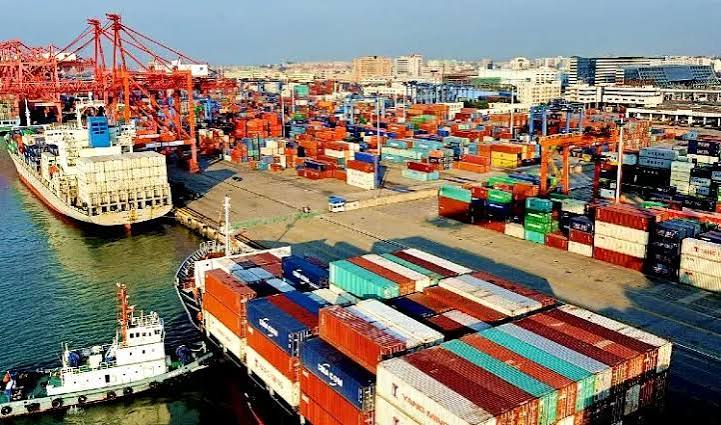
Nigeria risks leaving a significant share of its expanding maritime business and shipping revenue in foreign hands as its indigenous fleet faces a shortfall of 613 vessels needed to support the country’s ambition of building a $1 trillion economy by 2030.
Maritime expert, Emeka Akabogu, disclosed this on Friday while delivering a paper titled, “Can Nigeria’s Seaports Carry a One-Trillion-Dollar Economy by 2030?” at the National Conference of the Network of Nigerian Maritime Journalists (NNMJ), held at the Airport Hotel, Ikeja, Lagos.
According to data presented by Akabogu, Nigeria currently has 307 indigenously owned ships, against the estimated 920 vessels required to support a $1 trillion economy by 2030.
Although the number of locally owned ships is projected to increase to 348 by 2030, the country would still have a deficit of 572 vessels, leaving its shipping capacity significantly below the demands of its economic growth target.
Similarly, Nigeria’s flag fleet has a combined capacity of 7.12 million deadweight tonnes (DWT), representing roughly one-third of the 21.4 million DWT estimated to be required to support the targeted economic expansion.
The figures raise concerns about Nigeria’s ability to handle the anticipated increase in cargo volumes as economic activities and international trade expand, particularly whether indigenous shipowners have the capacity to capture the opportunities.
Akabogu warned that modernising port infrastructure without simultaneously expanding indigenous shipping capacity could deepen the country’s dependence on foreign vessels for the transportation of imports and exports.
He noted that achieving a $1 trillion economy would require more than improved port infrastructure and streamlined cargo clearance processes, stressing that national shipping capacity must grow alongside the economy.
The maritime lawyer, therefore, advocated a pragmatic overhaul of the Cabotage Vessel Financing Fund (CVFF) to ensure that financing translates into operational vessels capable of participating in commercial shipping.
He recommended that disbursement of the fund should be tied directly to vessels backed by verifiable cargo contracts and viable crewing arrangements.
According to him, access to financing must result in commercially deployable ships rather than funding arrangements that fail to deliver operational vessels.
Akabogu also emphasised the need to develop Nigerian seafarers and strengthen local industry participation, noting that expanding the indigenous fleet would require skilled manpower and a viable operating environment.
The presentation further highlighted the financial implications of Nigeria’s dependence on foreign shipping services, putting the country’s annual net transport payments at approximately $4.5 billion.
He warned that without deliberate investment in indigenous vessels, Nigeria could expand its economy and trade volumes while allowing foreign shipowners to capture a substantial share of the resulting shipping business and revenue.
We’ve got the edge. Get real-time reports, breaking scoops, and exclusive angles delivered straight to your phone. Don’t settle for stale news. Join LEADERSHIP NEWS on WhatsApp for 24/7 updates →
Join Our WhatsApp Channel